Arugula Planned
Astro / Wild (Sylvetta)
Planned seed-start; cut-and-come-again, 21–40 days.
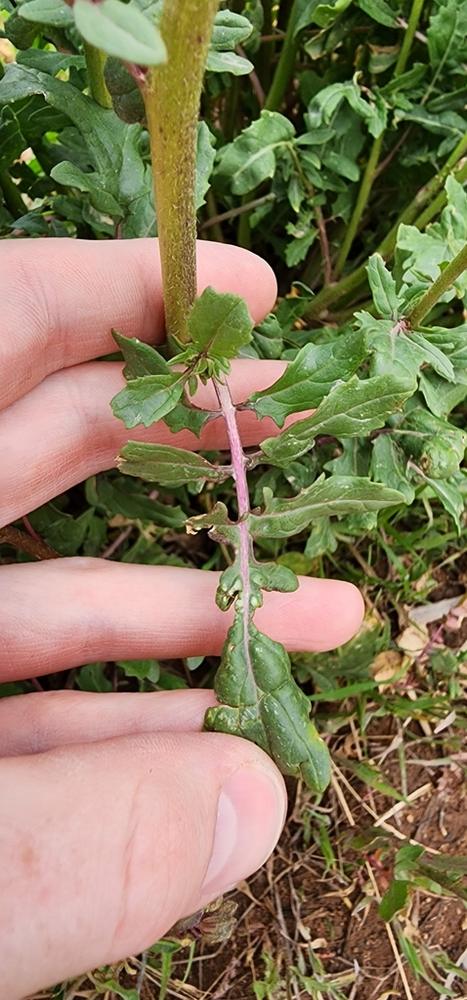 Young
YoungA small arugula stem with a few young, shallowly lobed leaves, held in hand for scale.
Species-level Eruca vesicaria subsp. sativa; a true tiny-seedling (cotyledon stage) photo could not be found -- this is the youngest, non-flowering foliage available.
Photo: Braydon Lake· CC BY-NC
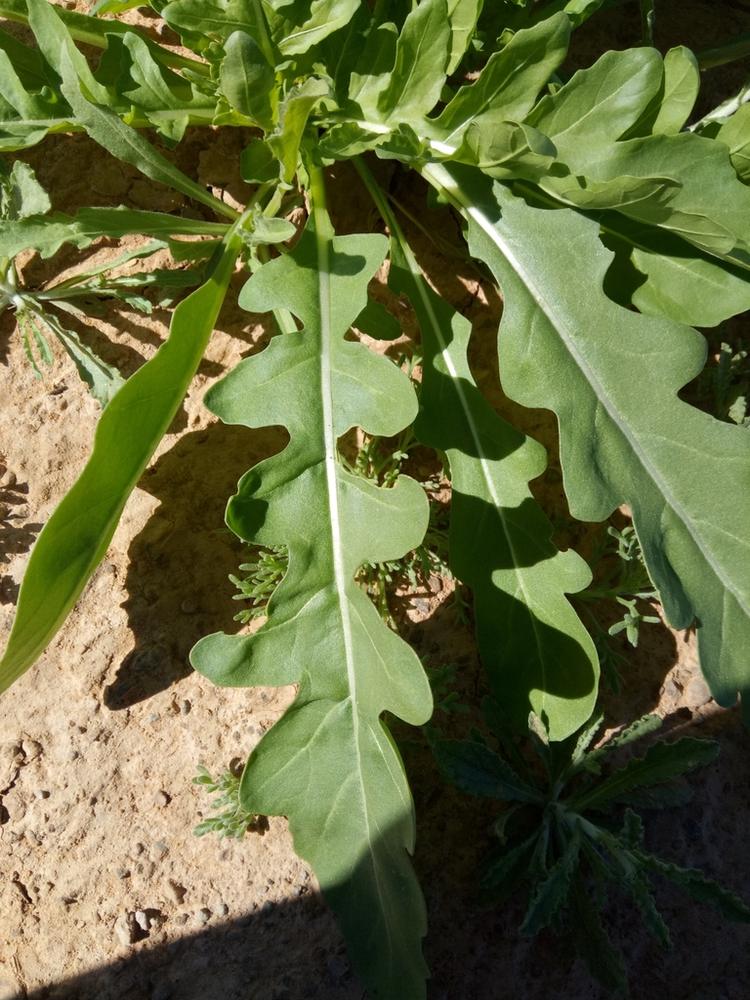 Growing
A clump of established arugula with characteristic deeply lobed, dandelion-like leaves, before flowering.
Species-level arugula foliage.
Photo: Karim Haddad· CC BY
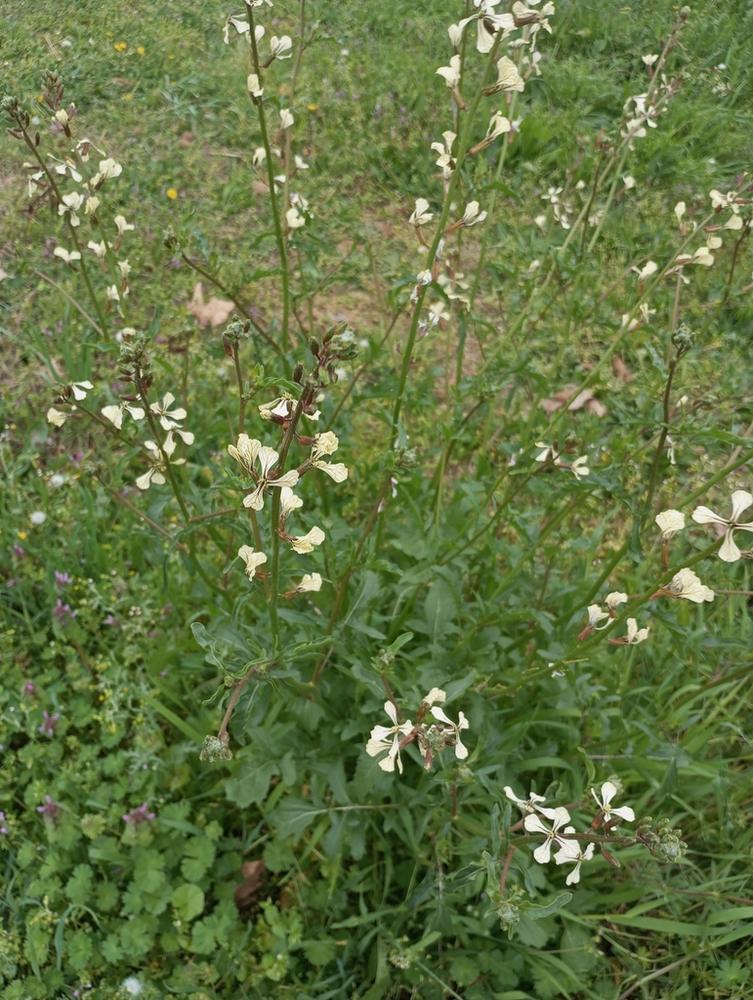 Full grown
A patch of mature arugula plants that have bolted and are flowering, with pale creamy-white, purple-veined blooms.
Species-level arugula in flower -- per the brief, mature arugula may show flowering.
Photo: Paweł Radzikowski· CC BY-NC
Growing stages
What to look for, and what to do, at each point in its lifeArugula ('Astro' salad arugula and 'Wild'/Sylvetta arugula grown side by side) runs two seasons in Decatur's Zone 8a: a fall sowing in September that carries through the mild winter into a big harvest, and a shorter spring sowing in February-March that races the early heat, though the two types behave differently once things warm up.
- 1
Sowing
Early-mid September (fall crop) or mid-February to early March (spring crop)You'll see Astro seed is small and round, tan to reddish-brown; Wild (Sylvetta) seed is even smaller and slower to show, since it's a different, wilder species.
Do Direct sow both 1/4 inch deep, keeping the soil surface damp until sprouting.
- 2
Seedling
Days 5-21 after sowingYou'll see Astro shows the familiar deeply notched, oak-leaf-shaped true leaf typical of salad arugula; Wild arugula's true leaves are narrower, more finely divided, and almost feathery by comparison.
Do Thin Astro to 3-4 inches apart for baby greens, and Wild arugula to 6-8 inches since it grows into a bushier, longer-lived clump.
- 3
Cut-and-come-again harvest
Starting 21-40 days after sowing, continuing for weeks to months depending on the typeYou'll see Astro's leaves reach 4-6 inches with a peppery, mustard-like bite; Wild arugula stays lower and bushier with narrower, more deeply lobed leaves and a sharper, more pungent, slightly nutty flavor.
Do Harvest outer leaves from both, or shear Astro to an inch above the crown; Wild arugula regrows best when picked leaf by leaf rather than sheared hard.
- 4
Bolting
Late May into June for Astro, considerably later or barely at all for Wild arugulaYou'll see Astro sends up a central stalk with narrow leaves and small white, purple-veined flowers; Wild arugula flowers on and off over a much longer season without necessarily giving up its leaf production, its flowers a brighter yellow.
Do Harvest Astro's remaining leaves promptly once it bolts, since they turn bitter fast; Wild arugula can often keep being picked even while flowering.
- 5
Seed saving
4-8 weeks after flowering, once seed pods dry from green to brownYou'll see Astro's flower stalks form slim, brown, brittle pods; Wild arugula's pods are similar but on a different, more branching flower structure.
Do Cut dry seed stalks into a paper bag once pods are dry and brittle, then crush and winnow to separate seed from chaff.
Techniques — transplant, prune, propagate, divide, seed
Full sun to part shade; cool weather.
Consistent moisture.
Hydro pods / tight in-ground spacing.
Steady light feeding.
Care
- Cool-season crops — spring and fall windows; they bolt in summer heat.
- Wasabina mustard + tatsoi run permanently indoors in the 2nd hydro unit.
- Giant Red + Southern Green mustard run outdoors in the wooden structure.
Harvest
Cut-and-come-again; harvest outer leaves.
Watch for
Bolting in heat; aphids/flea beetles.