Beets Planned
Detroit Dark Red / Chioggia
Planned seed-start; sow by mid-Oct for winter roots and greens.
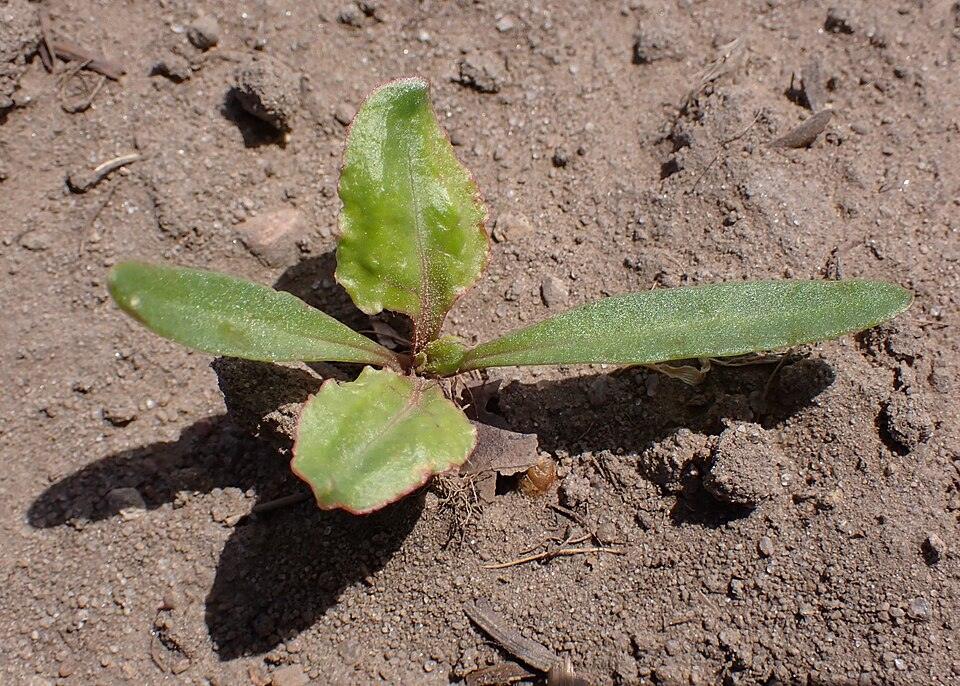 Young
YoungClose-up of a just-emerged beet seedling with cotyledon and first true leaves in soil
Photo is labeled a sugar beet seedling (Beta vulgaris, Altissima cultivar group) rather than a table/garden beet (Crassa group); the two are indistinguishable at the cotyledon/seedling stage, so it's a faithful stand-in for young beet seedlings.
Photo: Krzysztof Ziarnek, Kenraiz· CC BY-SA 4.0
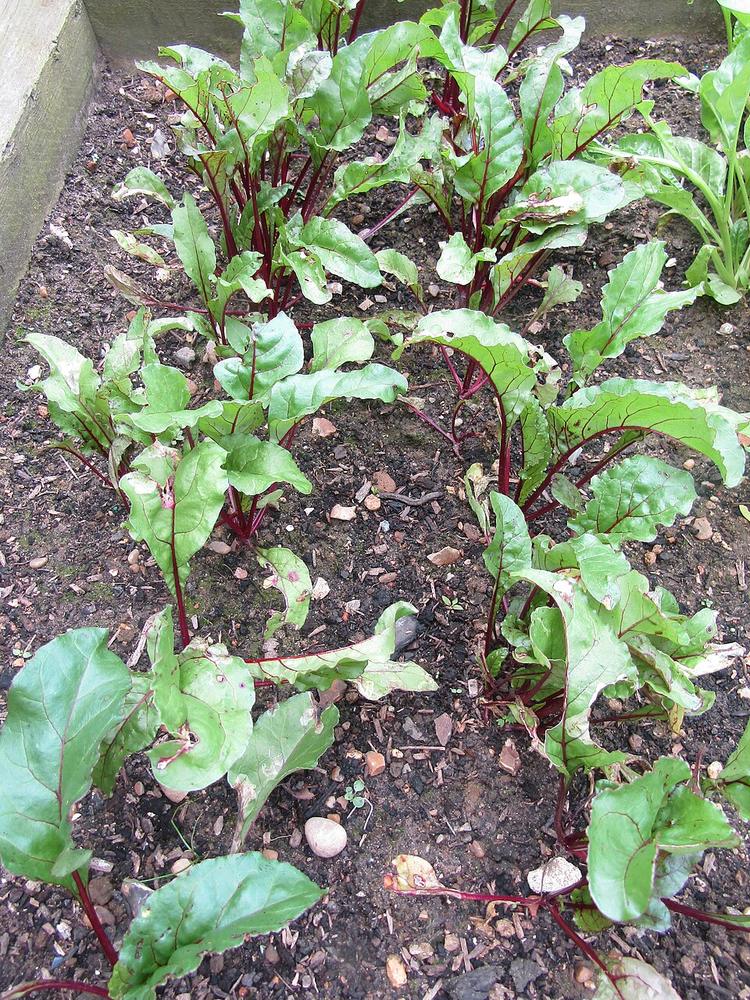 Growing
Rows of established red beetroot plants with red-veined leafy tops growing in a garden bed
Photo: Kolforn (Kolforn) I'd appreciate if you could mail me (Kolforn@gmail.com) if you· CC BY-SA 4.0
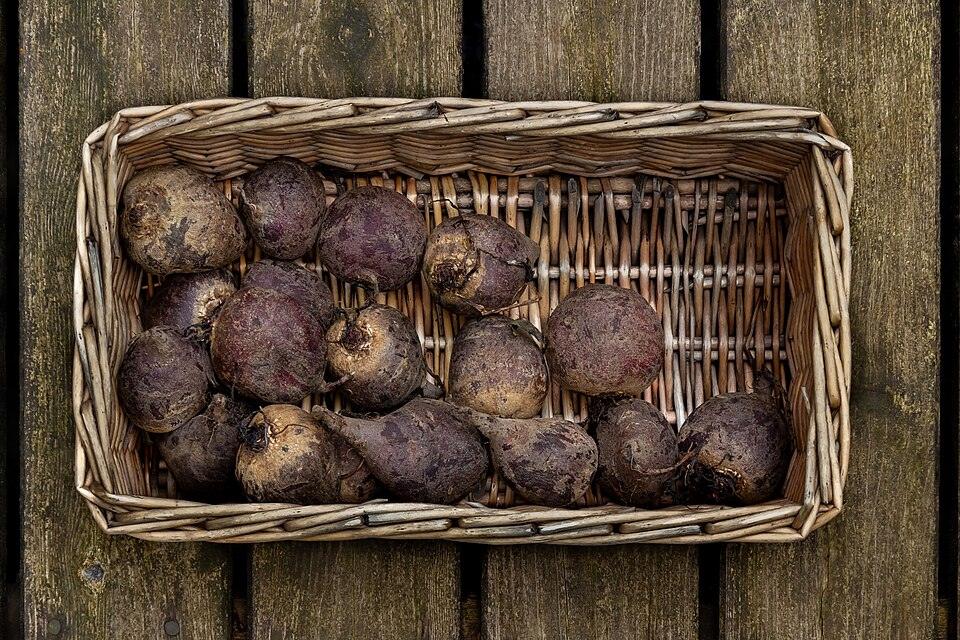 Full grown
Basket of freshly harvested round beetroots showing full-size mature roots
Photo: W.carter· CC BY-SA 4.0
Growing stages
What to look for, and what to do, at each point in its lifeBeets (grown here as Detroit Dark Red and Chioggia, both open-pollinated heirlooms) are direct-sown by mid-October for winter roots and greens in Decatur, with each papery seed cluster containing several seeds that come up needing thinning, and roots reaching harvest size in about 50-70 days.
- 1
Direct sowing
By mid-October for the winter crop; a spring sowing (mid-February to early April) also worksYou'll see Seed is sown directly into loosened soil; nothing is visible above ground for the first several days.
Do Sow beet seed clusters 1/2-3/4 inch deep directly where they will grow, never in trays for transplanting.
- 2
Germination
3-5 days in good conditions, up to 7-14 days in cool soilYou'll see Beets pop up quickly as small, rounded, often reddish-tinged seed leaves, usually several crowded together from each seed cluster.
Do Keep the top inch of soil moist, watering lightly once or twice a day if the surface dries, until seedlings emerge.
- 3
Thinning
10-21 days after sowing, once seedlings have their first true leavesYou'll see Rows look crowded, with clusters of 2-4 seedlings sprouting from each individual seed ball.
Do Thin to a final spacing of 3-4 inches apart.
- 4
Root development
6-9 weeks after thinningYou'll see Leafy tops (green for Detroit Dark Red, often with reddish veining for Chioggia) fill in and thicken while the round root swells underground, invisible except where it begins to show at the soil surface.
Do Keep soil evenly moist (about 1 inch of water a week) and weed-free, since beets don't compete well with weeds for root space.
- 5
Harvest
50-70 days after sowingYou'll see The top of the root, its shoulder, begins to push up and show color (deep red for Detroit Dark Red, or the telltale pink-and-white banding of Chioggia once cut) right at the soil surface.
Do Check shoulders regularly once in the expected window; harvest anywhere from golf-ball to tennis-ball size depending on preference, by gripping leaves near the base and pulling straight up, loosening soil with a fork first if compacted.
- 6
Biennial Seed Saving
Second spring after overwintering, if a few roots are left through winter specifically for seedYou'll see An overwintered beet sends up a tall flower spike in its second spring, topped with small green flower clusters along the stalk.
Do Select your best roots, leave them in the ground (or replant them) over winter, and let them flower and set seed the following spring.
Techniques — transplant, prune, propagate, divide, seed
Full sun
Even moisture — 1" per week; keep the seedbed damp until germination (carrots take 10–21…
Carrots 2–3", beets 3–4", radishes 1–2", in rows 6–12" apart; thin early
Compost worked in before sowing; low nitrogen (forks roots and grows tops).
Care
- Loose, rock-free soil 8–12" deep — grow bags with a fluffy mix beat Georgia clay for carrots.
- Sow shallow (¼") and cover the bed with a board or burlap until carrots sprout, then remove.
- Thin ruthlessly at 2" tall; crowded roots stay small.
Harvest
Radish 25–30 days, beets 50–60 (greens earlier), carrots 65–75 days. Loosen with a fork before pulling.
Watch for
Poor germination from crusted or dry seedbeds, forked carrots from rocks/fresh manure, root maggots (row cover), rabbits on tops.