Pepper (Burrito)
Burrito
Medium. Burrito Smoke jelly.
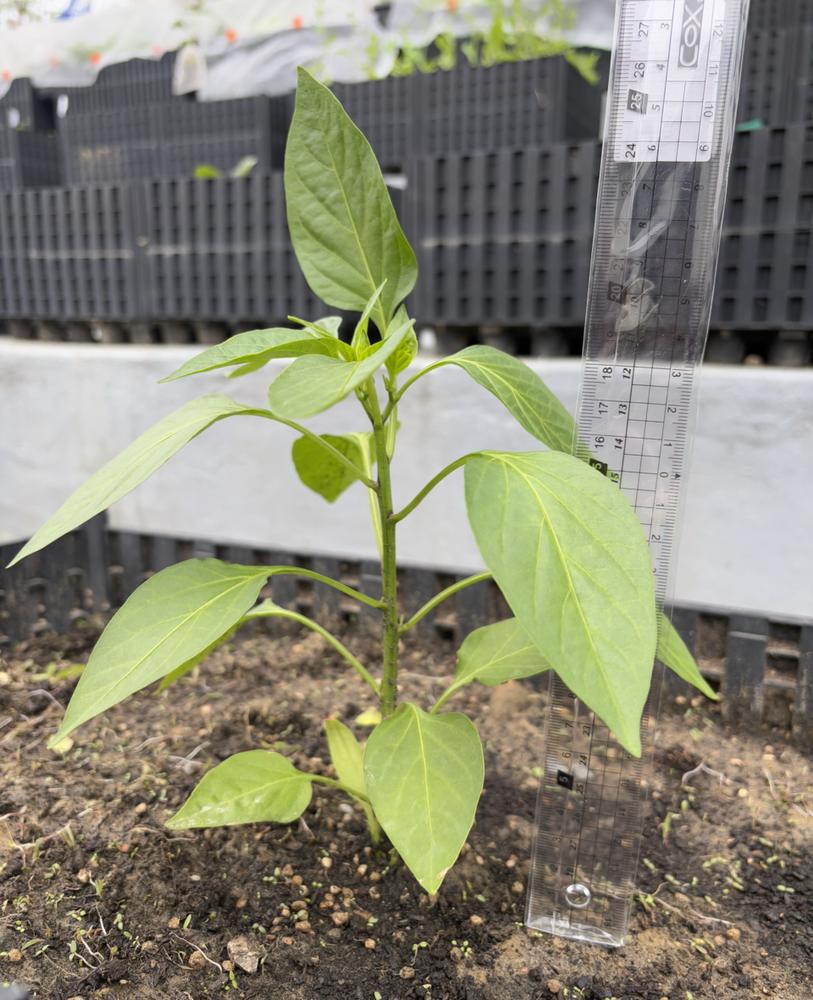 Young
YoungYoung pepper transplant with several true leaves (shown against a ruler for scale), pre-flower.
Generic Capsicum annuum pepper seedling; no 'Burrito'/Anaheim-specific seedling photo found on Commons/iNat.
Photo: 欸不是· CC0
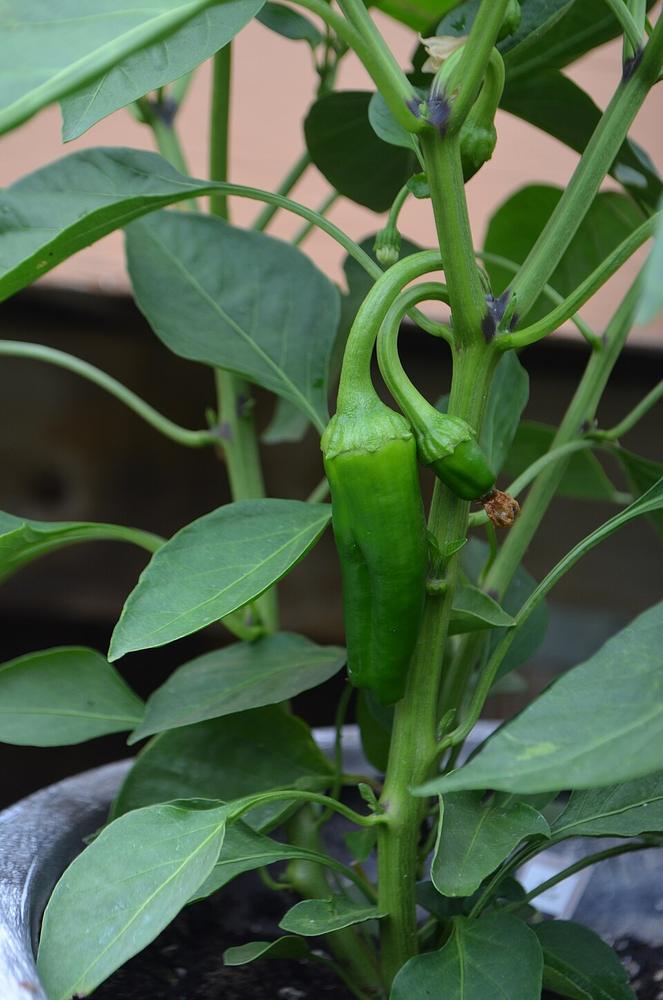
 Growing
Young Anaheim-type pepper plant with an elongated green immature fruit and flower buds still on the plant.
Generic Anaheim-type Capsicum annuum plant; 'Burrito' (Bonnie hybrid) specifically not distinguishable from photo.
Photo: Forest & Kim Starr· CC BY 3.0
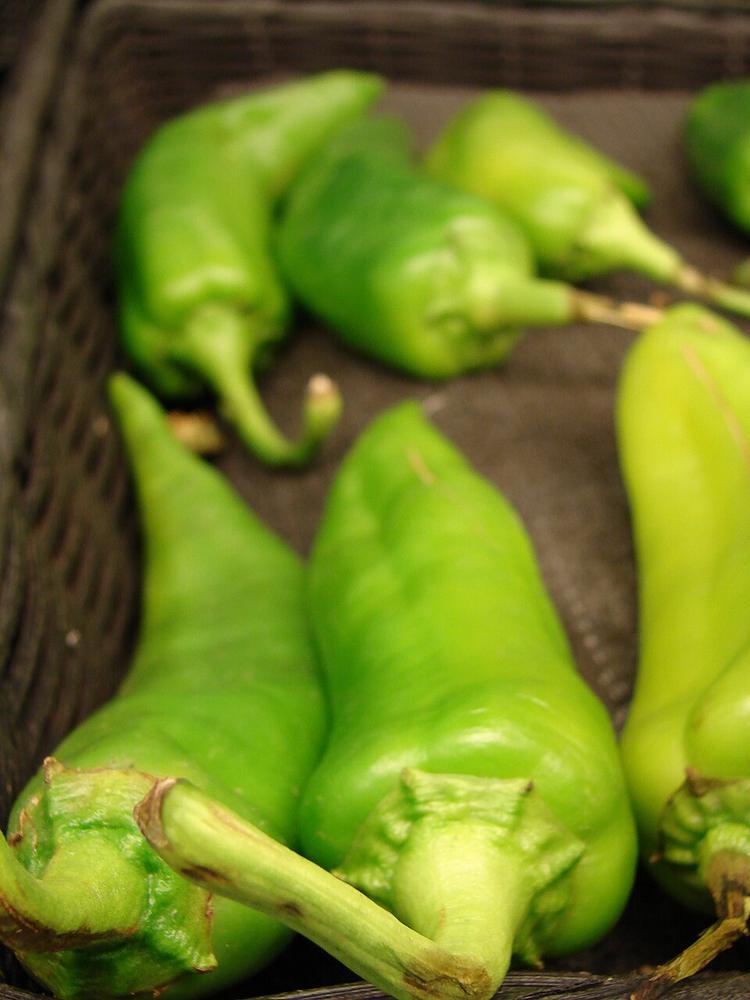
 Full grown
Harvested pile of ripe green Anaheim-type chile peppers, mild long tapered pods.
Generic Anaheim pepper (harvested, not on-plant); 'Burrito' cultivar specifically not confirmed.
Photo: Samsmachado· CC BY 4.0
Growing stages
What to look for, and what to do, at each point in its lifeBurrito is a Bonnie Plants hybrid Anaheim-type hot pepper in Decatur's Zone 8a, a compact 18-24 inch plant producing medium-heat pods (roughly 3,000-6,000 SHU) with the classic long, tapering New Mexico/California chile shape, well suited to fire-roasting and smoking.
- 1
Seedling
Weeks 1-8 after sowing if started from seed, though this variety is most often grown from a Bonnie Plants transplant rather than home-started seedYou'll see Oval cotyledons first, then pointed true leaves; growth is slow and steady, and a healthy seedling stays compact and deep green.
Do If starting from seed, keep soil warm (75-85F, a heat mat speeds and evens germination) and give strong, close light right away to prevent stretching; if starting from a purchased transplant, this stage is already done for you.
- 2
Transplant
Late March through mid-April, once nighttime lows hold above 55F and soil has warmedYou'll see A ready transplant has several true leaves and a sturdy stem, ideally no flower buds yet.
Do Harden off over 5-7 days if moving from a sheltered garden-center environment, transplant into warm soil, and stake or cage this compact 18-24 inch plant lightly if needed.
- 3
Establishing / early branching
First 2-3 weeks after transplantYou'll see Resumed leaf growth, new side branches forming, and the first flower buds appearing at the growing tip.
Do Top or pinch the plant once and remove the first flower bud(s) to push branching before letting it fruit freely.
- 4
Flowering and fruit set
Late May through SeptemberYou'll see Small white, star-shaped flowers open along the branches and swell into slender, tapering green pods within days of pollination.
Do Keep watering consistent through fruit set, especially given this variety's compact size and correspondingly smaller root zone if grown in a container.
- 5
Ripening
Roughly 70-80 days from transplant to first mature-size green fruit, following typical Anaheim-type timing; full color change to red takes additional weeksYou'll see Long, tapering, thick-walled pods, the classic New Mexico/Anaheim chile shape, stay green through most of development, then gradually shift toward a deep red as they fully ripen.
Do Pick most fruit green for classic chile-relleno-style use and milder flavor, or let some fully ripen red for a hotter, sweeter finish.
- 6
Harvest and drying
Ongoing through the season, with a final push before first frost (~Nov 12)You'll see Firm, glossy, thick-walled pods at your target color are ready; the thick walls make this variety slow to plain air-dry in Georgia humidity.
Do Pick with scissors or pruners, and route extra fruit toward fire-roasting or smoking-then-drying rather than plain air drying.
- 7
Seed saving
From fully mature, fully ripe red fruit at the end of the seasonYou'll see Seeds are pale tan, flat, and firm inside a fully ripe red fruit; seed from green fruit is underdeveloped and won't germinate well.
Do Saving seed is mainly useful for continued eating stock, not for reproducing this exact plant, since Burrito is a bred hybrid.
Techniques — transplant, prune, propagate, divide, seed
Full sun, warmth-loving
Even, moderate moisture.
18–24" apart
Heavy feeder; ease off nitrogen at flowering.
Care
- Always wear nitrile gloves when seeding hot peppers; never touch your face.
- Work in a well-ventilated area for cayenne or large quantities of jalapeño.
- Purple Cayenne: wait until deep purple/violet for best color and heat.
Harvest
Riper = hotter and more colorful. Fully ripe purple cayennes give the strongest violet for Purple Reign jelly.
Watch for
Capsaicin handling is the main hazard — gloves and ventilation.