Carrots Planned
Nelson / Yaya / Danvers
Planned seed-start in grow bags 5–6 (loose mix). Sow by end of Sept; overwinter in the ground and pull as needed.
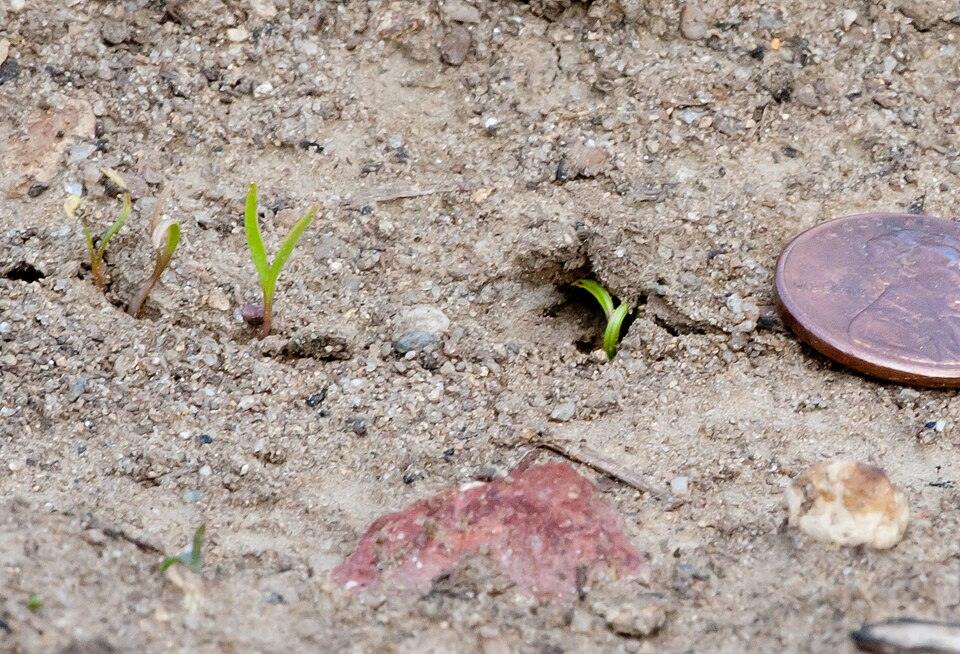 Young
YoungFreshly germinated carrot seedlings pushing through the soil surface, shown next to a penny for scale
Generic carrot seedlings; variety not specified.
Photo: Dwight Sipler from Stow, MA, USA· CC BY 2.0
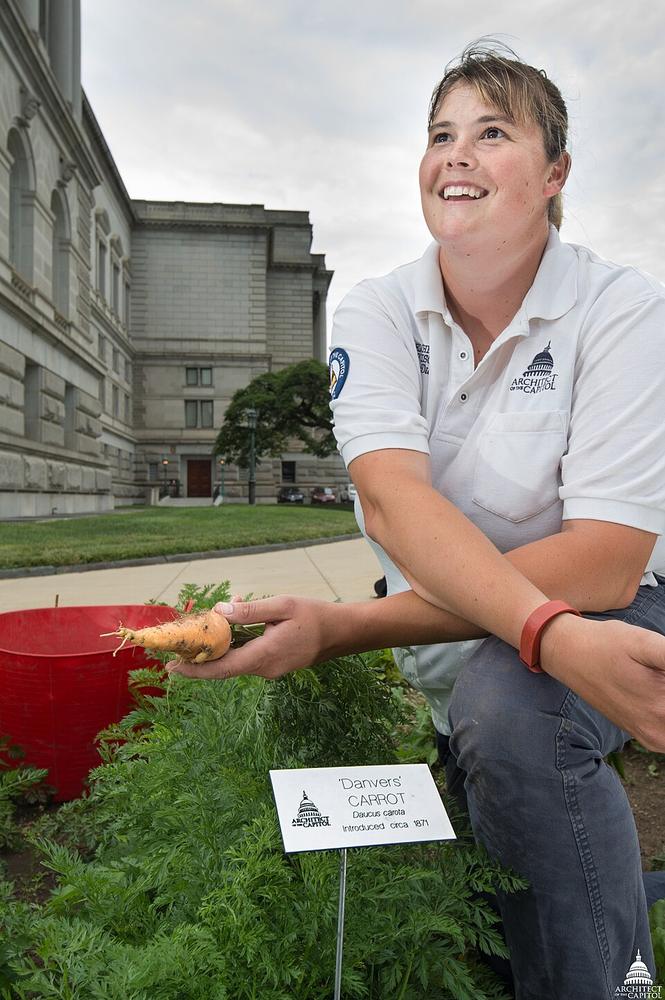 Growing
A leafy carrot bed with full feathery foliage, with a 'Danvers' carrot just pulled to show the root
Shows the 'Danvers' carrot cultivar, not a specific variety match for the assigned plant, but representative of a leafy, established carrot row.
Photo: USCapitol from Washington, D.C., United States of America· Public domain
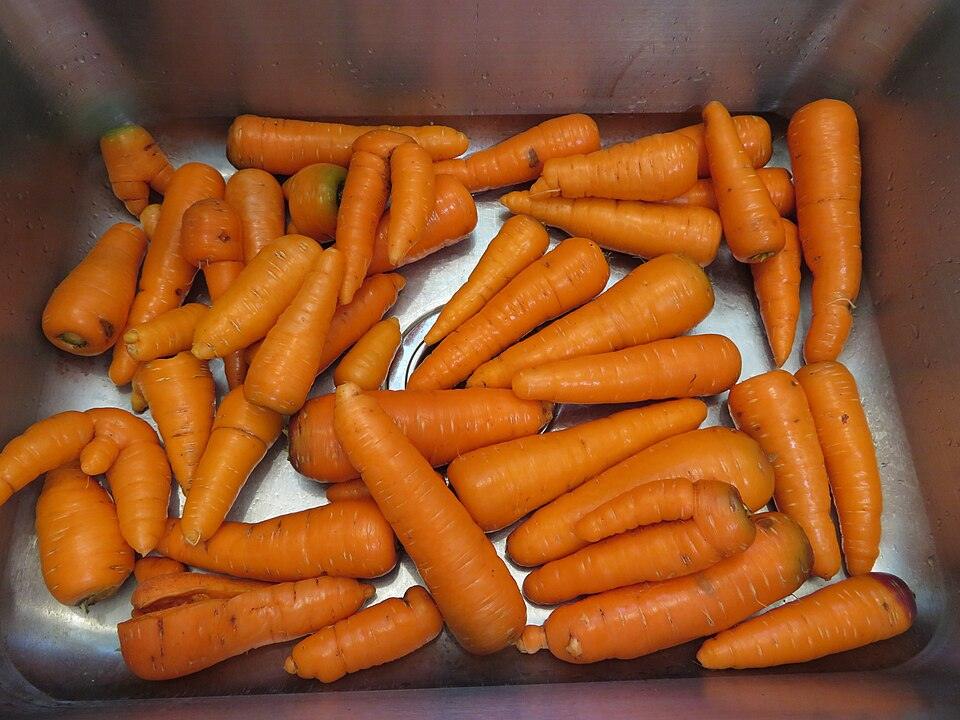 Full grown
A bin of freshly harvested carrot roots
Generic harvested carrots; variety not specified.
Photo: Forest and Kim Starr· CC BY 2.0
Growing stages
What to look for, and what to do, at each point in its lifeCarrots (grown here as a Nelson, Yaya, and Danvers mix) are direct-sown straight into deep grow bags with a loose mix by end of September for a fall crop that overwinters in the ground and is pulled as needed through the mild Decatur winter, since disturbing their taproot by transplanting causes forking or stunting.
- 1
Direct sowing
By end of September for the main fall crop; a spring sowing (mid-February to early April) also worksYou'll see Seed is sown directly into loosened, loose grow-bag mix; nothing is visible above ground for the first several days.
Do Sow carrot seed 1/4-1/2 inch deep directly where it will grow, never in trays for transplanting, into a deep grow bag filled with a loose, rock-free mix.
- 2
Germination
6-10 days in good conditions, up to 14-21 days in cool or crusted soilYou'll see Carrots are slow to show, and their first thread-like, feathery leaves are easy to mistake for grass or miss entirely.
Do Keep the top inch of grow-bag mix constantly moist, watering lightly once or twice a day if the surface dries, until every seed you expect has sprouted.
- 3
Thinning
10-21 days after sowing, once seedlings have their first true leavesYou'll see Rows in the grow bag look crowded with thread-like seedlings touching or overlapping.
Do Thin to a final spacing of 2-3 inches apart.
- 4
Root development
6-9 weeks after thinningYou'll see Feathery, ferny tops fill in and thicken while the orange root swells underground in the grow bag, invisible except where it begins to show at the surface.
Do Keep the grow-bag mix evenly moist (it dries out faster than garden soil) and weed-free, since carrots don't compete well with weeds for root space.
- 5
Overwintering & Harvest
Roots reach usable size 60-80 days after sowing and can then be left in the grow bag and pulled as needed through winterYou'll see The shoulder of the root, its top, begins to push up and show orange color right at the surface of the mix.
Do Check shoulders regularly once in the expected harvest window, and pull roots as needed rather than harvesting the whole bag at once; a light mulch over the bag helps protect roots through cold snaps.
- 6
Biennial Seed Saving
Second spring after overwintering, if a few roots are left through winter specifically for seedYou'll see An overwintered carrot sends up a tall flower stalk in its second spring, topped with a flat, umbrella-shaped white flower cluster.
Do Select your best roots, leave them in the grow bag (or replant them) over winter, and let them flower and set seed the following spring.
Techniques — transplant, prune, propagate, divide, seed
Full sun
Even moisture — 1" per week; keep the seedbed damp until germination (carrots take 10–21…
Carrots 2–3", beets 3–4", radishes 1–2", in rows 6–12" apart; thin early
Compost worked in before sowing; low nitrogen (forks roots and grows tops).
Care
- Loose, rock-free soil 8–12" deep — grow bags with a fluffy mix beat Georgia clay for carrots.
- Sow shallow (¼") and cover the bed with a board or burlap until carrots sprout, then remove.
- Thin ruthlessly at 2" tall; crowded roots stay small.
Harvest
Radish 25–30 days, beets 50–60 (greens earlier), carrots 65–75 days. Loosen with a fork before pulling.
Watch for
Poor germination from crusted or dry seedbeds, forked carrots from rocks/fresh manure, root maggots (row cover), rabbits on tops.