Garlic Chives
Garlic Chives
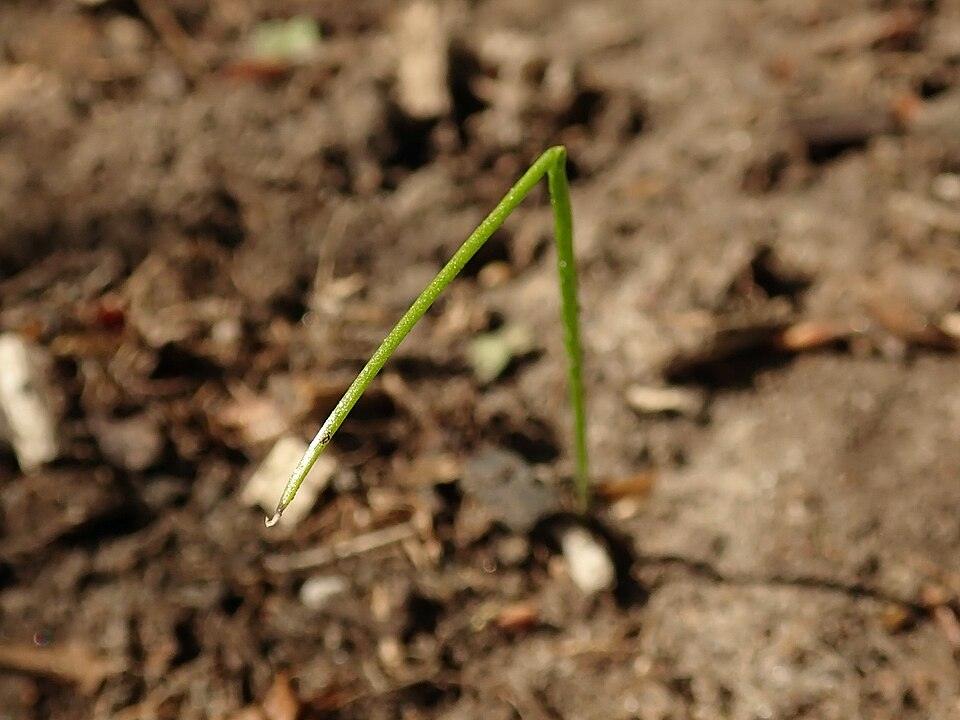 Young
YoungSingle germinating Allium tuberosum seedling blade emerging from soil.
Photo: Salicyna· CC BY-SA 4.0
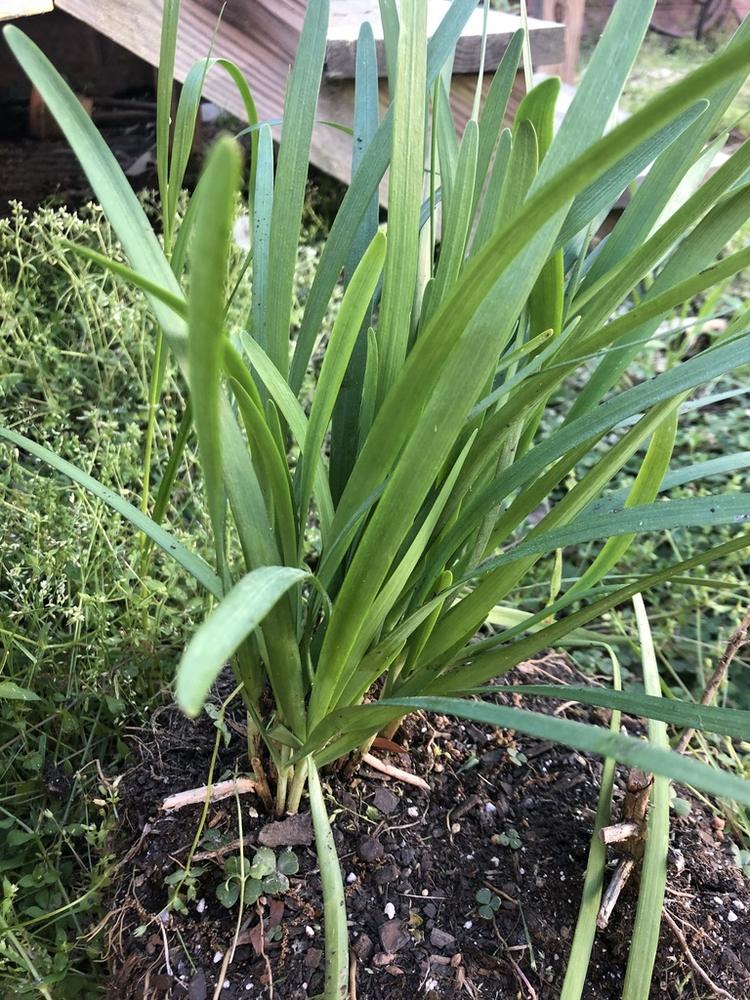 Growing
Established garlic chives foliage clump with flat grass-like blades, pre-flowering.
Photo: kipdoolittle· CC BY-NC
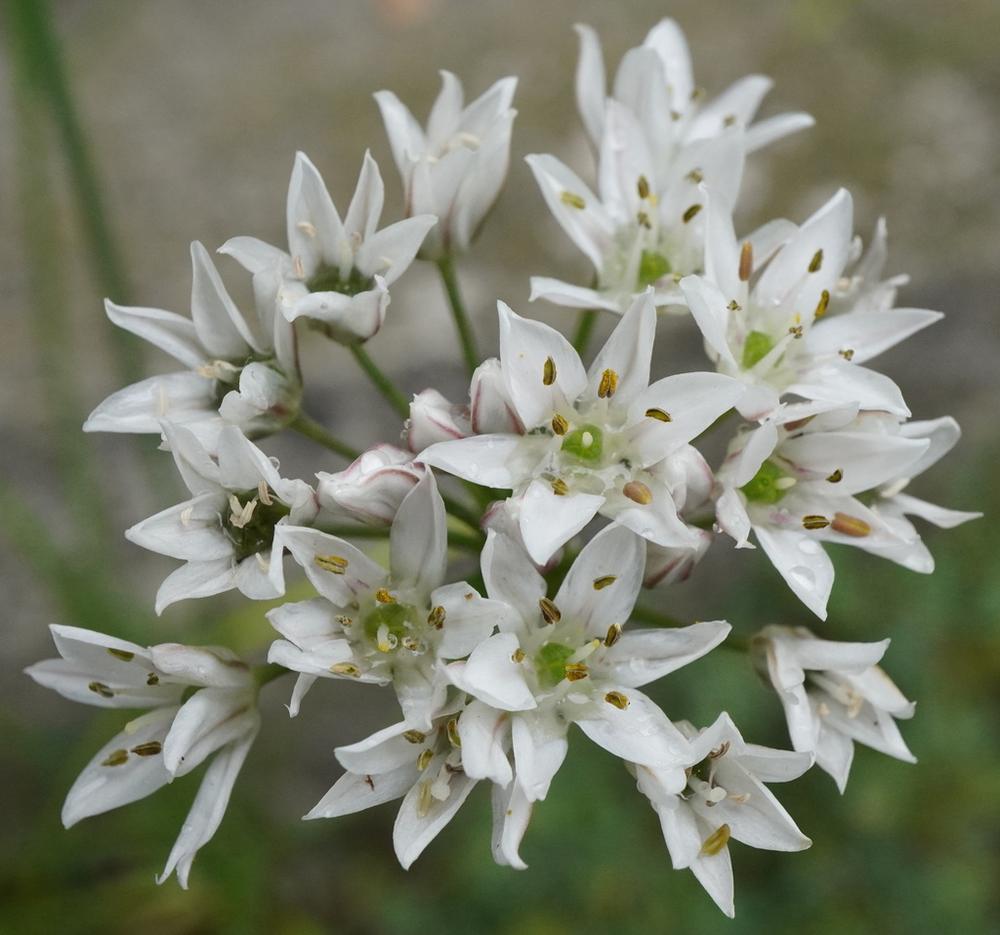 Full grown
Garlic chives in bloom, close-up of white star-shaped flower umbel.
Photo: Patrick Hacker· CC BY
Growing stages
What to look for, and what to do, at each point in its lifeGarlic chives (Allium tuberosum) follow the same arc as common chives but shrug off Georgia summer heat, flower white in late summer, and self-sow aggressively — deadhead unless you want a colony. Common chives go into Luke's beds as a live clump division rather than seed, spend their first year quietly building roots, then settle into a yearly rhythm of spring growth and purple blooms, a hard summer slowdown in Georgia's heat, a fall comeback, and a division every 2 to 3 years once the clump gets crowded.
- 1
Planting the Division
Spring or fall, Zone 8aYou'll see You're setting a small clump of grass-like, hollow, round leaves with a dense mat of roots at the base, rather than starting from seed.
Do Dig a hole about as wide and deep as the root mass, set the division in at the same depth it was growing before, backfill, and water in well.
- 2
First-Year Establishment
First growing season after plantingYou'll see The clump stays relatively small and modest-looking compared to a mature plant, sending up a moderate number of thin leaves without the dense, full look chives get in later years.
Do Resist the urge to harvest heavily this first year; take only light, occasional snips if you need a few leaves.
- 3
Spring Growth and Bloom
March through May, Zone 8aYou'll see The clump sends up a flush of fresh, bright green hollow leaves, followed by round, purple pom-pom flower heads on stiff stalks rising above the foliage.
Do Harvest leaves regularly by snipping near the base, and pick some flowers to eat while leaving a few if you want them to go to seed.
- 4
Post-Bloom Cutback
Late spring to early summer, after flowering finishesYou'll see Flower stalks fade, dry, and turn brown or papery, and the surrounding leaves start to look coarser and less appetizing than the tender spring growth.
Do Cut the entire clump back to about 2 inches above the soil once blooming is done.
- 5
Summer Slowdown
June through August, Zone 8aYou'll see Growth noticeably slows, leaves may look sparse, pale, or partially die back, and the clump can look ragged or semi-dormant during the hottest, most humid stretches.
Do Keep watering during dry spells but don't fertilize heavily or expect much new growth; let the plant coast through the heat.
- 6
Fall Flush
September through November, Zone 8aYou'll see As temperatures cool, the clump fills back in with fresh, tender green leaves, often looking nearly as full and vigorous as the spring flush.
Do Resume regular harvesting, and cut back any remaining ragged summer growth to make room for the new leaves.
- 7
Dividing an Overgrown Clump
Every 2 to 3 years, spring or fallYou'll see The clump has grown dense and crowded, with a hollow, woody, or dead-looking center and leaves that seem thinner or less vigorous than a few years back.
Do Dig up the whole clump and split it into smaller sections, each with its own roots and leaves, then replant.
Techniques — transplant, prune, propagate, divide, seed
Full sun
Even moisture; ease off before harvest.
Bags/cells; 24" round felt bags for the allium station. Bulb onions get their own ground…
Feed early; STOP feeding garlic/onions 3–4 weeks before harvest.
Care
- Cut garlic/onion scapes immediately to redirect energy to bulbs.
- Fall planting: order seed garlic July–Aug; onion transplants order mid-Oct for a mid-Nov ship (Dixondale). Garlic goes in in October, onion transplants in November.
- Buy onion transplants rather than starting from seed — onion seed is viable only 1–2 years and wants 8–10 weeks in flats.
Harvest
Onions when tops flop; garlic when lower leaves brown. Granex/sweet onions that bolt early can be harvested as spring onions.
Watch for
Early bolting in warm spring — harvest as spring onions if it happens.