Cilantro Planned
Calypso / Santo
Planned seed-start for bag 4 (herb bag). Fall-sown cilantro lasts all winter in Georgia instead of bolting in 3 weeks.
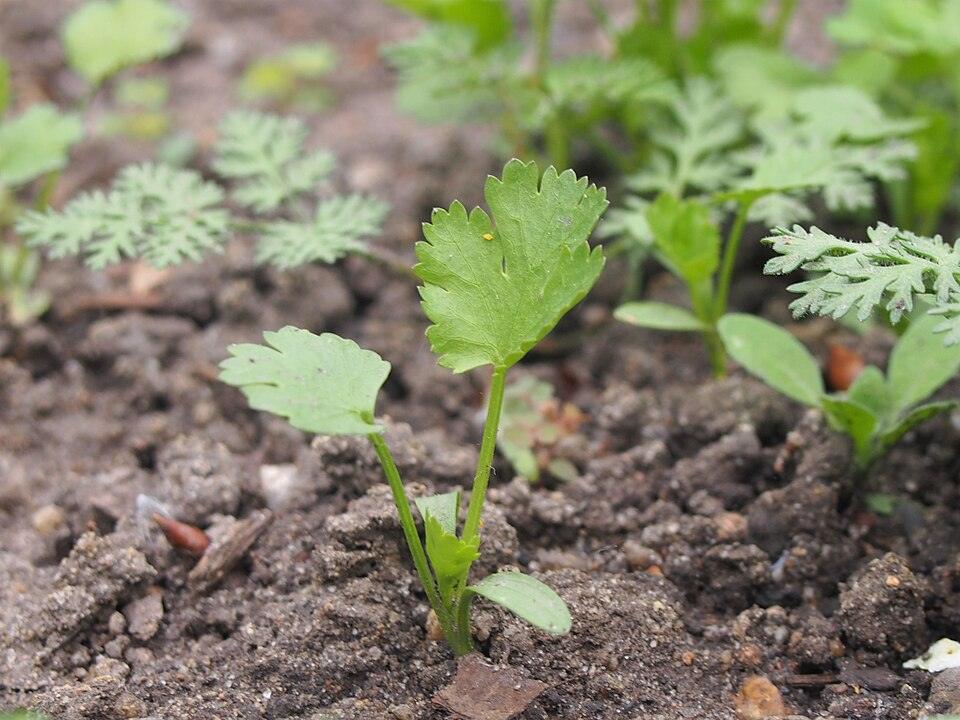 Young
YoungCilantro seedlings with rounded first true leaves emerging in garden soil.
Photo: Agnieszka Kwiecień, Nova· CC BY-SA 4.0
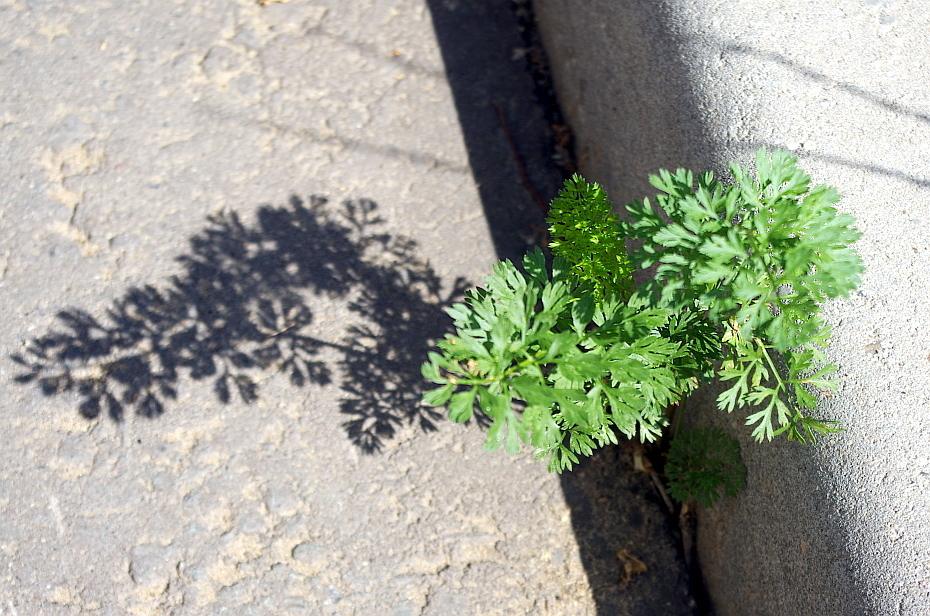 Growing
Leafy cilantro plant with both broad lower leaves and finely divided upper leaves, pre-bolt.
Photo: Георгий Виноградов (Georgy Vinogradov)· CC BY
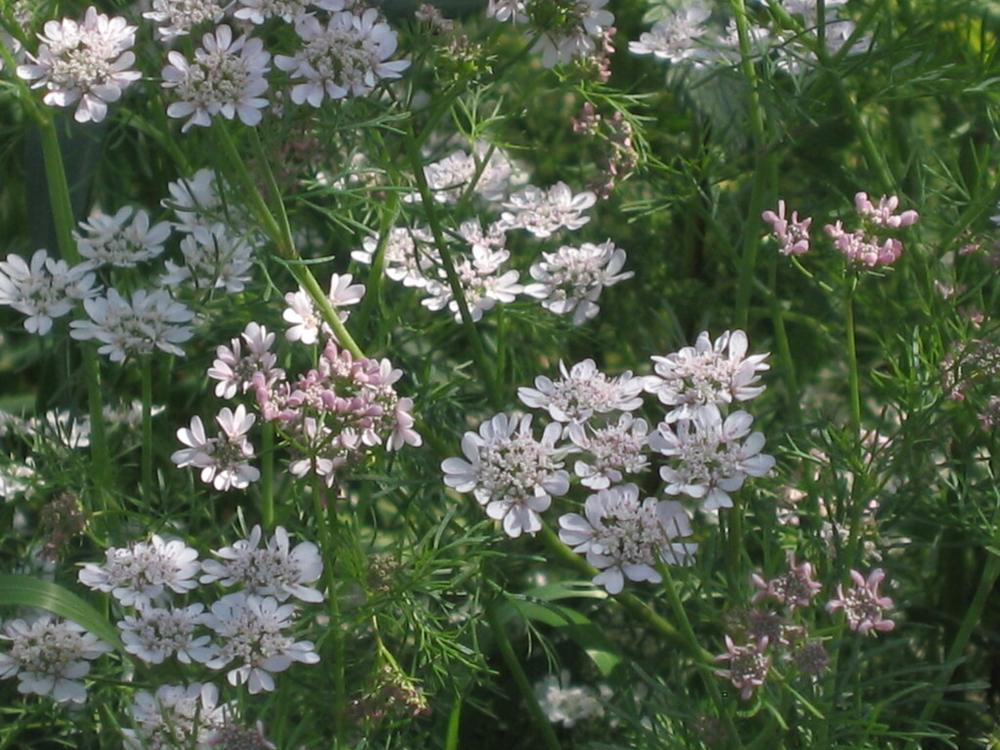 Full grown
Cilantro (coriander) plant in flower with clusters of small white/pink blooms.
Photo: zebedeugalinha· CC BY
Growing stages
What to look for, and what to do, at each point in its lifeCilantro (grown here as Calypso, a slow-bolt hybrid, and/or Santo, a standard open-pollinated type) is fastest and most reliable in Decatur when fall-sown, since fall-sown plants can hold through the whole winter instead of bolting within three weeks the way a spring planting does once heat arrives.
- 1
Sowing
Best sown fall (August-September) for a long winter harvest; a spring sowing (March-April) also works but bolts fastYou'll see Cilantro's round seed husks (each holding two seeds) sit just under the soil surface; nothing shows above ground for the first week or so.
Do Direct sow shallowly, 1/4-1/2 inch deep, since cilantro dislikes root disturbance from transplanting; favor the fall sowing window for the longest harvest.
- 2
Leaf Growth (main harvest window)
4-8 weeks after sowing; from a fall sowing this can extend through the entire winter into early springYou'll see A low rosette of broad, flat, deeply lobed leaves forms before the plant starts to elongate and change leaf shape.
Do Harvest outer leaves or whole young stems regularly, and sow a new round every 2-3 weeks in spring if you want continuous leaf beyond the long fall planting.
- 3
Bolting
Rare over a Georgia winter from a fall sowing; spring-sown cilantro often bolts within 4-6 weeks as heat arrives (May-June)You'll see The plant's growth suddenly shifts upward: a central stem shoots up and thickens, leaves get sparser and more finely divided or feathery than the earlier lush leaves, and a flat-topped cluster of small flower buds appears at the top.
Do Don't fight it as a failure; either pull and replace with a fresh planting for leaf, or leave the plant to flower and go to seed (coriander) on purpose.
- 4
Flowering
2-3 weeks after bolting beginsYou'll see Small clusters of tiny white or pale pink flowers open in flat umbels at the top of each stem.
Do Let flowers stay on the plant if you want coriander seed or want to support pollinators; cut and remove if you're done with that planting and want the bed space.
- 5
Seed Harvest (coriander)
4-6 weeks after flowering, typically May-June from a spring bolt or into summer from a late plantingYou'll see Seed heads turn from green to tan and feel dry and papery, with round tan coriander seeds visible and rattling loosely in the umbel when ripe.
Do Cut whole seed heads once mostly brown and dry, finish drying them indoors in a paper bag, then thresh and store.
Techniques — transplant, prune, propagate, divide, seed
Full sun to part shade
Consistent, even moisture.
Sow shallow — parsley ⅛–¼", dill surface-sown (light-dependent).
Light, steady feeding.
Care
- Parsley is a biennial — harvest the first year; it bolts the second.
- Dill self-sows readily; let some flower for pollinators/swallowtails.
- Succession-sow for a steady supply.
Harvest
Snip outer stems; harvest often to delay bolting.
Watch for
Bolting in heat; swallowtail caterpillars on dill/parsley (usually leave them).