Citrus (greenhouse)
Meyer/Eureka lemon, lime, Calamondin (planned)
Future greenhouse project. Source dwarf grafted stock from Four Winds Growers.
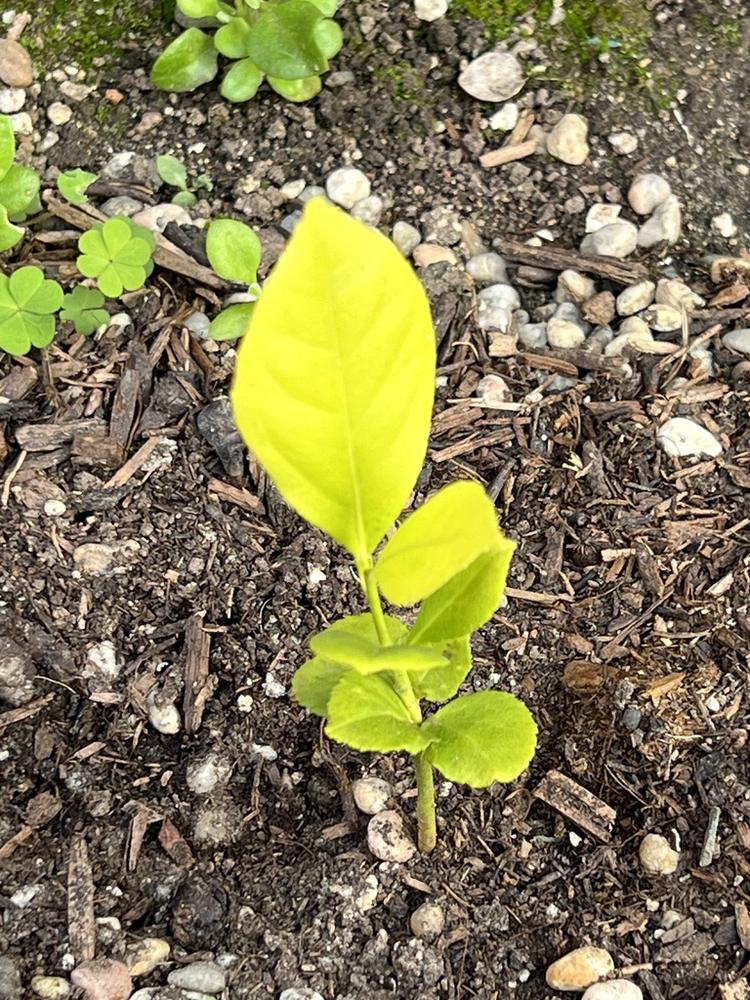 Young
YoungSmall young lemon seedling with a few bright green leaves growing in mulch
Generic lemon (Citrus x limon) seedling, not confirmed Meyer, and in-ground rather than potted; no CC-licensed small potted Meyer lemon photo was found.
Photo: Irana Hawkins· CC BY-NC
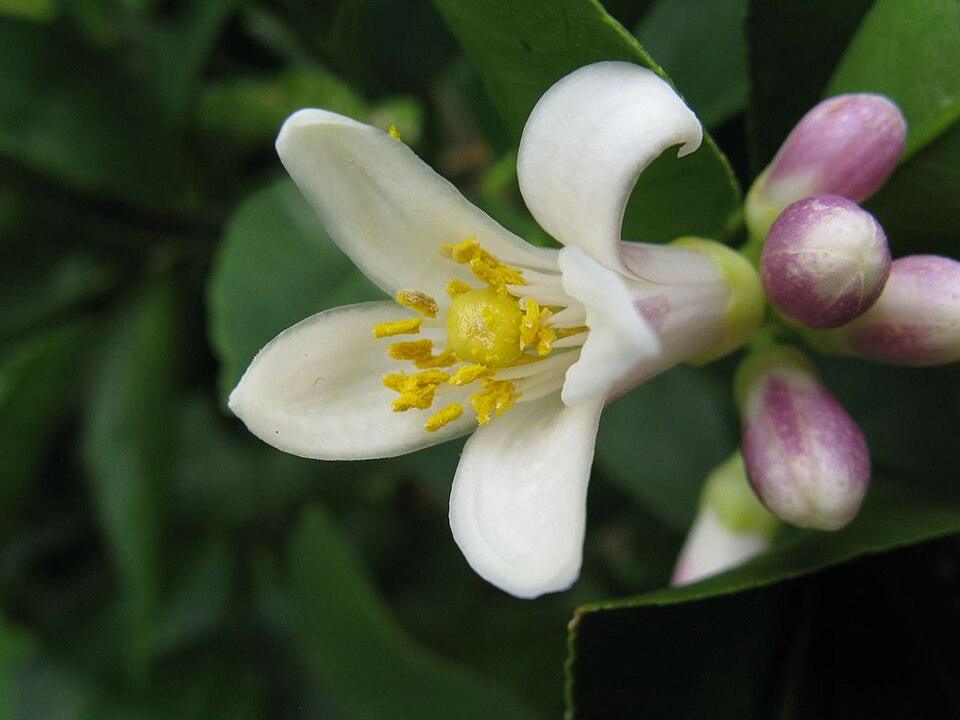 Growing
Close-up of a white Meyer lemon blossom with yellow stamens and purple-tinged buds
Photo: Nadiatalent· CC BY-SA 3.0
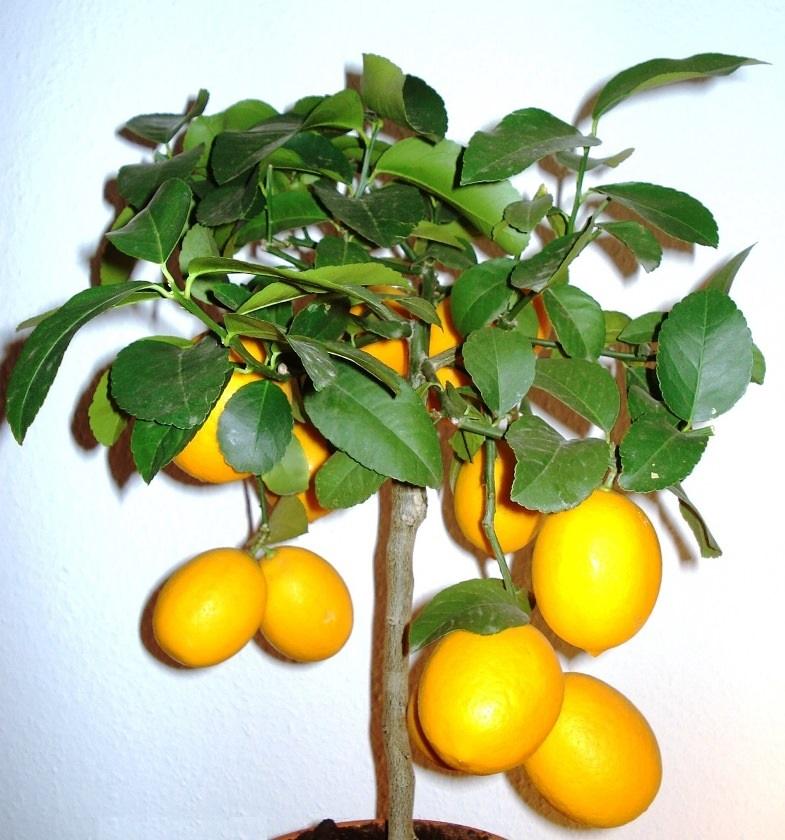 Full grown
Compact potted Meyer lemon tree heavily loaded with ripe yellow-orange fruit
Photo: Genet (Diskussion)· CC BY-SA 3.0 de
Growing stages
What to look for, and what to do, at each point in its lifeThe potted Meyer lemon runs on a two-season cycle in Luke's garden: it lives outdoors in bright sun from spring through fall, then moves into the greenhouse before nights drop into the 40s, since Meyer lemon has no cold-hardiness in Zone 8a. Flowering and fruit set happen mainly in spring and again in late summer, with fruit ripening slowly over months while the tree is pinched and shaped year-round for a fuller, more productive canopy.
- 1
Spring flush
Late March to May, after the tree comes back outsideYou'll see New leaves emerge pale yellow-green and glossy, then darken over 2-3 weeks. Clusters of white, five-petaled flowers with a strong sweet citrus fragrance open along the new growth and older wood, often self-pollinating without help.
Do Move the tree outdoors once nights stay above 45 F, acclimating it over 7-10 days in filtered light before full sun. Let bees and wind pollinate; light tapping of open flowers with a small brush can help indoors-held trees. Resume regular feeding with a citrus fertilizer.
- 2
Fruit set and drop
April through JuneYou'll see Pollinated flowers swell into tiny green marble-sized fruit within 2-3 weeks. Over the following weeks you will see a natural wave of small fruitlets yellow and fall, this is the tree self-thinning to a load it can support, not disease.
Do Do not intervene during natural drop. Keep watering consistent (drought stress increases drop) and hold off on high-nitrogen feeding, which pushes leafy growth at the expense of fruit.
- 3
Summer vegetative growth
June through August, outdoorsYou'll see Vigorous new shoots extend from the branch tips, often 4-8 inches in a flush, sometimes with reddish new leaf tips. A second, lighter bloom may appear on some branches.
Do Pinch the soft tips of vigorous new shoots back by 1-2 inches once they reach 6-8 inches long to encourage side branching. Continue regular deep watering and monthly citrus fertilizer through summer.
- 4
Fruit ripening
September into winter, fruit from spring bloomYou'll see Fruit slowly shifts from green to yellow-green to full yellow over 4-6 months from set. Meyer lemon skin stays thinner and more orange-yellow than a grocery-store lemon, and fruit softens slightly and gives a little under gentle thumb pressure when ripe.
Do Let fruit color fully before picking, they do not ripen further once cut. Begin reducing nitrogen fertilizer as days shorten to prepare the tree for its move indoors.
- 5
Move to greenhouse
Late October, before first frost (~Nov 12)You'll see Nights are consistently dropping into the 40s. The tree still holds a full canopy and possibly ripening fruit.
Do Move the tree into the greenhouse before the first cold night, ideally when outdoor lows are still in the 50s so the transition is gradual. Inspect leaves closely for pests before bringing it into an enclosed space.
- 6
Winter rest
November through February, greenhouseYou'll see Growth slows dramatically or stops. Leaves stay green but the tree pushes little to no new growth. Any remaining fruit continues to slowly ripen.
Do Cut watering back significantly, water only when the top 2 inches of soil are dry, roughly every 10-14 days depending on greenhouse conditions. Stop fertilizing entirely. Keep the tree in the brightest available light and supplement with a grow light for 12-14 hours a day if the greenhouse gets weak winter sun. Aim to keep the greenhouse between 45-65 F.
- 7
Reacclimation outdoors
Late March, after last frost (~Mar 28)You'll see Tree resumes pushing new leaf buds as temperatures and light increase. It may look slightly leggy or thin after winter indoors.
Do Reverse the fall transition: move the tree back outside gradually over 1-2 weeks, starting in shade or filtered light before full sun, and resume regular watering and feeding as new growth appears.
Techniques — transplant, prune, propagate, divide, seed
Bright — full sun / greenhouse
Even moisture; let top inch dry; never waterlogged.
Containers for movability.
Citrus-specific fertilizer through the growing season.
Care
- Not cold-hardy in Zone 8a — greenhouse or move indoors below freezing.
- Buy grafted 2–3 year-old trees for fastest fruiting; source: Four Winds Growers (dwarf grafted).
- Candidates: Meyer/Eureka/Lisbon lemon, Persian lime, Calamondin.
Harvest
Leave fruit on the tree until fully colored and sweet.
Watch for
Cold damage; scale/aphids indoors in winter.