Collards Planned
Georgia Southern / Champion
Planned: transplants in Sept. Sweeter after frost; harvest outer leaves all winter.
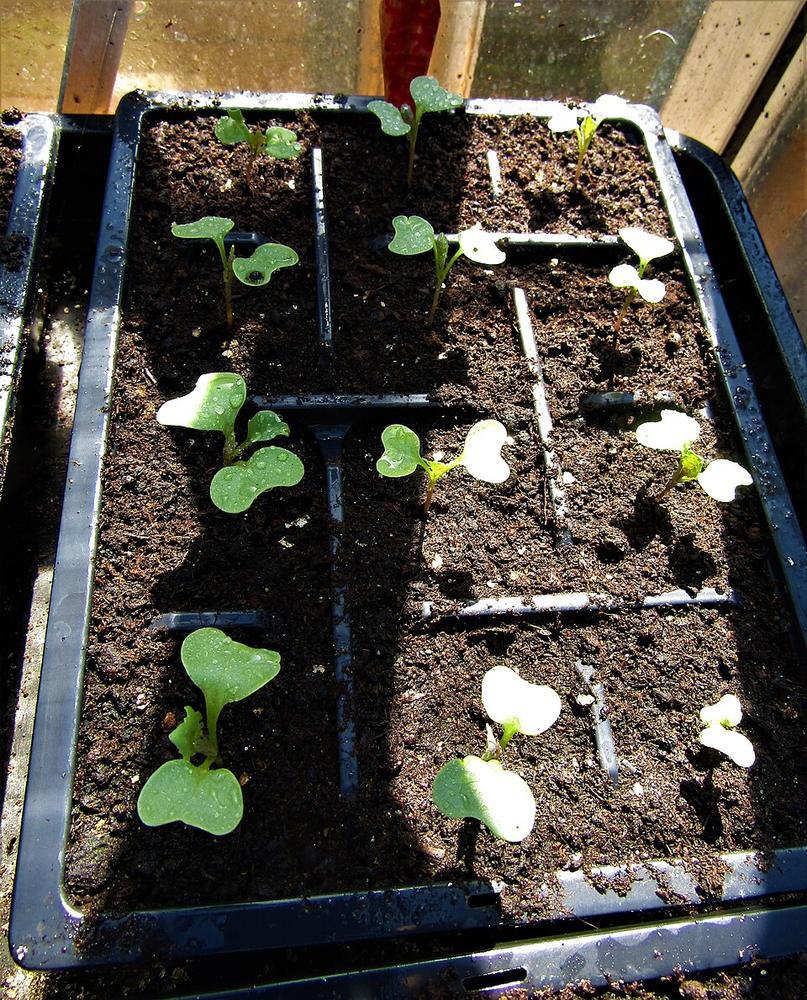 Young
YoungTray of just-emerged Brassica oleracea seedlings (cotyledon stage) in a nursery flat
Generic Brassica oleracea (spring cabbage) seedlings, not collards specifically; at this cotyledon stage collard seedlings are visually indistinguishable. No 'Georgia Southern' cultivar-specific seedling photo found.
Photo: Kolforn (Kolforn) I'd appreciate if you could mail me (Kolforn@gmail.com) if you· CC BY-SA 4.0
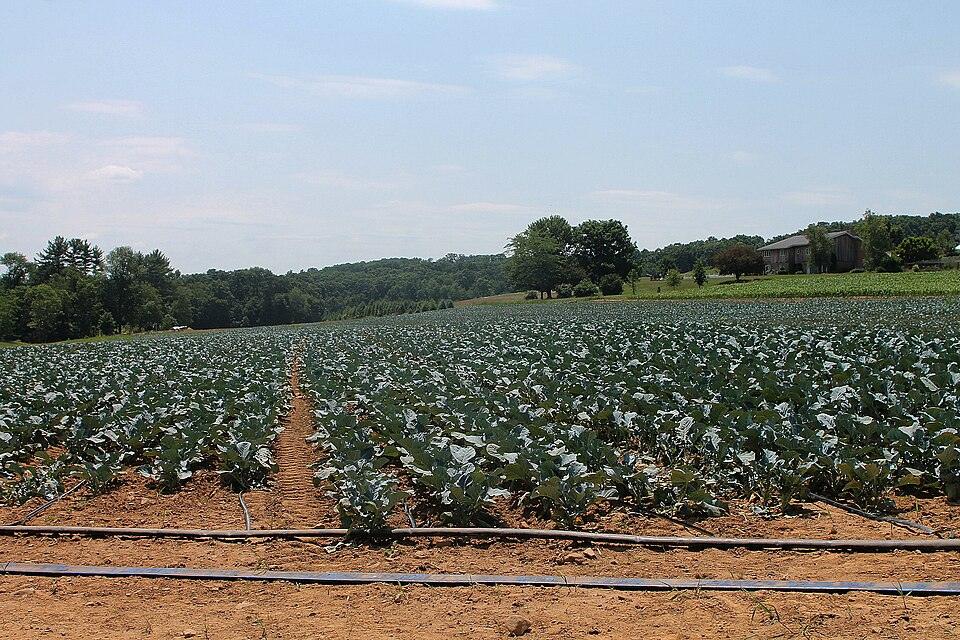 Growing
A commercial collard green field with established rows of plants, pre-harvest
Generic collard greens field; cultivar not specified.
Photo: Jakec· CC BY-SA 3.0
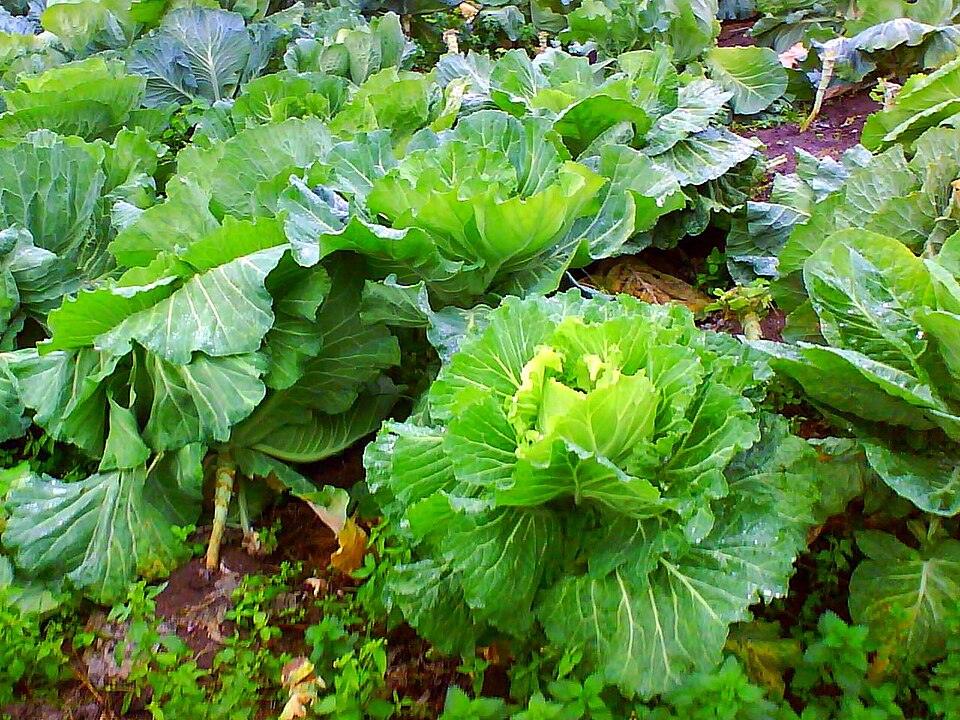 Full grown
Full-grown collard green plants with large broad leaves at harvest size
Generic collard greens (Galicia, Spain); cultivar not specified, but visually typical of Georgia Southern-type collards.
Photo: el Buho nº30· CC BY-SA 2.0
Growing stages
What to look for, and what to do, at each point in its lifeCollards ('Georgia Southern' and 'Champion' grown together) are transplanted in September for Decatur's Zone 8a fall-into-winter garden, sweetening after frost and holding through most of the cold season on outer-leaf harvests.
- 1
Sowing
Late July to mid-August, 4-6 weeks before the September transplant dateYou'll see Seeds are round and pea-sized, dark brown to black, nearly identical between the two varieties.
Do Start seed in cell trays under lights or in a shaded spot, keeping soil surface damp until sprouting.
- 2
Seedling
Days 5-28 after sowingYou'll see Rounded seed leaves appear first, then broad, smooth, blue-green true leaves begin to show, with Champion generally staying a bit more compact than Georgia Southern even at this stage.
Do Keep seedlings in bright light to prevent legginess, and pot up if roots fill the cell before transplanting.
- 3
Transplant
4-6 weeks after starting indoors, in September, when seedlings have 4-6 true leavesYou'll see Transplant-ready seedlings are stocky, 3-4 inches tall, with broad blue-green leaves and a root ball that holds together when lifted.
Do Harden off over 5-7 days, then set plants an inch deeper than they sat in the tray, spaced 18-24 inches apart for the larger Georgia Southern or 12-18 inches for the more compact Champion.
- 4
Cut-and-come-again harvest
Starting 55-75 days after transplant, continuing all winterYou'll see Broad, smooth, blue-green leaves 10-14 inches across form an open, non-heading rosette on an increasingly tall central stem.
Do Harvest the oldest outer leaves from the bottom of the plant, working up, and leave the top crown of young leaves untouched.
- 5
Bolting
Late winter into spring, once daylength lengthens, if plants are carried over that longYou'll see A central stalk elongates further and clusters of small yellow flowers appear at the top of the plant.
Do Keep harvesting leaves right up until flowering starts, then pull the plant or let a healthy one flower for pollinators and seed.
- 6
Seed saving
6-10 weeks after bolting, once seed pods dry from green to brownYou'll see Flower stalks turn from yellow blooms to slim, brown, brittle pods that rattle with seed when dry.
Do Cut whole seed stalks into a paper bag once pods are dry and brittle, then crush and winnow to separate seed from chaff.
Techniques — transplant, prune, propagate, divide, seed
Full sun to part shade; cool weather.
Consistent moisture.
Hydro pods / tight in-ground spacing.
Steady light feeding.
Care
- Cool-season crops — spring and fall windows; they bolt in summer heat.
- Wasabina mustard + tatsoi run permanently indoors in the 2nd hydro unit.
- Giant Red + Southern Green mustard run outdoors in the wooden structure.
Harvest
Cut-and-come-again; harvest outer leaves.
Watch for
Bolting in heat; aphids/flea beetles.