Sargent Crabapple ×2
Malus sargentii
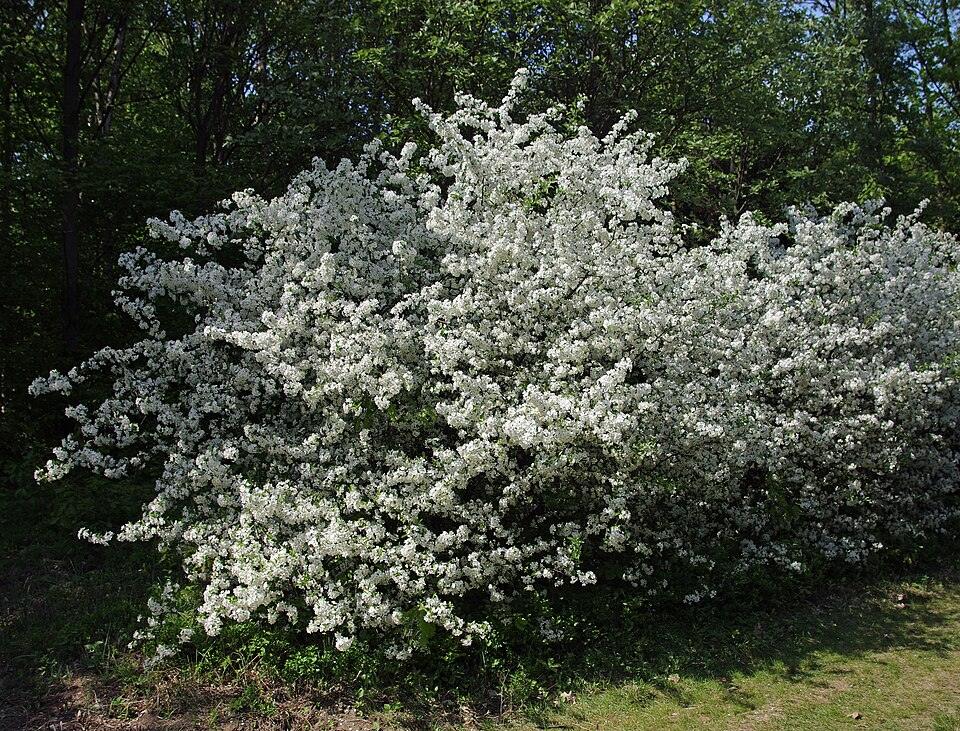 Growing
A mature Sargent crabapple shrub/small tree covered in masses of white spring blossoms along a woodland edge.
Species-exact Malus sargentii; used for blossoming stage since the plant's typical mature size is a wide low shrub rather than a tall single-trunk tree.
Photo: Chrumps· CC BY-SA 4.0
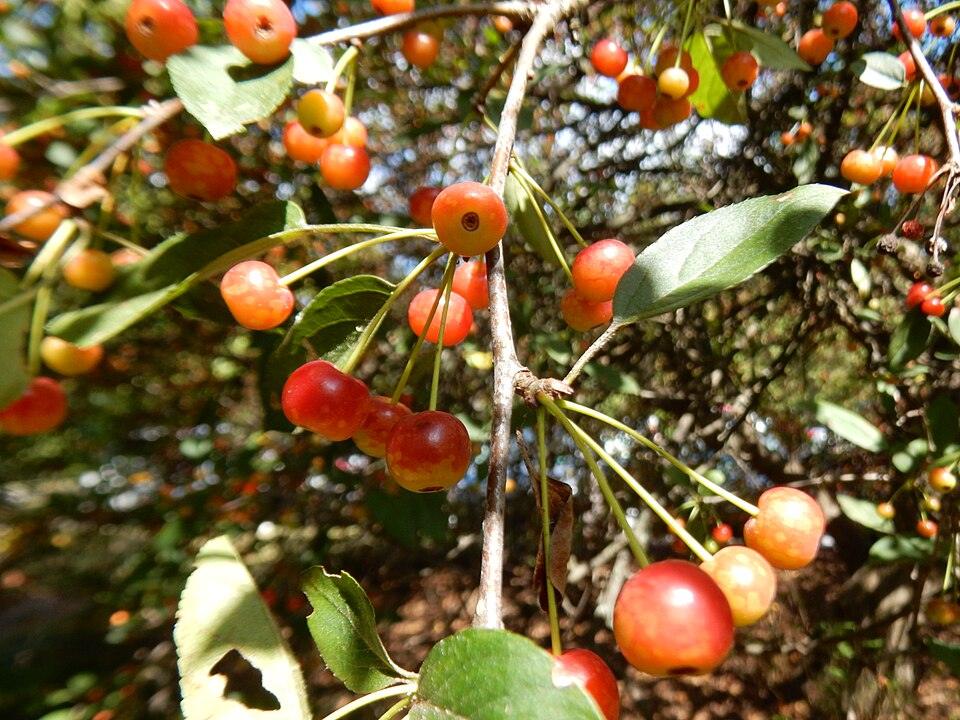 Full grown
Close view of a Sargent crabapple branch loaded with small red-orange ripening fruit among green leaves, Morris Arboretum.
Species-exact Malus sargentii.
Photo: Shuvaev· CC BY 4.0
Growing stages
What to look for, and what to do, at each point in its lifeYour two Sargent crabapples stay naturally compact and wide-spreading - 6-10 feet tall but 9-16 feet wide, a dense, mounded, horizontally-branched shrub-form tree - with fragrant white flowers opening from pink buds in April-May, followed by small pea-sized red fruit that often persists into winter for the birds, needing only light dormant-season pruning to keep its natural mounded shape.
- 1
Establishment Years
First 2-3 growing seasons after plantingYou'll see Canopy growth is modest compared to the eventual wide, mounded mature shape.
Do Water deeply once or twice a week, maintain a 2-3 inch mulch ring, and avoid heavy pruning while roots establish.
- 2
Dormant Structure Check
December through February, while leaflessYou'll see The dense, mounded, horizontally-branched framework is fully visible without leaves.
Do Do only light corrective pruning - remove dead, crossing, or rubbing branches - preserving the naturally wide, mounded form rather than trying to force an upright shape.
- 3
Bud Break and Bloom
April into MayYou'll see Red or pink flower buds open to fragrant white blooms about 0.75-1 inch across, loaded with pollinators.
Do Enjoy the bloom; avoid pruning now since flower buds formed the previous summer.
- 4
Fruit Set
May into JuneYou'll see Small green, pea-sized fruit begins forming where flowers were pollinated.
Do No thinning needed; let all the fruit develop naturally.
- 5
Summer Growth
June through AugustYou'll see The dense, horizontally-branched canopy fills in fully; any vigorous, upright shoots on branches or from the base are watersprouts or suckers.
Do Remove watersprouts and root suckers as you notice them.
- 6
Fruit Ripening and Fall Color
September into NovemberYou'll see The small red, 1/4 inch fruit ripens and foliage begins to color for fall.
Do Leave the fruit in place; it is a genuine wildlife food source and adds fall and winter interest.
- 7
Winter Fruit Persistence
December through FebruaryYou'll see Bright red fruit often continues hanging on bare branches well into winter.
Do Leave it for the birds; this also returns to the dormant structure check stage for any light corrective pruning.
Techniques — transplant, prune, propagate, divide, seed
Full sun to part shade by species
Deep weekly water through the first 1–2 establishment years.
Plant for mature size and clearance.
Minimal once established.
Care
- Water deeply while establishing; mulch the root zone (keep mulch off the trunk).
- See the plant's note for species-specific hazards (e.g. Washington Hawthorn thorns).
Harvest
Ornamental — grown for form, bloom, and shade.
Watch for
Establishment drought stress; site thorny species away from paths and the pool.