Crape Myrtle ×2
Lagerstroemia
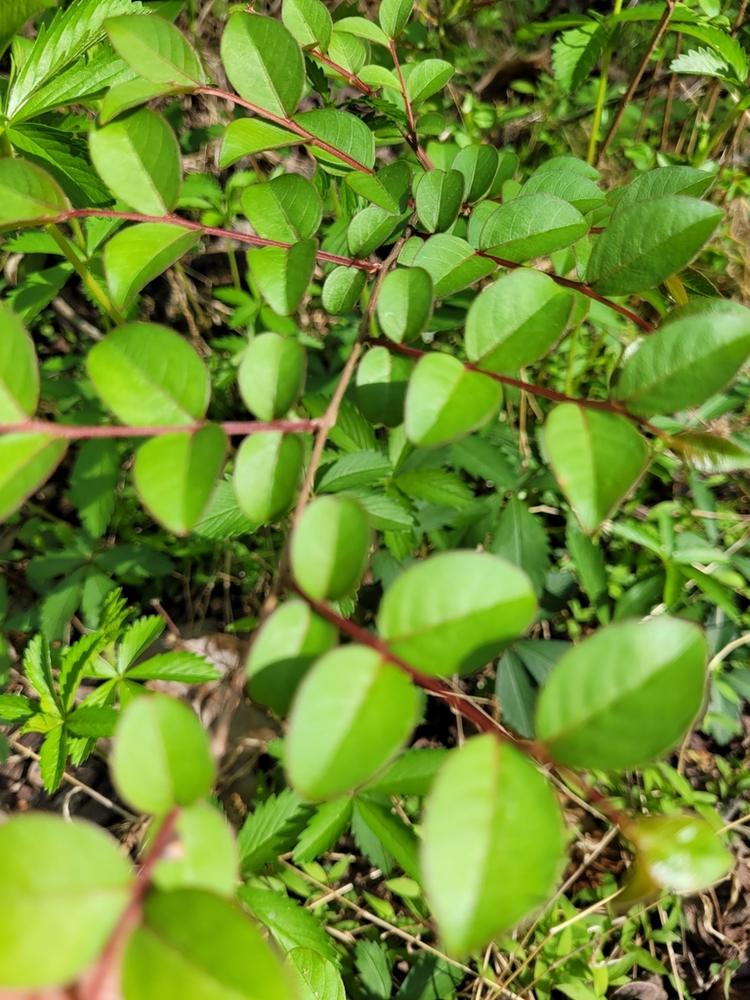 Young
YoungFresh green spring foliage on a small crape myrtle shrub, reddish new stems, no flowers yet (mid-April).
Species-level Lagerstroemia indica.
Photo: Robin Whitfield· CC BY-NC
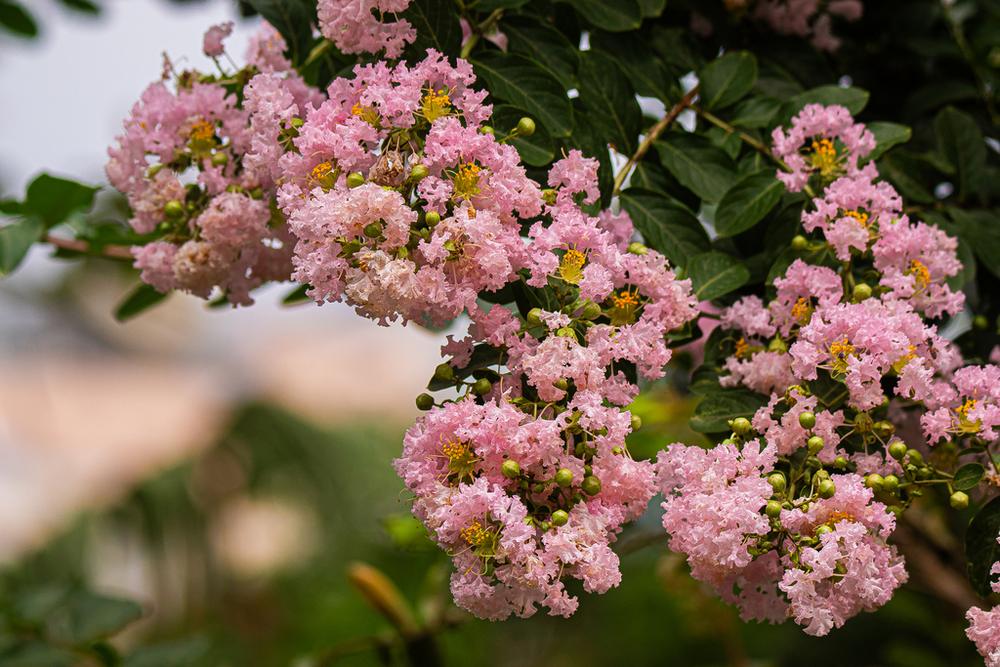 Growing
Branch of a young crape myrtle tree with glossy leaves and clusters of pink crinkled flowers just opening.
Species-level Lagerstroemia indica.
Photo: Shubhabrata Sarker· CC BY-NC
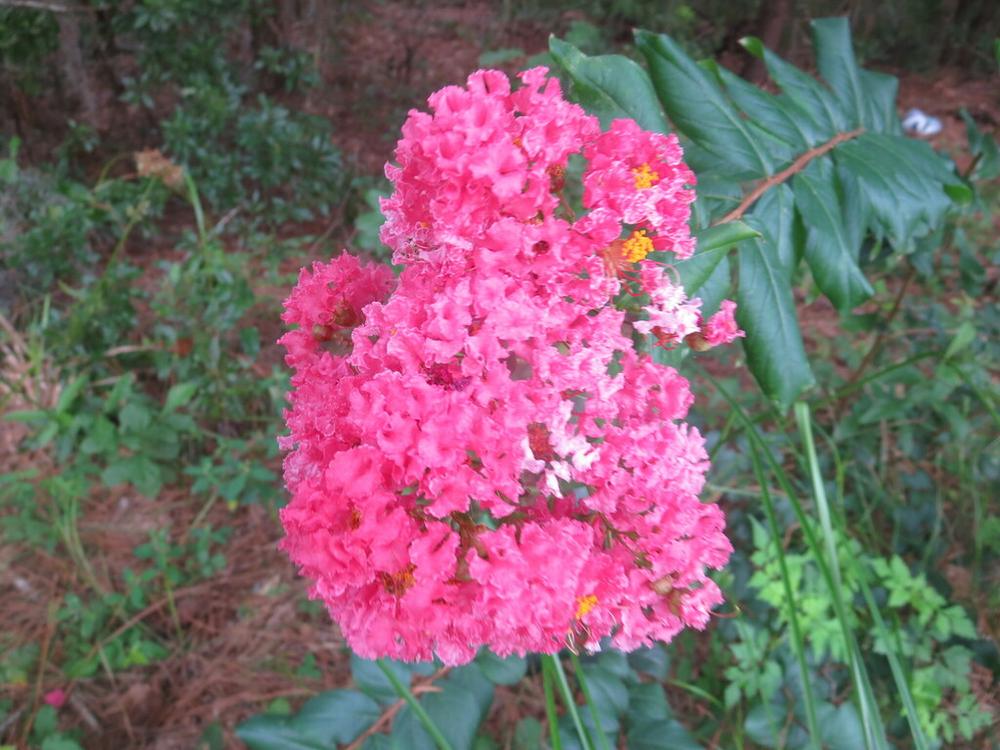 Full grown
Dense, heart-shaped cluster of hot-pink crape myrtle blooms in full flower, a classic 'wall of color' summer display.
Species-level Lagerstroemia indica.
Photo: no rights reserved· CC0
Growing stages
What to look for, and what to do, at each point in its lifeYour two crape myrtles bloom on new growth in showy, crinkled clusters from June through September, need only light late-winter pruning of dead or crossing wood and regular sucker removal (this species suckers heavily, especially after hard pruning), and should never be topped - the widespread but harmful practice known as crape murder - since a lightly pruned tree blooms just as reliably with a far better natural vase shape.
- 1
Establishment Years
First 2-3 growing seasons after plantingYou'll see Canopy growth is modest as the tree establishes; watch for early base suckers even at this stage.
Do Water deeply once or twice a week, maintain a mulch ring, and remove any base suckers as they appear.
- 2
Winter Dormancy and Light Pruning
December through FebruaryYou'll see Fully leafless, revealing smooth, mottled bark and the branch structure, along with any dried seed capsules from last summer's flowers at branch tips.
Do Remove only dead, damaged, or crossing branches and any base suckers. Never cut all main stems down to a uniform height.
- 3
Spring Leaf-Out
March into AprilYou'll see Fresh green foliage emerges, often with reddish new stems.
Do No special action needed; continue watching for base suckers.
- 4
Summer Bud and Bloom
June through SeptemberYou'll see Showy clusters of crinkled, papery flowers cover the tips of the current season's new growth.
Do Enjoy the long bloom; no pruning needed now.
- 5
Deadheading for Rebloom
June through September, after each flush fadesYou'll see Spent flower clusters brown and dry at the branch tips as a flush finishes.
Do Lightly deadhead spent clusters by hand if desired, to encourage a possible second flush.
- 6
Sucker Cleanup
May through September, ongoingYou'll see Vigorous upright shoots emerge from the base of the trunk, often more heavily than on other trees in the yard.
Do Remove base suckers regularly through the growing season.
- 7
Fall Color and Seed Capsules
October into NovemberYou'll see Foliage turns orange, red, or yellow depending on the variety, with round seed capsules persisting from summer's flowers at the branch tips.
Do Enjoy the fall color; only remove seed capsules if you dislike their winter look, using light hand-pruning just above a healthy bud.
Techniques — transplant, prune, propagate, divide, seed
Full sun to part shade by species
Deep weekly water through the first 1–2 establishment years.
Plant for mature size and clearance.
Minimal once established.
Care
- Water deeply while establishing; mulch the root zone (keep mulch off the trunk).
- See the plant's note for species-specific hazards (e.g. Washington Hawthorn thorns).
Harvest
Ornamental — grown for form, bloom, and shade.
Watch for
Establishment drought stress; site thorny species away from paths and the pool.