White Flowering Dogwood ×3
Cornus florida
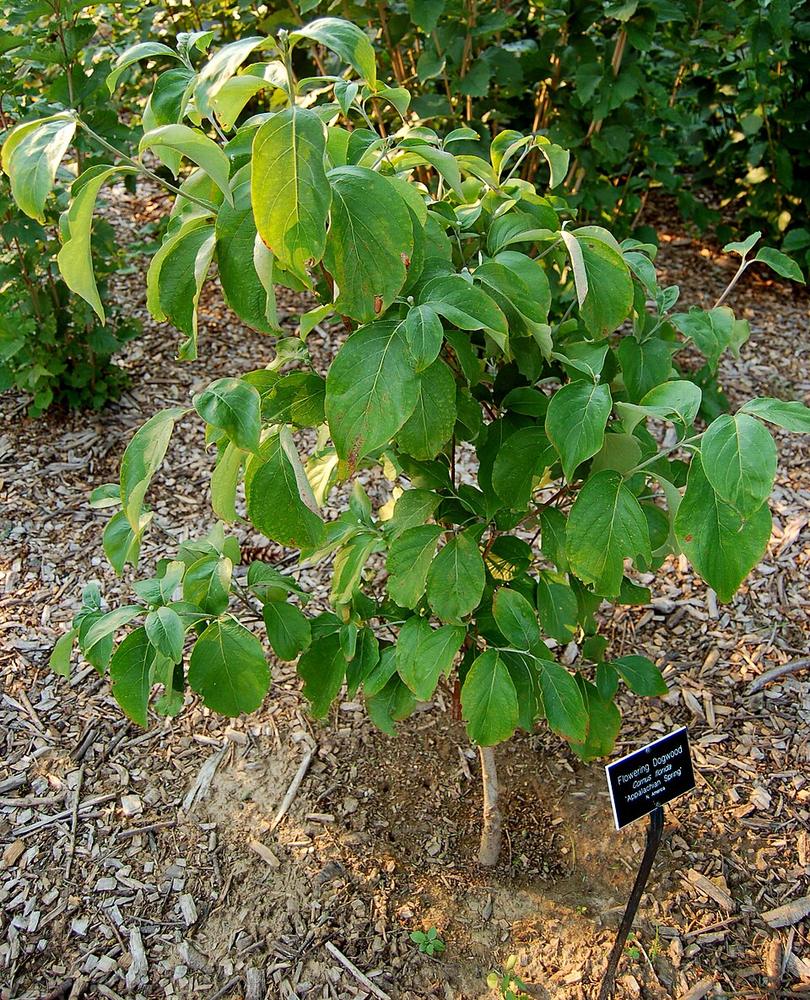 Young
YoungSmall labeled flowering dogwood sapling ('Appalachian Spring') with a full head of green leaves and no flowers, in a garden bed.
Photo is of the 'Appalachian Spring' cultivar (disease-resistant selection), shown for general sapling form; not cultivar-matched to any specific tree.
Photo: Photo (c)2007 Derek Ramsey (Ram-Man)· CC BY-SA 2.5
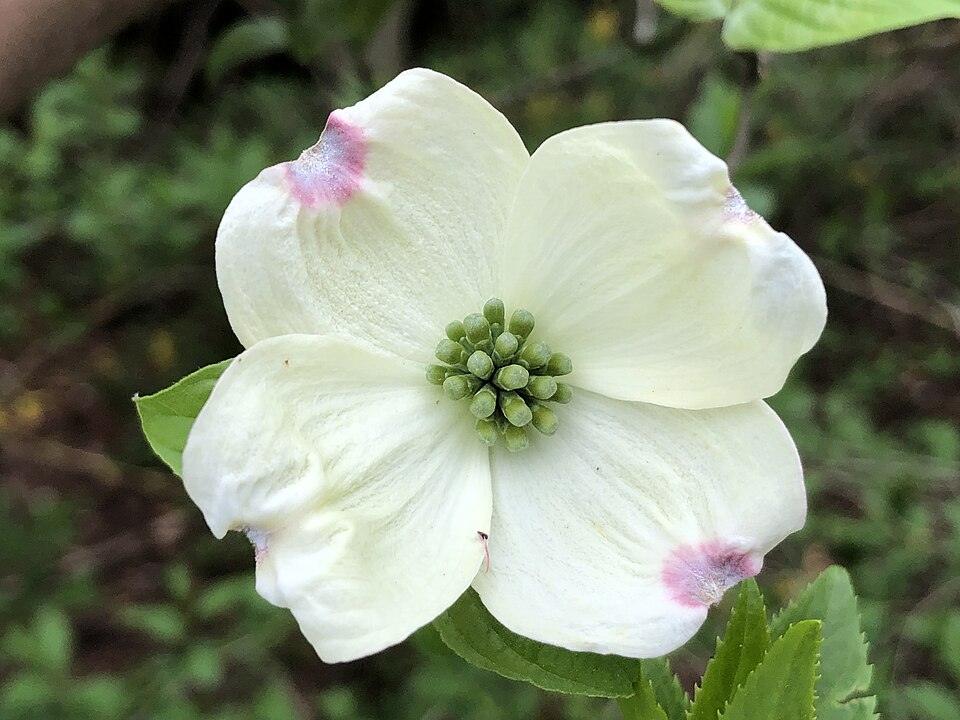 Growing
Close-up of a single white four-bracted flower blooming on a young, self-sown flowering dogwood sapling.
Species-level Cornus florida.
Photo: Famartin· CC BY-SA 4.0
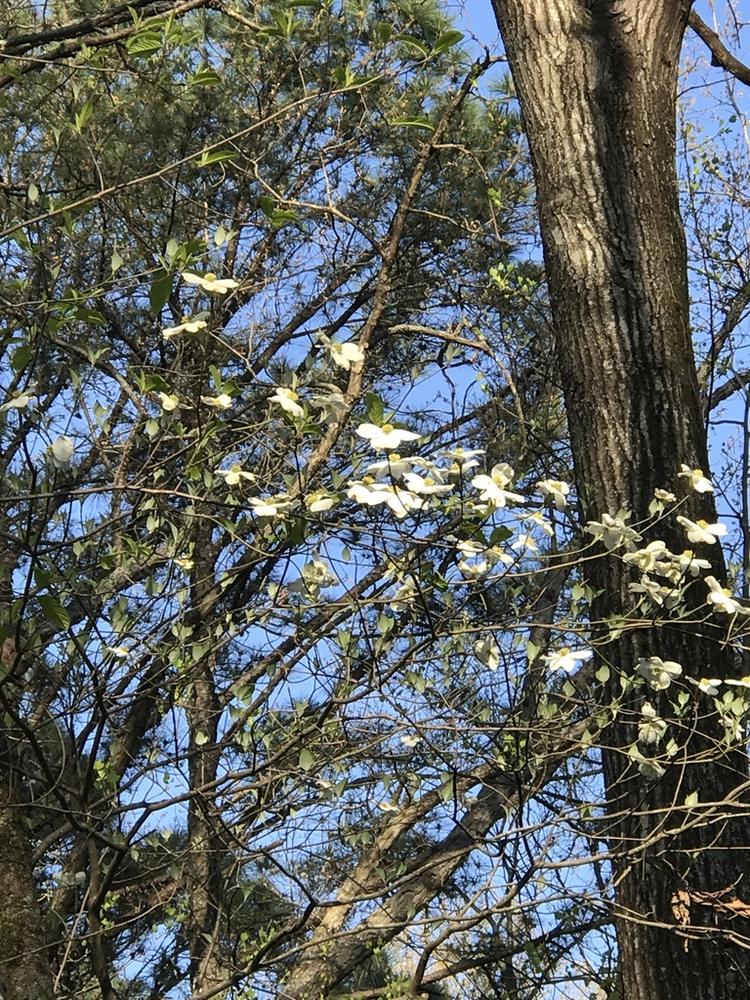 Full grown
Full flowering dogwood tree canopy covered in white blossoms against a blue sky, growing among pines.
Species-level Cornus florida.
Photo: qdj4573· CC BY-NC
Growing stages
What to look for, and what to do, at each point in its lifeYour three white flowering dogwoods open large white four-bracted blooms in March-April before leafing out fully, then are best pruned right after that bloom rather than in the dead of winter since this species is slower to callus wounds in cold weather, with fall bringing deep red-purple foliage and bright red berries, and summer care focused on airflow and prompt cleanup to keep anthracnose in check in Georgia's humidity.
- 1
Establishment Years
First 2-3 growing seasons after plantingYou'll see Canopy growth is modest as the tree, which can reach 15-30 feet, establishes its root system.
Do Water deeply once or twice a week, maintain a 2-3 inch mulch ring, and avoid heavy pruning while establishing.
- 2
Dormant Structure (Light Only)
December through FebruaryYou'll see With leaves off, the trunk and branch framework, including the blocky, alligator-like bark on older trunks, is fully visible.
Do If any pruning is genuinely needed now, keep it light and do it on a dry day; otherwise wait for the post-bloom window below.
- 3
Bud Break and Bloom
March into AprilYou'll see Large white, four-bracted flowers open, often before the leaves are fully out.
Do Enjoy the bloom; this is also the best time to plan any pruning for right after it finishes.
- 4
Post-Bloom Structural Pruning
April into May, right after floweringYou'll see Fresh leaves are expanding, making it easy to see where growth is headed and to compare branches against the rest of the canopy.
Do Make any structural cuts now - thin crowded areas for airflow, remove crossing branches - rather than in winter.
- 5
Summer Growth
May through AugustYou'll see Leaves fill out fully; watch for tan leaf spots with purple edges, which signal anthracnose in humid weather.
Do Maintain airflow through the canopy and remove any infected leaves or cankers promptly; also remove watersprouts and suckers as noticed.
- 6
Fall Color and Berries
October into NovemberYou'll see Foliage turns deep red-purple and bright red berries appear.
Do Enjoy the display and leave the berries for birds.
- 7
Winter Dormancy
December through FebruaryYou'll see Fully leafless, revealing the blocky, alligator-like bark on older trunks that is part of this species' winter interest.
Do Return to the dormant structure stage above - keep any pruning light and save larger cuts for after spring bloom.
Techniques — transplant, prune, propagate, divide, seed
Full sun to part shade by species
Deep weekly water through the first 1–2 establishment years.
Plant for mature size and clearance.
Minimal once established.
Care
- Water deeply while establishing; mulch the root zone (keep mulch off the trunk).
- See the plant's note for species-specific hazards (e.g. Washington Hawthorn thorns).
Harvest
Ornamental — grown for form, bloom, and shade.
Watch for
Establishment drought stress; site thorny species away from paths and the pool.