Washington Hawthorn ×2
Crataegus phaenopyrum
⚠ Thorns — a real hazard. Keep away from the pool area and garden paths.
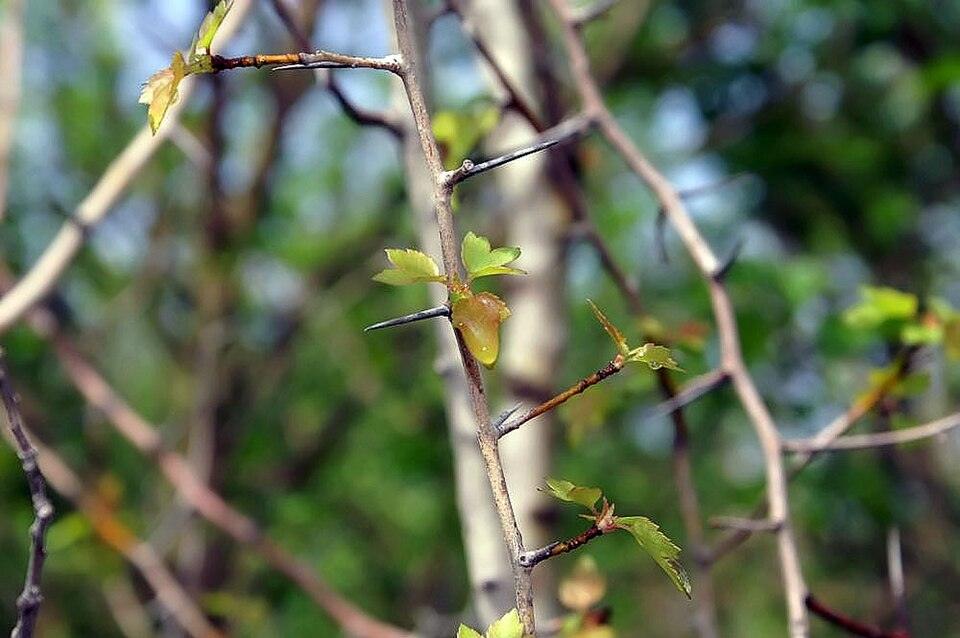 Young
YoungClose-up of Washington hawthorn twigs at spring bud break, tiny fresh leaves unfurling next to sharp thorns on bare bark.
Photo: Photo by David J. Stang· CC BY-SA 4.0
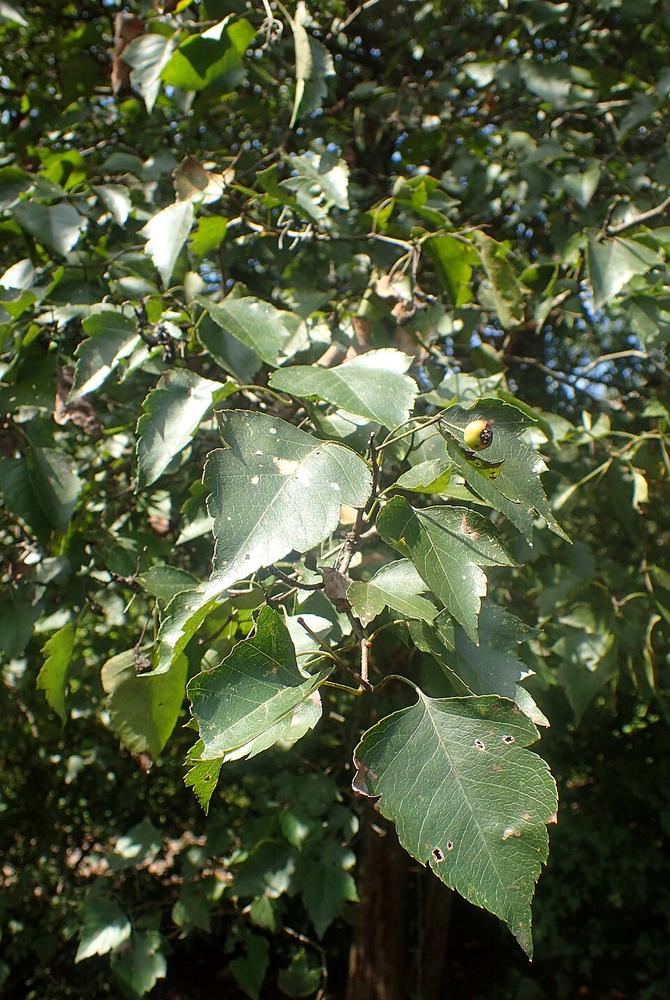 Growing
Leafy young hawthorn branch with glossy toothed leaves and a single small green (unripe) fruit forming, before autumn color and full fruit set.
Photo: Krzysztof Ziarnek, Kenraiz· CC BY-SA 4.0
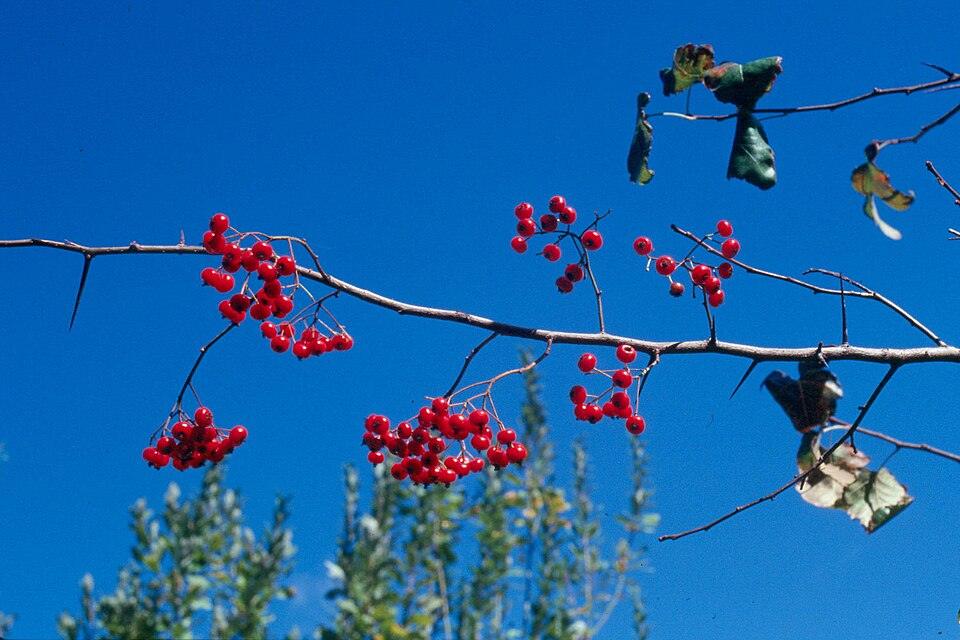 Full grown
Bare hawthorn branch loaded with clusters of bright red fruit against a blue autumn sky, thorns visible along the stem.
Photo: Cillas· CC BY-SA 4.0
Growing stages
What to look for, and what to do, at each point in its lifeYour two Washington hawthorns are dense, round-headed trees to 25-30 feet with slender 1-3 inch thorns, the last hawthorn to flower with dense clusters of creamy-white blooms in late spring followed by small fruit that ripens to bright red and often persists into winter; because the thorns are a real hazard, both the trees' placement and any pruning around them need extra care and heavy gloves.
- 1
Establishment Years
First 2-3 growing seasons after plantingYou'll see Young reddish-brown to gray-brown twigs already carry sharp 1-3 inch thorns even while the tree is small.
Do Water deeply once or twice a week, maintain a mulch ring, and keep the area around the young tree's base clear of foot traffic given the thorns.
- 2
Dormant Structure and Thorn-Aware Pruning
December through February, while leaflessYou'll see The dense, rounded crown and thorny branch structure are fully visible without leaves.
Do Remove only dead, damaged, or crossing branches. Always wear heavy gloves and protective clothing when working near this tree.
- 3
Bud Break
March into AprilYou'll see Fresh leaves unfurl next to the sharp thorns on bare bark.
Do No action needed; avoid working near the tree without gloves even at this stage, since the thorns are present on the previous year's growth.
- 4
Late Bloom
May into JuneYou'll see Dense clusters of creamy-white flowers cover the tree - this is the last hawthorn species to flower each spring.
Do Enjoy the bloom; avoid pruning now.
- 5
Fruit Set
June into AugustYou'll see Small green fruit (haws) form among the glossy, toothed leaves.
Do No action needed; let the fruit develop.
- 6
Fall Color and Fruit Ripening
September into NovemberYou'll see Foliage shows orange-red tones and the small haws ripen to bright red or orange.
Do Enjoy the display; no pruning needed.
- 7
Winter Fruit Persistence
December through FebruaryYou'll see Clusters of red fruit often continue hanging on the bare, thorny branches.
Do Leave the fruit for birds; this also returns to the dormant structure check for any needed light, protected pruning.
Techniques — transplant, prune, propagate, divide, seed
Full sun to part shade by species
Deep weekly water through the first 1–2 establishment years.
Plant for mature size and clearance.
Minimal once established.
Care
- Water deeply while establishing; mulch the root zone (keep mulch off the trunk).
- See the plant's note for species-specific hazards (e.g. Washington Hawthorn thorns).
Harvest
Ornamental — grown for form, bloom, and shade.
Watch for
Establishment drought stress; site thorny species away from paths and the pool.