Juncus (Soft Rush)
Juncus effusus
Moisture-tolerant — placed near downspouts. Shear flower stalks Jul–Aug to limit self-sowing; hard cutback late winter.
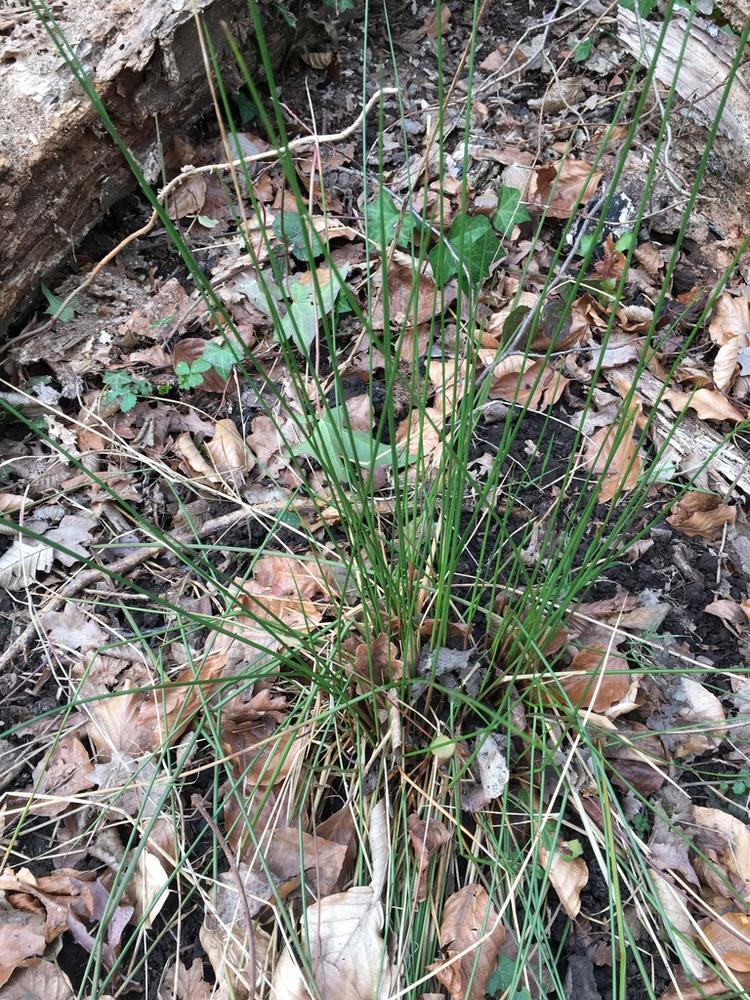 Young
YoungFresh young Juncus effusus shoots emerging from bare soil and leaf litter in early spring (early March)
Photo: bont· CC BY-NC
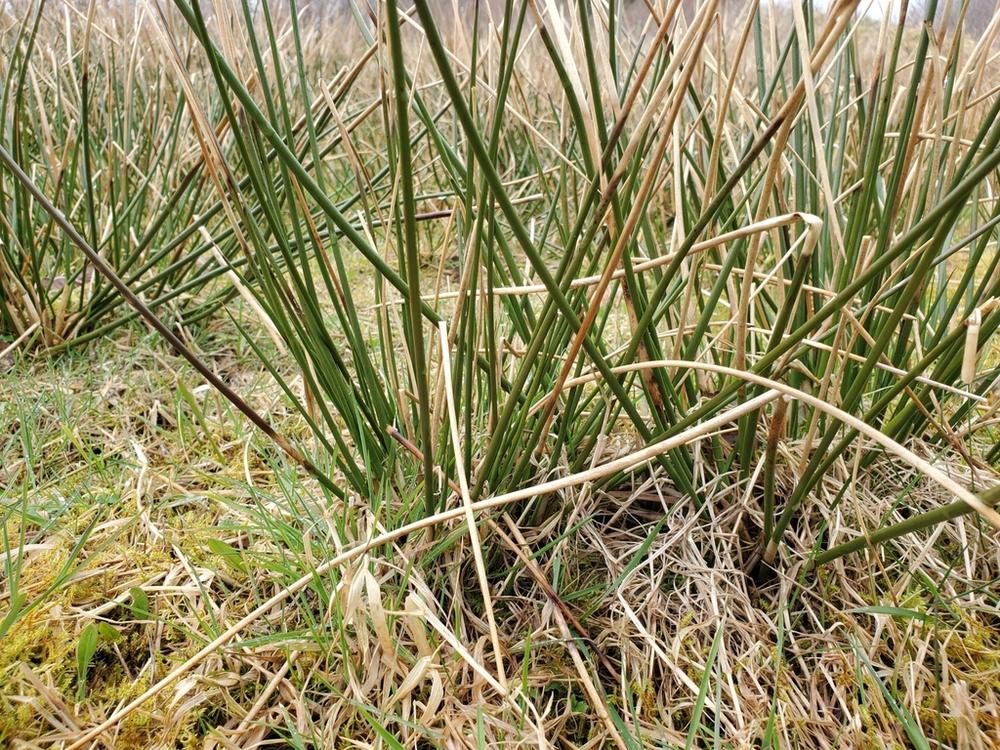 Growing
Established clump of green Juncus effusus stems in mid-spring (early April), before flower clusters appear
Photo: no rights reserved· CC0
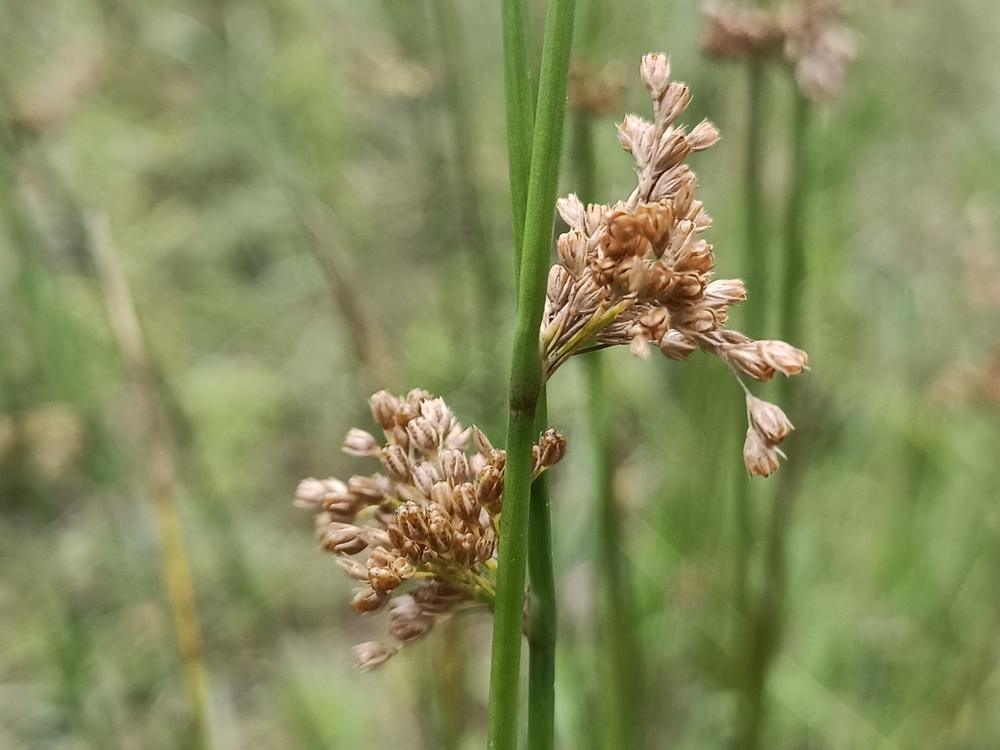 Full grown
Mature Juncus effusus clump with small brown-and-tan flower clusters emerging partway up the round green stems (late August)
Photo: ingester· CC BY-NC
Growing stages
What to look for, and what to do, at each point in its lifeJuncus (soft rush) is a moisture-loving rush with round, leafless, hollow-looking green stems that holds its texture through most of the year, gets a hard cutback to 2-3 inches in late winter before new growth starts, then produces small brown-tan flower clusters partway up the stems in July-August that are best sheared off promptly to keep it from self-sowing around its spot near the downspouts.
- 1
Winter Cutback
Late February, before new growth startsYou'll see Stems from the previous year may look bronzed, ragged, or frost-nipped but stay largely present through Decatur's mild winter.
Do Cut the whole clump back hard to 2-3 inches with hedge shears or pruners.
- 2
Spring New Growth
March into AprilYou'll see Fresh, rounded green stems push up from the crown, noticeably greener than any old growth left standing.
Do Comb through by hand to remove any remaining dead blades if the late-winter cutback was skipped or incomplete.
- 3
Summer Fill
April into JuneYou'll see The clump fills out to its full textural, upright form near the downspout planting.
Do No special watering is usually needed given its placement - this plant tolerates and even prefers consistently moist soil.
- 4
Flowering
July into AugustYou'll see Small brown-tan flower clusters emerge partway up the round green stems, not at the tips.
Do Watch for these clusters; they are the point at which self-sowing can start.
- 5
Seed Control Shearing
July into August, once flower clusters appearYou'll see Brown-tan clusters are visible partway up the stems.
Do Shear off the flower stalks to limit self-sowing, per the plant's placement note.
- 6
Fall Hold
September through NovemberYou'll see The clump holds its upright green, textural form well into fall.
Do No action needed; enjoy the winter-interest texture it provides.
- 7
Clump Division
Every 3-4 years, late winter or very early springYou'll see The clump has thickened and may show a dead, hollow, or woody-feeling center while spreading outward at the edges.
Do Dig up the clump and split it into sections with a sharp spade or knife, each with healthy shoots and roots, then replant.
Techniques — transplant, prune, propagate, divide, seed
Varies by species (see notes)
Varies — match to species (moisture-lovers vs. dry).
Right plant, right place.
Most ornamentals/wildflowers want LEAN soil — do not over-fertilize.
Care
- Divide most clumping perennials in fall (Sept–Oct).
- See the plant's own note for species-specific timing and cautions.
Harvest
Grown for bloom/pollinators, not harvest.
Watch for
Some spread aggressively (e.g. Liriope spicata via stolons) — mind placement.