Kale Planned
Lacinato / Red Russian / Winterbor
Planned: transplants in Sept (Bonnie) or seed-start in the AeroGarden.
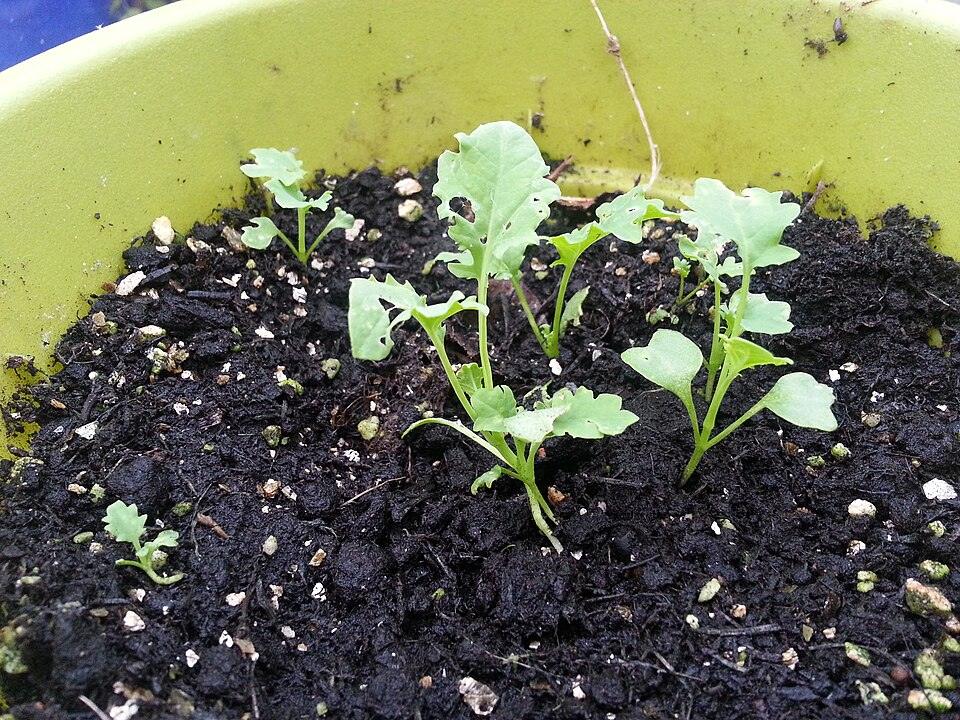 Young
YoungYoung kale seedlings, about a month after germination, growing in a pot
Generic kale seedlings; not identified to Lacinato/Red Russian/Winterbor cultivar.
Photo: Blokenearexeter· CC BY-SA 4.0
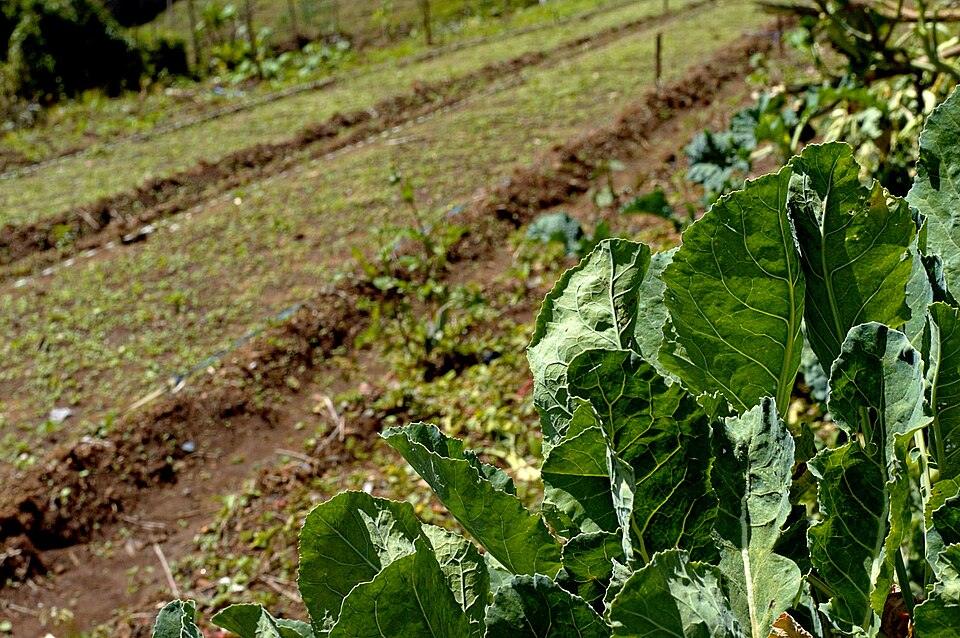 Growing
Established kale plant with a full foliage clump growing in a farm row, pre-harvest
Generic kale plant; cultivar not identified.
Photo: Cut angles· CC BY-SA 4.0
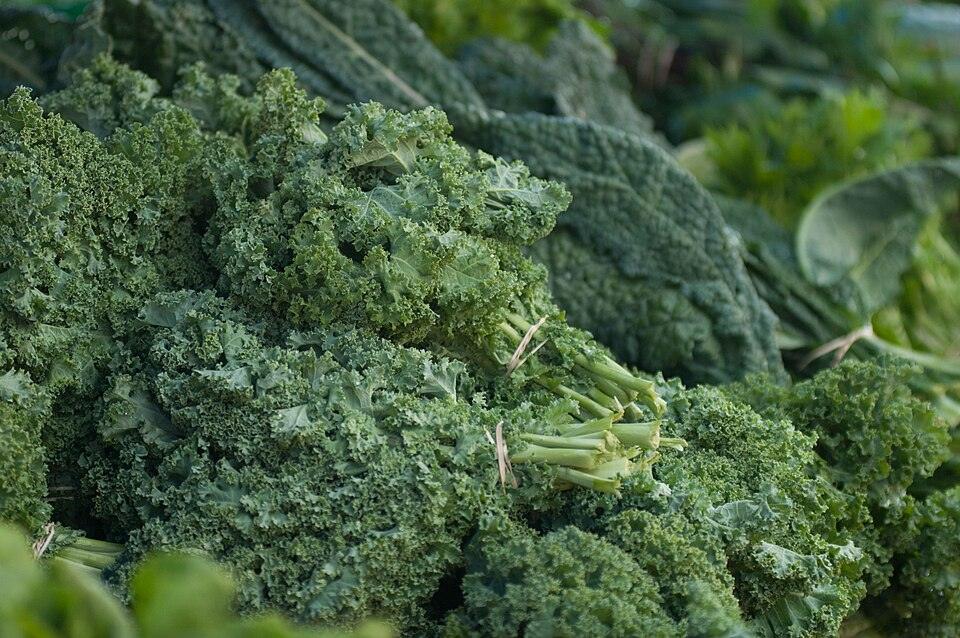 Full grown
Bundles of freshly picked curly kale at harvest size
Generic curly kale, harvest-ready; not identified to a specific cultivar (Lacinato/Red Russian/Winterbor).
Photo: USDAgov· Public domain
Growing stages
What to look for, and what to do, at each point in its lifeKale ('Lacinato', 'Red Russian', and 'Winterbor' grown together) is transplanted in September for Decatur's Zone 8a fall-into-winter garden, sweetening after frost and holding through most of the cold season, with a shorter spring round possible from a February-March sowing before summer heat pushes it to bolt.
- 1
Sowing
Late July to mid-August for fall transplants, or mid-February to early March for a direct-sown spring cropYou'll see Seeds are round and pea-sized, dark brown to black; Lacinato and Red Russian seed look nearly identical, while Winterbor's is the same size but from an F1 hybrid packet.
Do Start seed in cell trays 4-6 weeks before your September transplant date (Bonnie transplants are also an easy fall option), or direct sow 1/4 to 1/2 inch deep for the spring round.
- 2
Seedling
Days 5-28 after sowingYou'll see Rounded seed leaves appear first, then true leaves reveal each variety: Lacinato's long, narrow, deeply blistered blue-green strap; Red Russian's flat, frilly, purple-veined leaf; Winterbor's tightly curled, ruffled blue-green leaf.
Do Keep seedlings in bright light to avoid legginess, and pot up if roots fill the tray before your transplant date.
- 3
Transplant
4-6 weeks after starting indoors, in September, when seedlings have 4-6 true leavesYou'll see Transplant-ready seedlings are stocky, 3-4 inches tall, with a compact root ball that holds together when lifted.
Do Harden off over 5-7 days, then set plants an inch deeper than they sat in the tray, spaced 12-18 inches apart.
- 4
Cut-and-come-again harvest
Starting 55-70 days after transplant, continuing through most of winterYou'll see Leaves reach 8-14 inches: Lacinato's long, crinkled, near-black-green straps; Red Russian's tender, flat, purple-veined leaves; Winterbor's dense, tightly ruffled blue-green rosette.
Do Harvest the oldest outer leaves from each plant, leaving the central growing point untouched.
- 5
Bolting
Late winter into spring if plants are carried over, or anytime a spring-sown planting hits sustained heat above 80°FYou'll see A central stalk shoots up from the crown, leaves turn narrow and sparse, and clusters of small yellow flowers appear at the top.
Do Keep harvesting leaves right up until the stalk appears, then pull the plant or let a healthy one flower for pollinators and seed.
- 6
Seed saving
6-10 weeks after bolting, once seed pods dry from green to brownYou'll see Flower stalks turn from yellow blooms to slim, brown, brittle pods that rattle with seed when dry.
Do Cut whole seed stalks into a paper bag once pods are dry and brittle, then crush and winnow to separate seed from chaff.
Techniques — transplant, prune, propagate, divide, seed
Full sun to part shade; cool weather.
Consistent moisture.
Hydro pods / tight in-ground spacing.
Steady light feeding.
Care
- Cool-season crops — spring and fall windows; they bolt in summer heat.
- Wasabina mustard + tatsoi run permanently indoors in the 2nd hydro unit.
- Giant Red + Southern Green mustard run outdoors in the wooden structure.
Harvest
Cut-and-come-again; harvest outer leaves.
Watch for
Bolting in heat; aphids/flea beetles.