Lantana 'Miss Huff' New · Sep 2026
Lantana camara 'Miss Huff'· Miss Huff hardy lantana, Perennial lantana, Shrub verbena
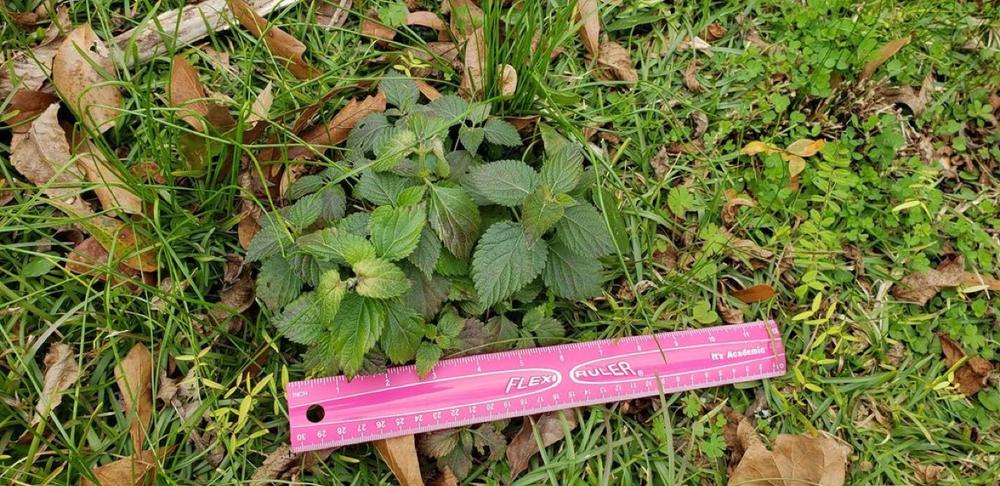 Young
YoungYoung lantana seedling only a few inches tall (ruler for scale), with the characteristic rough, toothed, opposite leaves and no flowers yet - the size of a fresh cutting or plug.
Species-level photo (not this exact cultivar).
Photo: Don Abrams· CC BY-NC
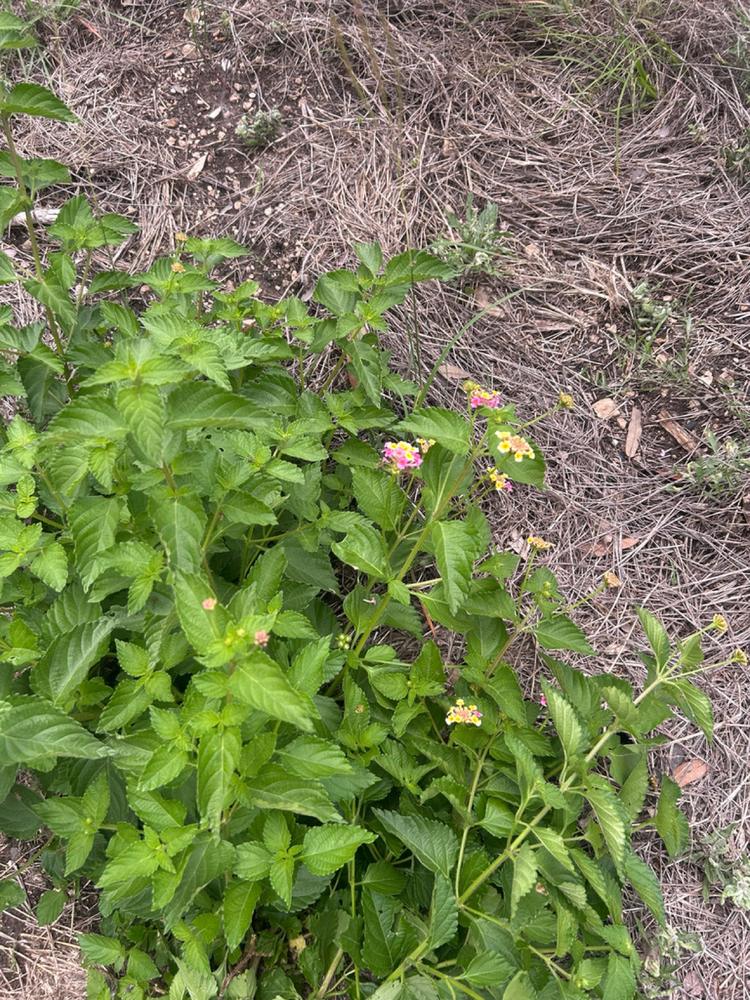 Growing
Late May: an established, leafy 1-2 ft clump in pine-straw mulch just beginning to open its first yellow-and-pink clusters.
Species-level photo (not this exact cultivar).
Photo: Ryan Collister· CC BY-NC
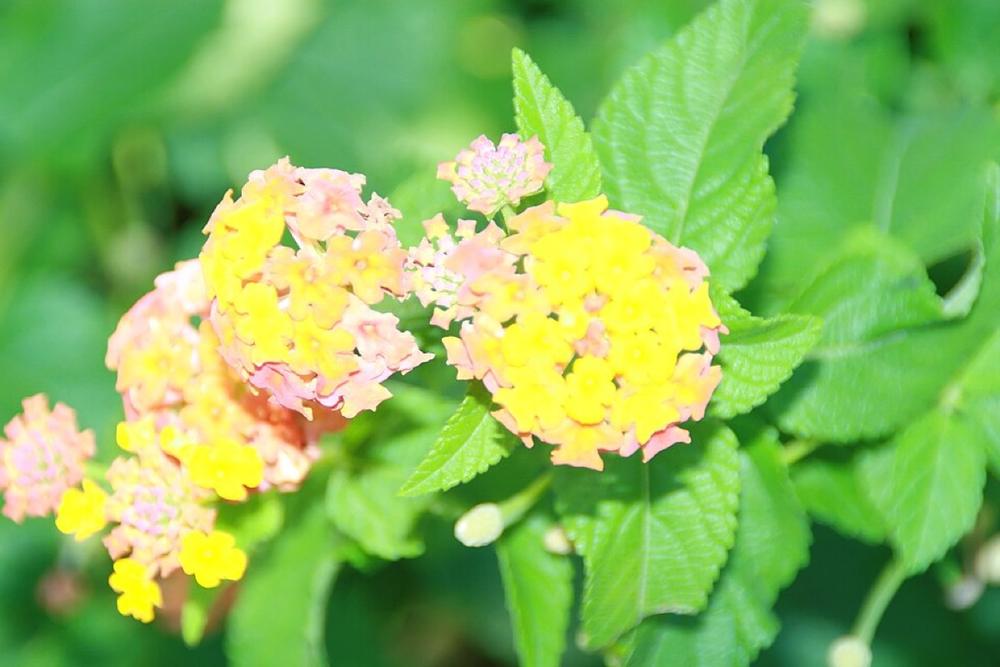 Full grown
'Miss Huff' in full bloom: rounded clusters opening yellow and aging to orange and pink on the same head, the tricolor look the cultivar is known for.
Photo: Photo by David J. Stang· CC BY-SA 4.0
Zone 8a: best planted April-June after frost so it gets a full season to establish before its first winter.
Growing stages
What to look for, and what to do, at each point in its lifeLantana 'Miss Huff' is a marginally hardy shrub that dies to the ground most Decatur winters and regrows from the crown, so it spends winter looking dead, gets cut back hard once new growth shows in spring, then blooms in tricolor yellow-orange-pink clusters non-stop from late May to frost, responding to a light midsummer shearing with fresh flushes.
- 1
Spring Cutback
Late March into April, once new growth is visible at the baseYou'll see Last year's stems are gray-brown, dry and hollow-feeling with no green on them, while small green or reddish shoots break low on the plant or right at the soil line.
Do Cut all of last year's dead top growth back to 6-12 inches above the ground, just above the new basal shoots. Do not cut before you can see the new growth.
- 2
Vegetative Growth
April into MayYou'll see Fresh, rough-textured, dark green ovate leaves fill in quickly from the cutback points on new sprawling stems.
Do Water regularly while it reestablishes. Give a light spring feeding only; skip fertilizer after this stage since lean soil and lower nitrogen mean more flowers later.
- 3
First Bloom Flush
Late May into JuneYou'll see Rounded 1-2 inch umbels open yellow and age to orange then pink-coral, so each cluster shows all three colors at once.
Do No deadheading is needed - 'Miss Huff' is virtually sterile and keeps blooming on its own. Water deeply during dry spells to keep the display going.
- 4
Midsummer Shearing
Every 4-6 weeks, June through SeptemberYou'll see Bloom slows and stems look leggy or sparse at the tips between flushes.
Do Shear or pinch the plant back by about a third once a flush fades. It rebounds in bloom within a couple of weeks.
- 5
Pest Watch
Hot, dry stretches of summerYou'll see Stippled gray leaves and stalled bloom point to lantana lace bug; fine webbing or off-color foliage points to spider mites; clouds of tiny white insects on leaf undersides are whiteflies.
Do Hose off pests or use insecticidal soap. Avoid overhead watering and crowding, which invite powdery mildew.
- 6
Fall Fade
October through first frost (~Nov 12) and beyondYou'll see Growth slows, flowering tapers off, and stems may brown at the tips after the first light cold snaps.
Do Stop shearing by early fall and do not cut back or tidy the plant now, even though it looks past its best.
- 7
Winter Dormancy
Mid-November through MarchYou'll see Top growth is fully brown, dry and dead-looking, brittle enough to rattle in the wind.
Do Leave all top growth standing. Mulch the crown 3-4 inches deep with pine straw, especially the first one or two winters, ahead of the coldest nights.
Techniques — transplant, prune, propagate, divide, seed
At a glance
- Botanical name
- Lantana camara 'Miss Huff'
- Family
Verbenaceae
- Type
Woody-based perennial shrub; dies to the ground in Zone 8a winters and regrows from the roots (evergreen shrub only in…
- Native range
Species native to the West Indies, Mexico and Central and South America; not native to Georgia.
- Hardiness
Zones 7b-10 (established clumps have survived brief dips to 0 to -3 F)
- Height
3-6 ft in a single season (4-5 ft typical in Atlanta)
Full sun, 6+ hours. Less sun means fewer flowers and mildew.
Drought tolerant once established; water weekly the first summer, then only a deep soak…
4-5 ft apart (3 ft for a solid hedge).
Any well-drained soil, pH 6-8; tolerates poor sandy or clay soil as long as it never…
Care
- Do not cut it back in fall or winter. Leave the dead stems standing (they insulate the crown) until new sprouts show at the base in April, then cut everything to 6-12 in.
- Mulch the crown 3-4 in deep with pine straw after the first frost, especially the first one or two winters.
- Full sun and lean soil. Skip fertilizer after July; late feeding pushes soft growth and reduces cold hardiness. A light spring feeding is plenty.
Good to know
Discovered in the 1980s in the Athens, GA yard of Miss Ruby Huff by Rick Berry and Marc Richardson of Goodness Grows Nursery (Lexington, GA), who noticed it came back from the roots every spring when other lantanas…
Where it fits
Blue mistflower, Mexican bush sage, purple coneflower, black-eyed Susan, muhly grass, 'Homestead Purple' verbena, dwarf crapemyrtle; hot, dry, sunny beds, slopes and driveway edges.
Harvest
Ornamental. Flowers on new wood — every trim is followed by more bloom.
Watch for
Lantana lace bug, whiteflies, spider mites; powdery mildew in shade; root rot in wet soil;
Wildlife & pollinators
Butterfly magnet - swallowtails, monarchs, gulf fritillaries, skippers, sulphurs - plus hummingbirds, bees and moths from June to frost.
Toxicity
Leaves, sap and especially unripe green berries contain lantadene triterpenoids: toxic to dogs, cats, horses, cattle and children (vomiting,…
Propagation
Softwood or semi-hardwood cuttings in summer (the only way to keep the cultivar). Seed is essentially not produced and would not come true.
General Woody Perennial / Subshrub (Zone 7–8 hardy) guide
- Plant in spring or early fall so roots establish before a hard freeze; in raised or well-drained ground, never a wet low spot.
- Do NOT cut back in fall — the old woody stems and a 3–4" mulch of pine straw protect the crown through winter.
- Cut back hard (to 6–12") in early spring once new growth shows at the base, then shape lightly through summer.
- Flowers on new wood — every trim is followed by more bloom.
- Expect top growth to die to the ground in a cold winter; roots resprout in April–May.
- Shear by a third after each flush of bloom to keep the plant compact and reblooming.
Sources (9)
- https://plants.ces.ncsu.edu/plants/lantana-camara-miss-huff/
- https://hgic.clemson.edu/factsheet/lantana/
- https://www.plantdelights.com/products/lantana-camara-miss-huff
- https://www.ajc.com/lifestyles/home--garden/miss-huff-lantana-originated-georgia/i9G6FKeHoEK26TMzqGKYsI/
- https://www.walterreeves.com/landscaping/miss-huff-lantana-when-to-trim-and-move/
- https://www.walterreeves.com/landscaping/lantana-when-to-prune-in-winter/
- https://www.walterreeves.com/landscaping/lantana-winter-hardiness/
- https://plantfinder.mobot.org/PlantFinderDetails.aspx?kempercode=a523
- https://en.wikipedia.org/wiki/Lantana_camara