Baby Lettuce Mix
Mixed
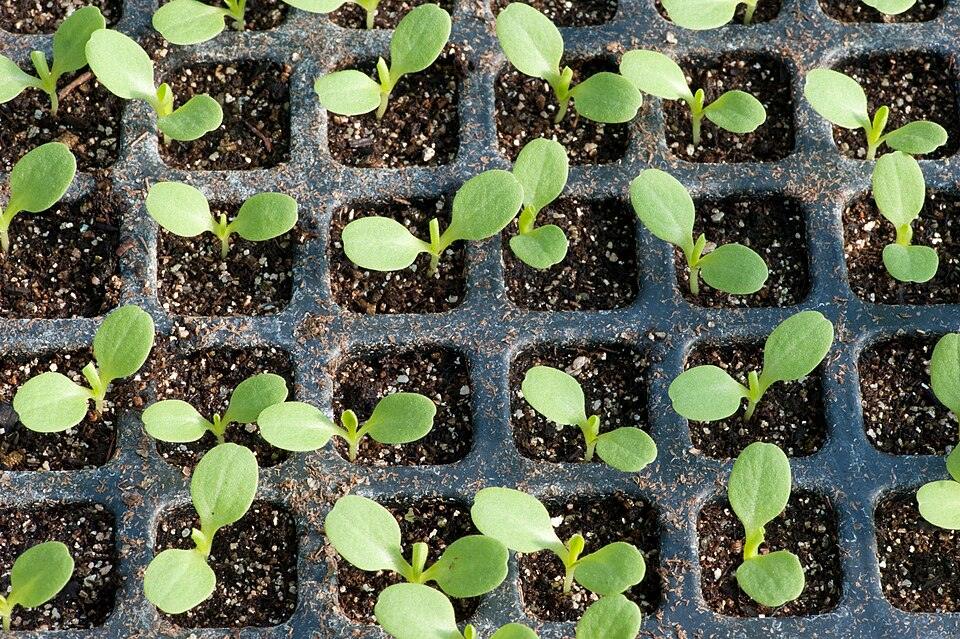 Young
YoungTiny lettuce seedlings about a week old, just past the cotyledon stage, growing in cell tray plugs.
Generic Lactuca sativa seedling tray, titled 'Lettuce a week old'; mixed varieties not yet distinguishable by color.
Photo: Dwight Sipler from Stow, MA, USA· CC BY 2.0
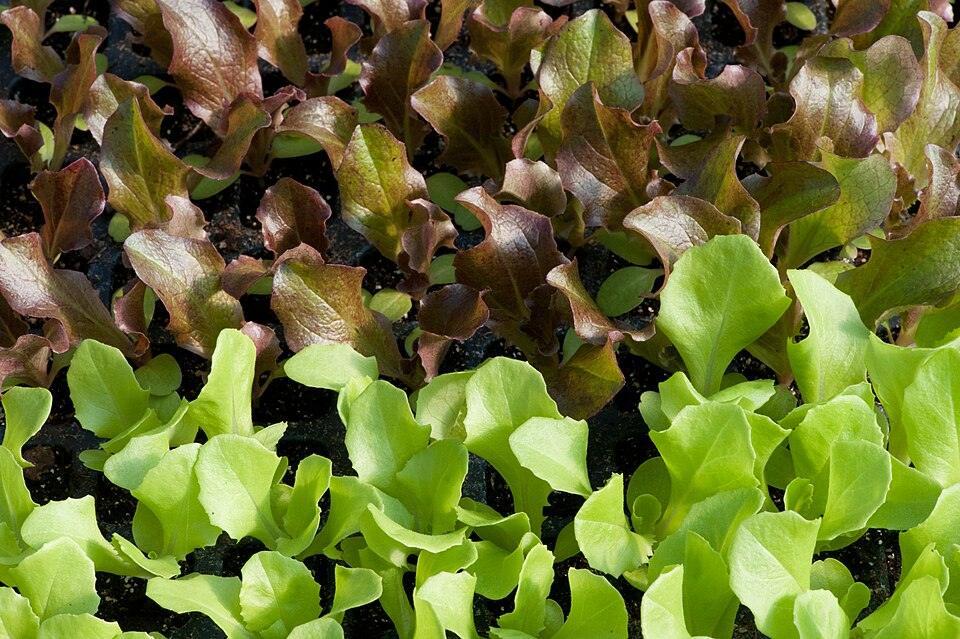 Growing
Rows of two-week-old baby lettuce in red and green varieties, leaves developing but still small.
Generic mixed red/green baby lettuce ('Lettuce after two weeks'); matches a baby-leaf mix look even though not tied to a specific named blend.
Photo: Dwight Sipler from Stow, MA, USA· CC BY 2.0
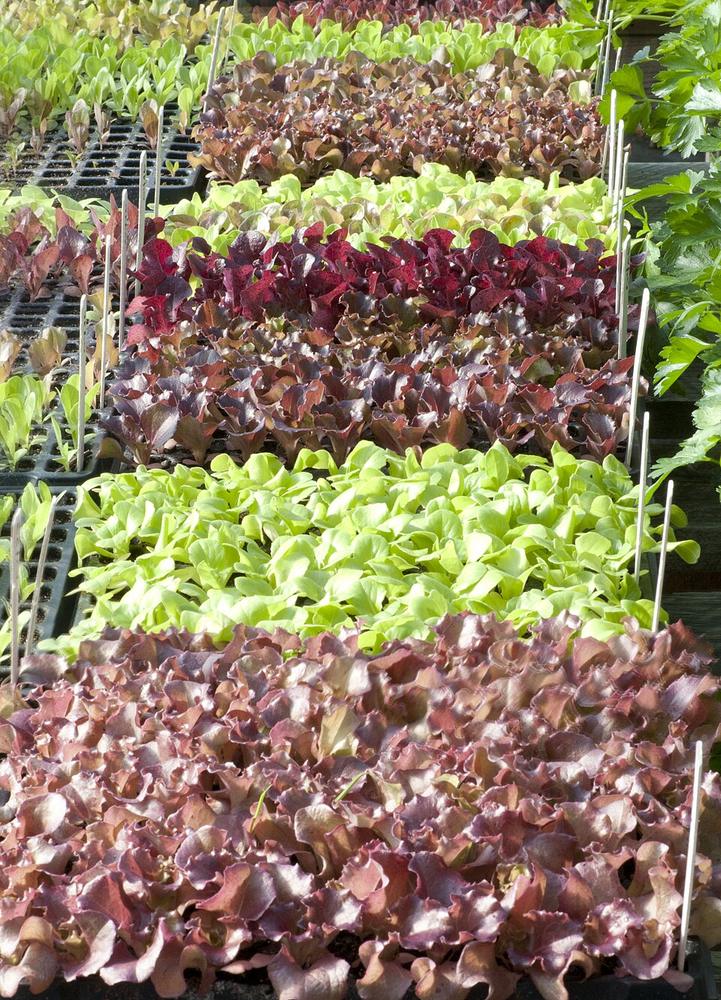 Full grown
A greenhouse bed of mixed baby lettuces -- bright green, lime, and deep red/burgundy varieties -- at full, ready-to-harvest baby-leaf size.
Generic mixed baby-leaf lettuce bed; a strong match for the 'baby lettuce mix' concept even though it's not a specific named seed blend.
Photo: Dwight Sipler from Stow, MA, USA· CC BY 2.0
Growing stages
What to look for, and what to do, at each point in its lifeBaby Lettuce Mix, a blend of several loose-leaf lettuce varieties grown for tender young leaves, runs two seasons in Decatur's Zone 8a: a fall sowing in September that carries through the mild winter into a big harvest, and a shorter spring sowing in February-March that races the early heat before bolting shuts it down in May-June.
- 1
Sowing
Early-mid September (fall crop) or mid-February to early March (spring crop)You'll see Seeds are tiny and dust-like, tan to brown depending on the variety in the mix, and show nothing above ground for 5-10 days.
Do Broadcast or direct sow 1/4 inch deep in a band or block, then keep the soil surface damp until sprouting.
- 2
Seedling
Days 5-21 after sowingYou'll see You'll see a pair of rounded seed leaves first, then a mix of leaf shapes and colors emerge as the different varieties in the blend show themselves: smooth green oak-leaf types alongside frillier red-tinged ones.
Do Thin crowded patches to 3-4 inches apart, and keep soil evenly moist.
- 3
Cut-and-come-again harvest
Starting 25-30 days after sowing, continuing for several cuttings over 4-8 weeksYou'll see Leaves reach 4-6 inches, a dense mix of colors and textures from the different varieties in the blend, still tender rather than tough or bitter.
Do Shear the whole patch with scissors an inch above the crowns, leaving the growing points intact so it regrows.
- 4
Bolting
Late May into June for spring crops, or anytime a plant hits prolonged heat above 80°F or long daylengthYou'll see A central stalk suddenly shoots up from the center of a plant, leaves turn narrow and pointed, and small yellow flowers appear at the top, one variety in the mix at a time as each reaches its own heat tolerance.
Do Harvest remaining leaves promptly, since they turn bitter once bolting starts, and pull bolted plants to make room for the rest of the mix.
- 5
Seed saving
4-8 weeks after bolting, once flower clusters dry into fluffy, dandelion-like seed headsYou'll see Flower stalks turn from small yellow blooms to tufted, parachute-like seed heads.
Do Shake or clip dry seed heads into a paper bag as they mature, then separate seed from fluff.
Techniques — transplant, prune, propagate, divide, seed
Full sun to part shade; cool weather.
Consistent moisture.
Hydro pods / tight in-ground spacing.
Steady light feeding.
Care
- Cool-season crops — spring and fall windows; they bolt in summer heat.
- Wasabina mustard + tatsoi run permanently indoors in the 2nd hydro unit.
- Giant Red + Southern Green mustard run outdoors in the wooden structure.
Harvest
Cut-and-come-again; harvest outer leaves.
Watch for
Bolting in heat; aphids/flea beetles.