Liriope (clumping)
L. muscari 'Silver Dragon' (tentative)
Clumping — stays put (safe). Existing front-yard plant.
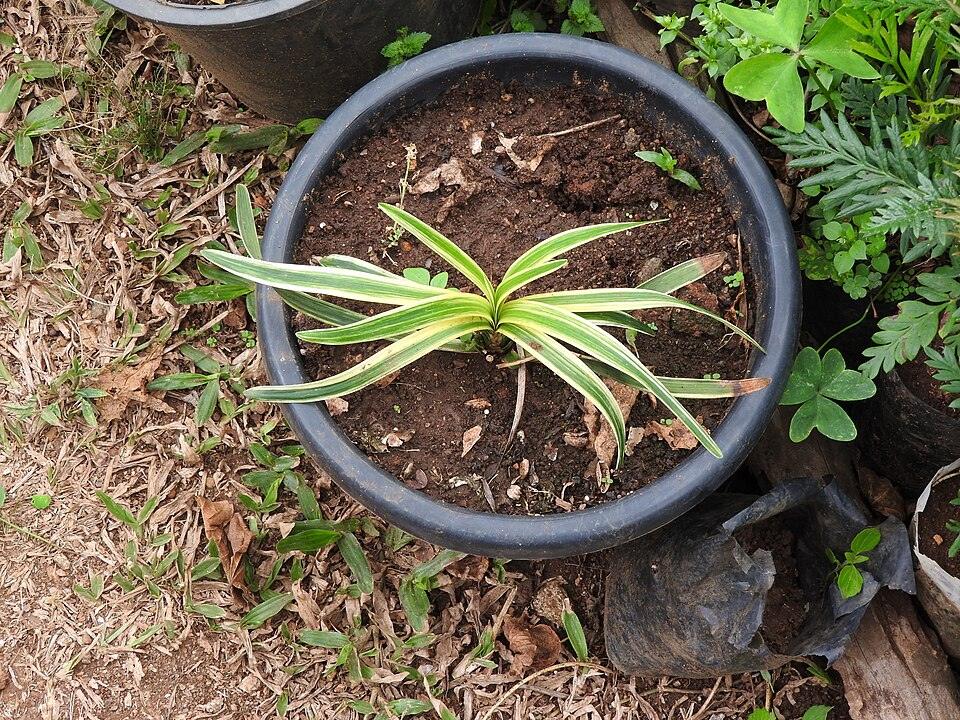 Young
YoungSmall newly potted variegated lilyturf division with just a handful of cream-and-green striped blades, no flower spike yet.
Liriope muscari 'Variegata' (a different variegated cultivar than 'Silver Dragon', but same white/cream-striped-leaf type); no 'Silver Dragon'-specific photo was found on Commons or iNat.
Photo: Yercaud-elango· CC BY-SA 4.0
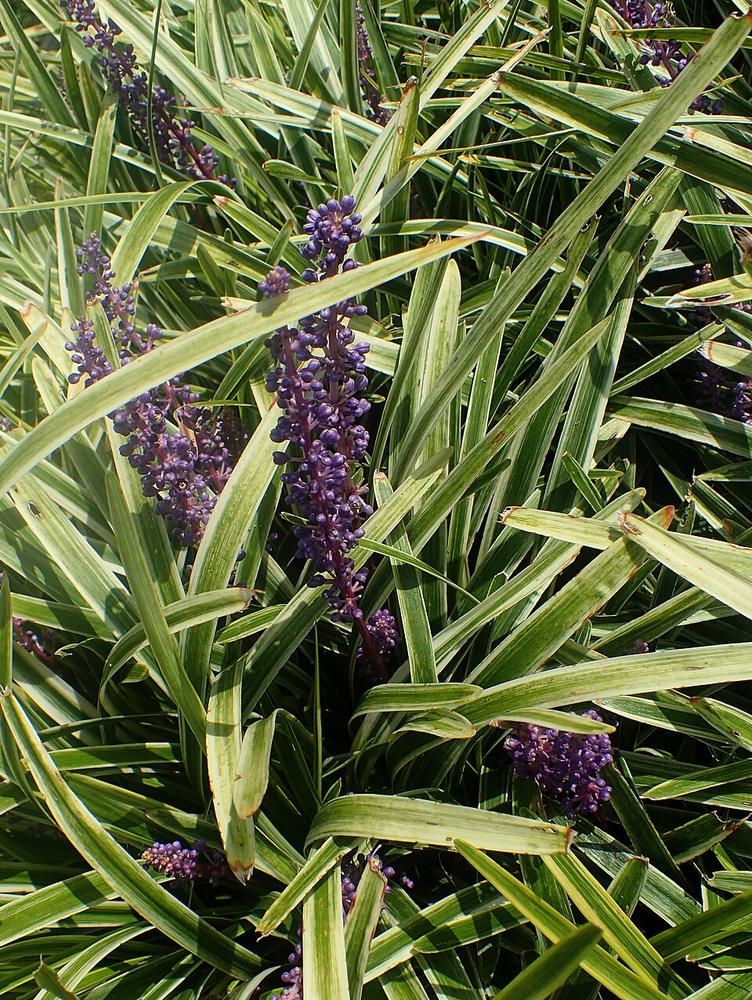 Growing
Dense, established clump of variegated lilyturf with strappy cream-striped leaves and a few purple flower spikes just emerging above the foliage.
Liriope muscari 'Variegata', not 'Silver Dragon'; foliage variegation pattern is representative of the type.
Photo: Krzysztof Ziarnek, Kenraiz· CC BY-SA 4.0
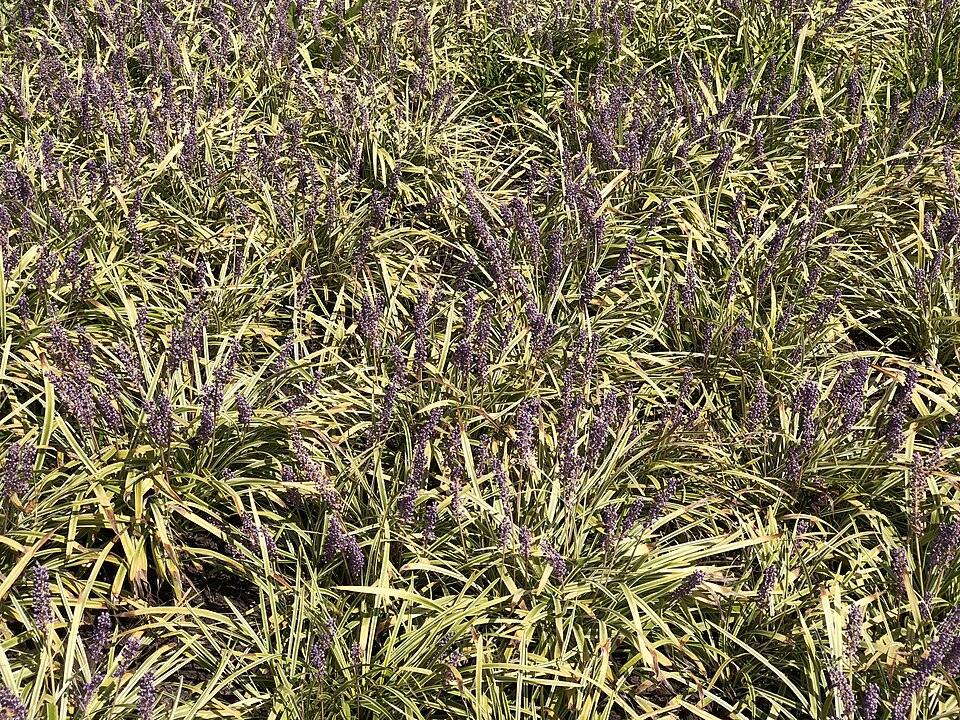 Full grown
Mass planting of variegated lilyturf in full bloom, dozens of upright purple flower spikes rising above the striped grassy foliage.
Liriope muscari 'Variegata', not 'Silver Dragon'; used as the closest available variegated cultivar in full bloom.
Photo: Famartin· CC BY-SA 4.0
Growing stages
What to look for, and what to do, at each point in its lifeLiriope muscari (clumping lilyturf, tentatively 'Silver Dragon') is the safe, non-spreading liriope already established in the front yard, forming a slow-enlarging clump rather than running by rhizome, that gets sheared to 2-3 inches in late winter, sends up purple flower spikes in late summer followed by black berries, and is divided only every 3-4 years to renew an aging center rather than for spread control.
- 1
Winter Cutback
Late February, before new growth startsYou'll see Foliage may look ragged or bronzed after winter cold but stays mostly evergreen through Decatur's mild winters.
Do Shear the clump down to 2-3 inches with hedge shears or pruners.
- 2
Spring New Growth
March into AprilYou'll see Fresh blades emerge from the crown, often showing the cream-and-white striping typical of variegated selections like 'Silver Dragon' if that is what this plant is.
Do No special care needed at this stage.
- 3
Summer Clump Fill
April into JulyYou'll see The clump thickens in place, growing denser rather than wider.
Do Water during extended drought; otherwise minimal care is needed for an established clump.
- 4
Bloom
Late summer, typically AugustYou'll see Short spikes of small purple (or white, depending on selection) flowers rise above the strappy foliage.
Do Enjoy the bloom; no action needed.
- 5
Berries and Fall
September into NovemberYou'll see Spent flower spikes give way to berries that darken to black as fall progresses.
Do Leave the berries in place; they are mostly ornamental.
- 6
Winter Hold
December through FebruaryYou'll see Foliage may look ragged or frost-nipped but generally stays evergreen through Decatur's mild winters.
Do No action needed until the late-winter cutback stage returns.
- 7
Division
Every 3-4 years, late winter to very early springYou'll see The clump develops a dead, hollow, or woody center, or has simply crowded its neighbors.
Do Dig up the clump, split it with a sharp spade or knife into sections with healthy shoots and roots, and replant.
Techniques — transplant, prune, propagate, divide, seed
Varies by species (see notes)
Varies — match to species (moisture-lovers vs. dry).
Right plant, right place.
Most ornamentals/wildflowers want LEAN soil — do not over-fertilize.
Care
- Divide most clumping perennials in fall (Sept–Oct).
- See the plant's own note for species-specific timing and cautions.
Harvest
Grown for bloom/pollinators, not harvest.
Watch for
Some spread aggressively (e.g. Liriope spicata via stolons) — mind placement.