Japanese Red Giant Mustard New · Sep 2026
Brassica juncea 'Red Giant'· Red Giant mustard, Japanese Giant Red mustard, giant red mustard
Re-bought Sept 2026 for the fall/winter garden. Same variety as the spring "Giant Red" mustard.
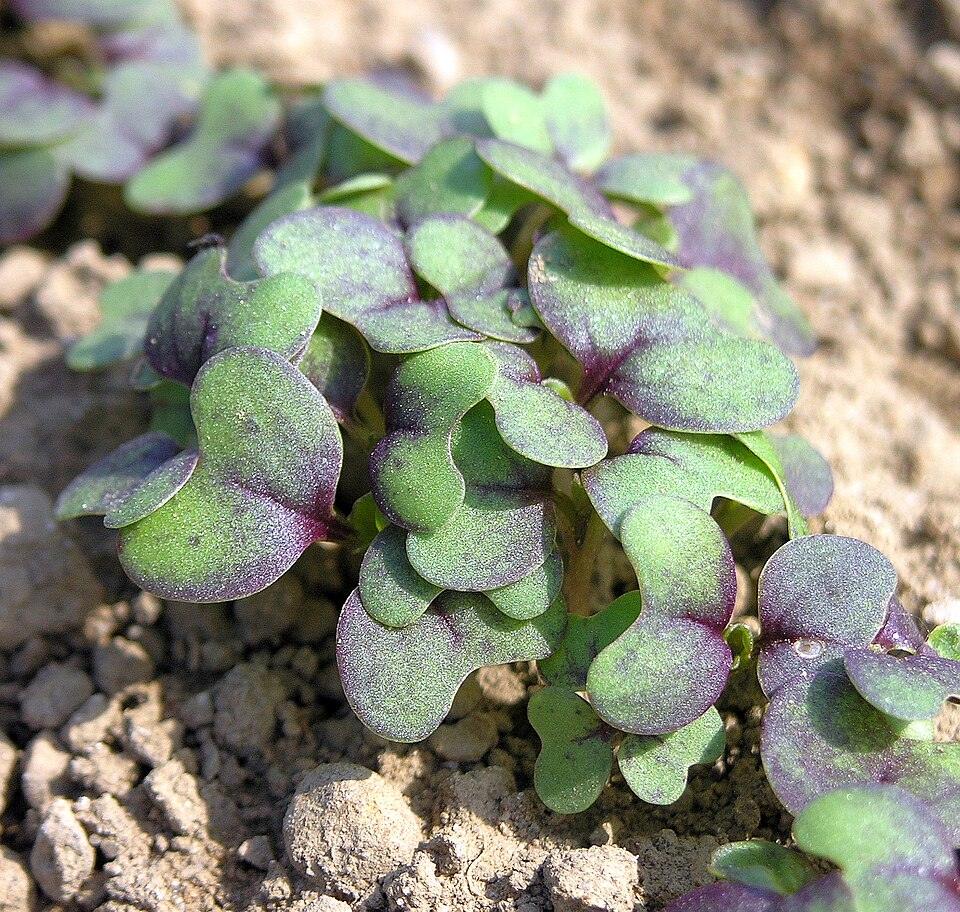 Young
Young'Red Giant' mustard seedlings a week or two after emergence, already showing purple-flushed cotyledons and first leaves
Photo: Goldlocki· CC BY-SA 3.0
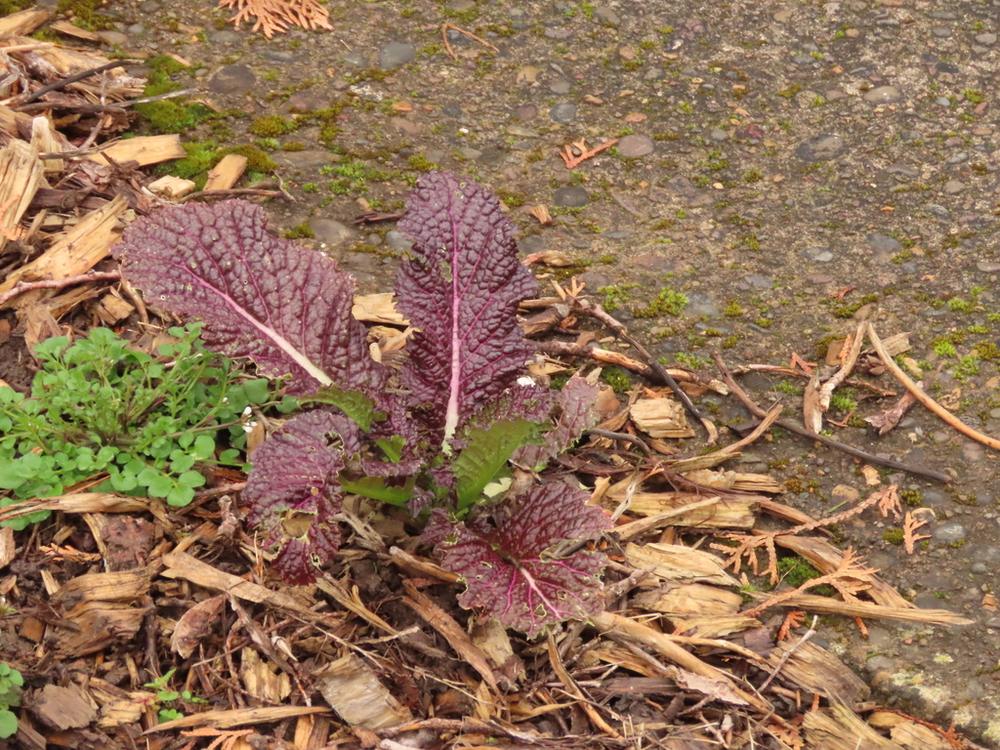 Growing
Half-grown red mustard rosette (early March, Oregon) with the purple-red savoyed leaves and pale midribs typical of Red Giant
Species-level photo (not this exact cultivar).
Photo: Barbara L. Wilson· CC BY-NC
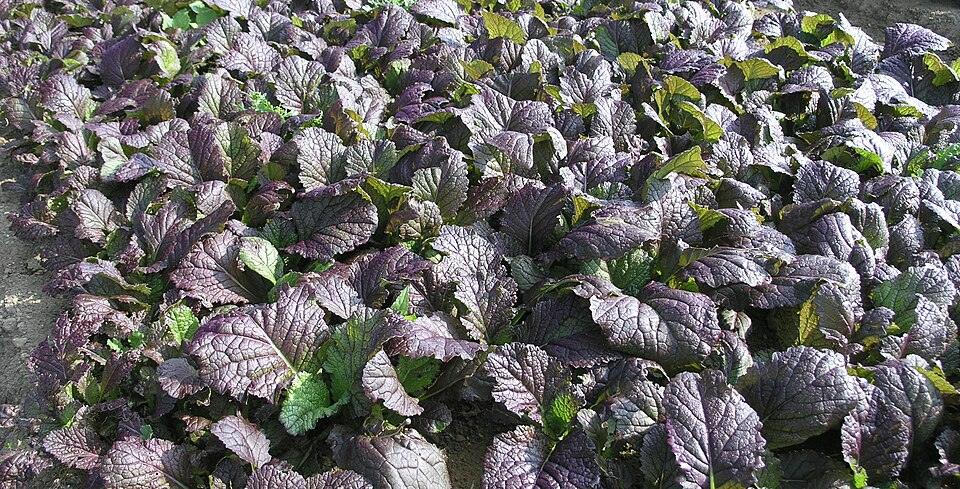 Full grown
A bed of 'Red Giant' mustard at full harvest size, leaves burgundy-purple over green
Photo: Goldlocki· CC BY-SA 3.0
Decatur GA Zone 8a: FALL direct-sow Aug 15 to about Oct 1 (UGA Aug 15-Sept 30; Clemson Piedmont July 15-Sept 30), with a mid-September sowing yielding baby leaves in early October and full leaves by early November;
Growing stages
What to look for, and what to do, at each point in its lifeJapanese Red Giant Mustard, an open-pollinated heirloom grown for its large purple-tinted, spicy leaves, follows the fall-through-spring rhythm typical of mustards in Decatur's Zone 8a, sown in September for a winter harvest and again in February-March before spring heat pushes it to bolt.
- 1
Sowing
Early-mid September (fall crop) or mid-February to early March (spring crop)You'll see Seeds are small and round, reddish-brown, showing nothing above ground for 4-7 days.
Do Direct sow 1/4 inch deep and keep the soil surface consistently moist until sprouting.
- 2
Seedling
Days 4-16 after sowingYou'll see Round seed leaves appear first, then large, savoyed (crinkled), purple-tinted true leaves begin to show, the purple deepening with each successive leaf.
Do Thin to 6-8 inches apart, and watch for flea beetle shot-holes.
- 3
Cut-and-come-again harvest
Baby leaf at 20-25 days after sowing, full size at 40-45 daysYou'll see Leaves grow large and broad, up to 18 inches tall on the plant, heavily savoyed and crinkled with purple-tinted margins over a green base.
Do Harvest outer leaves first, or shear the whole plant an inch above the crown for a quick regrow.
- 4
Bolting
Late spring, typically May, once daylength lengthens and temperatures push past 75-80°FYou'll see A central stalk shoots up, leaves become sparse, and small yellow four-petaled flowers cluster at the top.
Do Harvest what you can before leaves turn bitter, then pull the plant or leave a few to flower for pollinators and seed.
- 5
Seed saving
4-8 weeks after bolting, once seed pods dry from green to brownYou'll see Flower stalks turn from bright yellow blooms to slim, brown, brittle pods that rattle with seed when dry.
Do Cut dry seed stalks into a paper bag, finish drying, then crush and winnow to collect seed.
Techniques — transplant, prune, propagate, divide, seed
At a glance
- Botanical name
- Brassica juncea 'Red Giant'
- Family
Brassicaceae (mustard family)
- Type
Cool-season annual vegetable (leafy green), also used as an edible ornamental
- Native range
Brassica juncea originated in central Asia (NC State: Russia to central Asia);
- Hardiness
Zones Grown as an annual in all zones; in Zone 8a a fall-through-spring crop that usually overwinters
- Height
12-24 in (Clemson lists 18 in); bolting flower stalks reach 3-4 ft
Full sun for the richest red color; tolerates part shade (4-6 hours), where leaves stay…
Consistent moisture, 1-2 in per week; drought makes leaves fiery and tough.
Sow 0.25-0.5 in deep. Baby leaf: 3-5 seeds per inch in a 2-4 in band, rows 12 in apart.
Fertile, well-drained loam with plenty of compost, pH 6.0-7.5.
Care
- Direct-sow now and every 2-3 weeks through early October; a late-September sowing overwinters small and gives the best March-April harvest.
- Amend with 2-3 in of compost and side-dress with a nitrogen source 3 weeks after emergence; feed again in February when growth restarts.
- Cover the seedbed with floating row cover at sowing to keep flea beetles and caterpillars off; leaves riddled with shot holes are the usual September complaint.
Good to know
Luke's tag said 'Mustard, Japanese Red Giant'; seed companies sell it as Red Giant, Japanese Giant Red or Giant Red, all the same large purple takana-type Japanese mustard (Kitazawa Seed has carried it in the US since…
Where it fits
Its burgundy leaves make it the showpiece of a fall greens or edible-ornamental bed with lettuce, chard, kale, pansies and calendula; interplant with cilantro and dill for beneficial insects;
Harvest
Cut baby leaves at 2-4 in about three weeks after sowing for salad mixes, or pick outer leaves at 6-12 in from 40-45 days on as cut-and-come-again,…
In the kitchen
Bold, spicy, horseradish-wasabi heat when raw, mellowing to a rich, slightly sweet green when cooked;
Watch for
Flea beetles, cabbage loopers, imported cabbageworm, diamondback moth and cross-striped cabbageworm in warm weather; aphids, slugs and snails;
Wildlife & pollinators
Spring flowers feed honey bees, native bees and hoverflies; host plant for cabbage white and other brassica caterpillars.
Toxicity
Safe for people; NC State notes Brassica juncea can be problematic for horses and livestock grazing it in quantity (glucosinolates).
Propagation
Direct-sown seed, or transplants set out at 3-4 weeks. Open-pollinated; save seed from dry pods in late spring, isolating from other B.
General Asian Greens / Mustards guide
- Transplant in the evening; shade cloth the first 3–5 days if highs are above 85°F.
- Row cover (AG-19) from day one keeps cabbage worms, flea beetles and harlequin bugs off — the #1 fall greens fix.
- Sow a new short row every 2–3 weeks through October for a continuous harvest.
- Harvest outer leaves and let the center keep producing (cut-and-come-again); or cut whole plants 1" above the crown and they'll regrow once.
- Mustards and mizuna shrug off frost and freezes into the low 20s; pac choi needs row cover below ~28°F.
- Let one plant bolt in spring — the yellow flowers feed bees and the seed comes true for open-pollinated types.
Sources (8)
- https://www.johnnyseeds.com/vegetables/greens/mustard-greens/red-giant-mustard-green-seed-378.html
- https://www.botanicalinterests.com/products/red-giant-mustard-seeds
- https://www.highmowingseeds.com/organic-non-gmo-red-giant-mustard-greens.html
- https://trueleafmarket.com/products/mustard-red-giant-seeds
- https://hgic.clemson.edu/factsheet/arugula-kale-mesclun-mustard-and-swiss-chard/
- https://plants.ces.ncsu.edu/plants/brassica-juncea/common-name/mustard-greens/
- https://fieldreport.caes.uga.edu/publications/C1258/fall-vegetable-gardening/
- https://gwinnettmastergardeners.com/2025/08/fall-vegetable-planting.html