Flat-leaf Parsley
Italian Flat-leaf
Sow ⅛–¼". Biennial — bolts its second year.
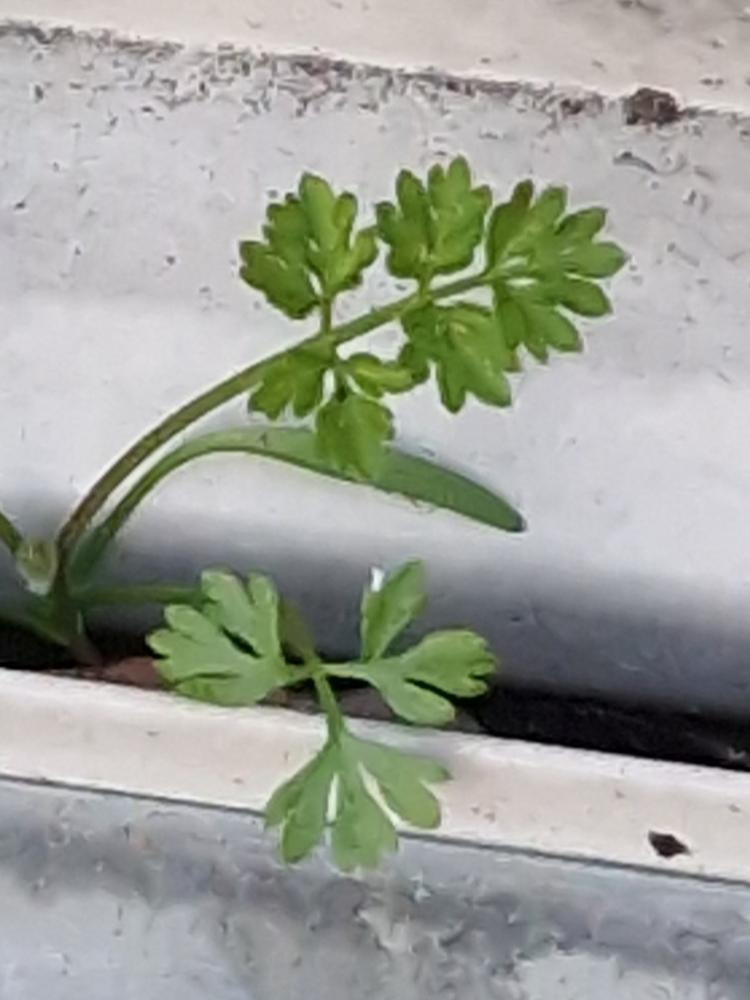 Young
YoungYoung parsley plant with just a couple of small compound leaves emerging from a crack.
Generic Petroselinum crispum seedling; leaf shape is flat-type but cultivar/variety not confirmed as neapolitanum.
Photo: Clive Freedman· CC BY
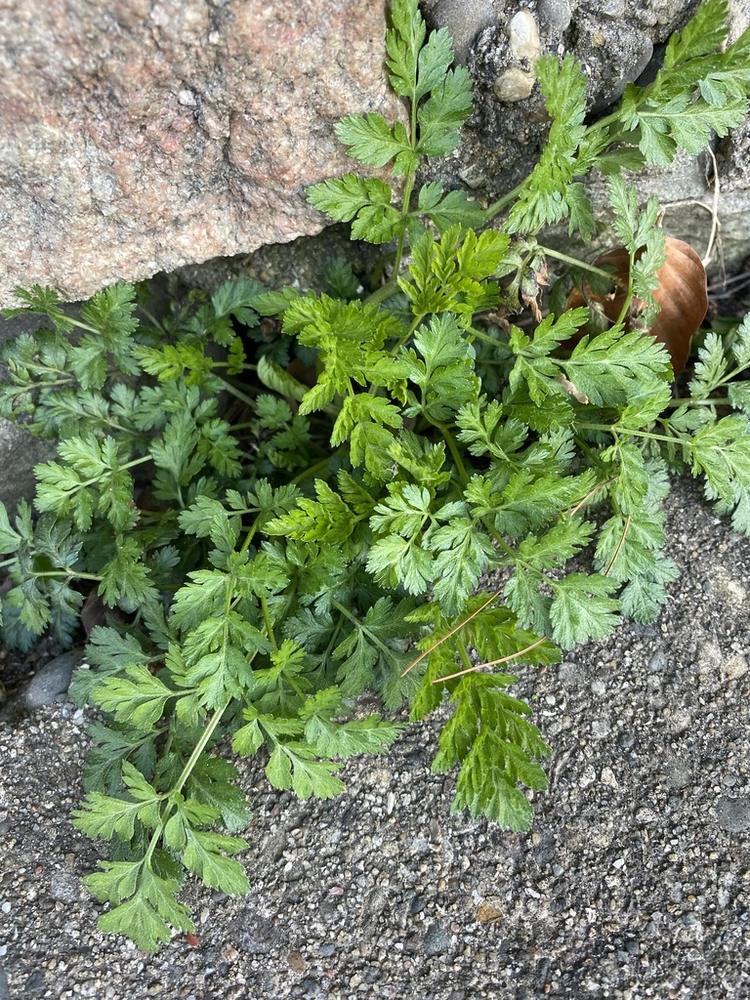 Growing
Established parsley plant, a dense low clump of deeply-cut flat leaves, pre-bolt.
Generic flat-leaf-type parsley; species-level (Petroselinum crispum), not confirmed as var. neapolitanum.
Photo: qcollins3· CC BY-NC
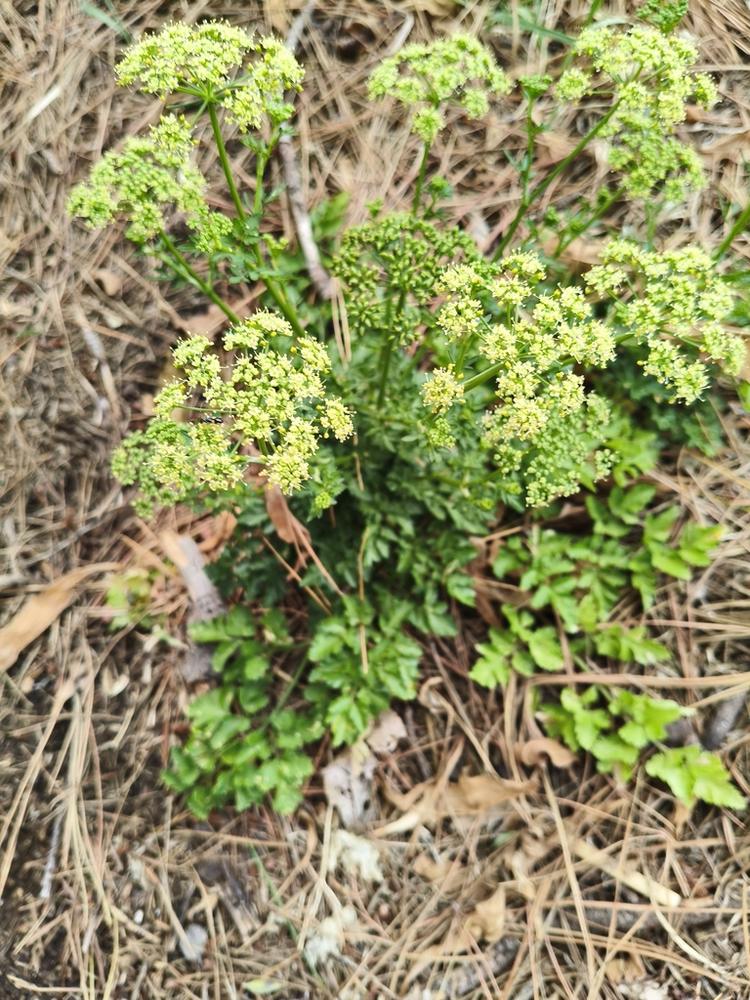 Full grown
Mature, bolted parsley plant with basal foliage and tall flowering umbels (second-year flowering habit).
Generic parsley in flower; species-level, not confirmed as flat-leaf Italian cultivar.
Photo: Chris Ecroyd· CC BY-NC
Growing stages
What to look for, and what to do, at each point in its lifeItalian flat-leaf parsley is a true biennial in Decatur's Zone 8a: it forms a dense rosette of dark green, flat, celery-like leaves and can be picked all through its first year, overwinters as an evergreen clump, then bolts to flower and seed in its second spring.
- 1
Sowing
Direct sow (or start in cell trays) March-April or August; seed is notoriously slow to germinate, 2-4 weeksYou'll see Germination is slow and sometimes patchy; the first leaves that do emerge are crinkled, celery-like, and flat rather than curled.
Do Sow seed shallowly, about 1/8-1/4 inch deep, and soak seed overnight before sowing to speed germination slightly; keep the seedbed consistently moist for the full 2-4 week window.
- 2
Leaf Growth (Year One)
Spring through fall of the first year after sowingYou'll see A dense, dark green rosette of flat, deeply cut leaves builds up low to the ground, with new leaves emerging from the center as outer ones are harvested.
Do Harvest outer leaves and stems regularly, cutting at the base rather than snipping leaf tips, and keep soil evenly moist.
- 3
Overwintering
Late fall through winter (November-February) of year one into year twoYou'll see Growth slows and the rosette may flatten or lose some color in hard cold, but the plant stays green and alive through typical Zone 8a winters.
Do Keep harvesting lightly through fall and any mild winter days, and add a light mulch around the crown before the coldest nights.
- 4
Flowering (Year Two)
April-June of the second springYou'll see A tall flower stalk rises from the center of the mature rosette, topped with small clusters of yellow-green flowers, and the remaining leaves get sparser and more finely divided.
Do Let the plant flower for pollinators and seed, or pull it once new first-year parsley is established elsewhere in the bed.
- 5
Seed Harvest (Year Two)
4-6 weeks after flowering, typically by early summer of the second yearYou'll see Small green seeds form in flat clusters where the flowers were, gradually turning brown, dry, and ridged as they ripen.
Do Cut whole seed heads once mostly brown and dry, finish drying indoors, then thresh and store.
Techniques — transplant, prune, propagate, divide, seed
Full sun to part shade
Consistent, even moisture.
Sow shallow — parsley ⅛–¼", dill surface-sown (light-dependent).
Light, steady feeding.
Care
- Parsley is a biennial — harvest the first year; it bolts the second.
- Dill self-sows readily; let some flower for pollinators/swallowtails.
- Succession-sow for a steady supply.
Harvest
Snip outer stems; harvest often to delay bolting.
Watch for
Bolting in heat; swallowtail caterpillars on dill/parsley (usually leave them).