Pak Choi (White Stem)
White Stem
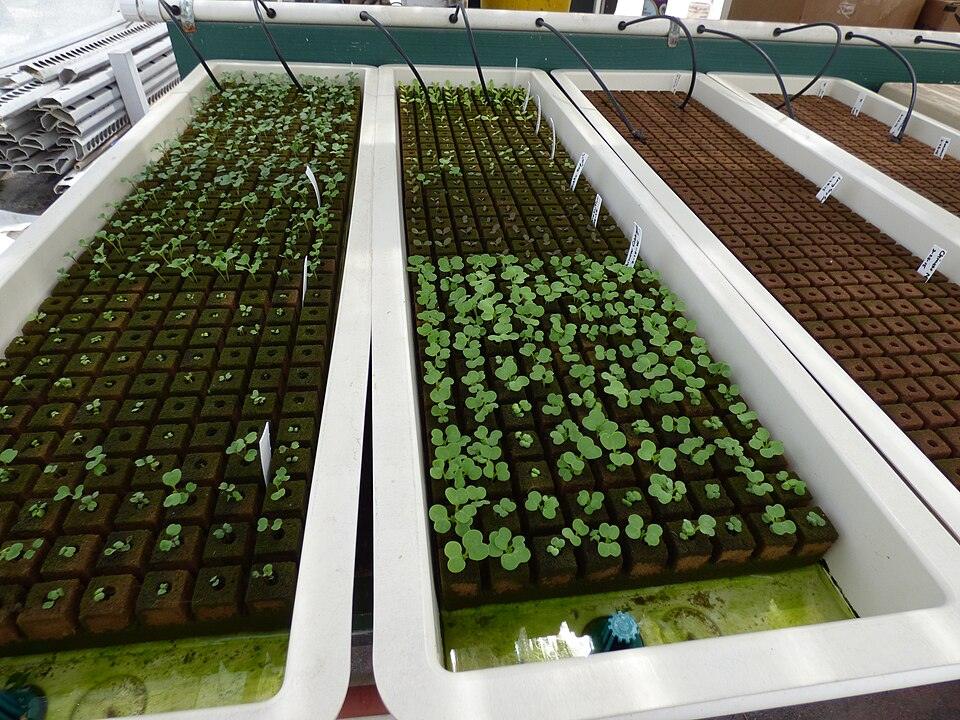 Young
YoungTrays of Brassica rapa var. chinensis (pak choi) seedlings with just their first true leaves, growing in a hydroponic nursery.
Species-level pak choi seedling tray; not specific to a white-stem cultivar like 'Joi Choi', but the seedling stage looks the same across pak choi types.
Photo: Forest and Kim Starr· CC BY 3.0 us
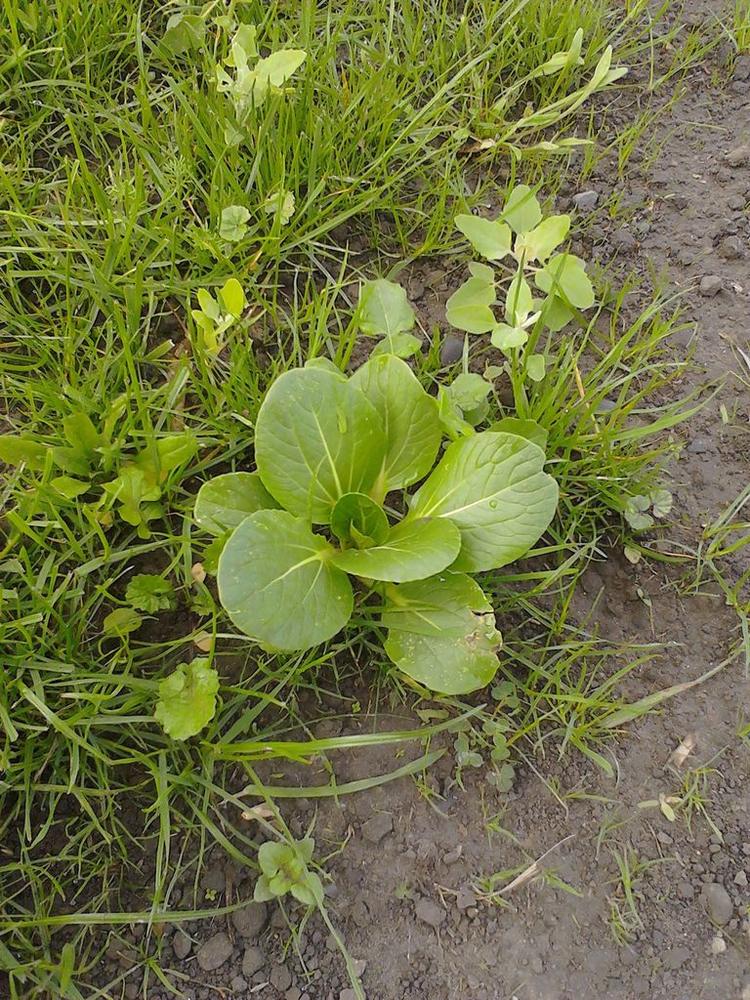 Growing
A half-grown pak choi plant with pale green-white stems and glossy spoon-shaped leaves, growing in a garden bed.
Generic white/pale-stem pak choi at half-grown size; species-level, not confirmed as a specific white-stem cultivar.
Photo: Trevor Partridge· CC BY-NC
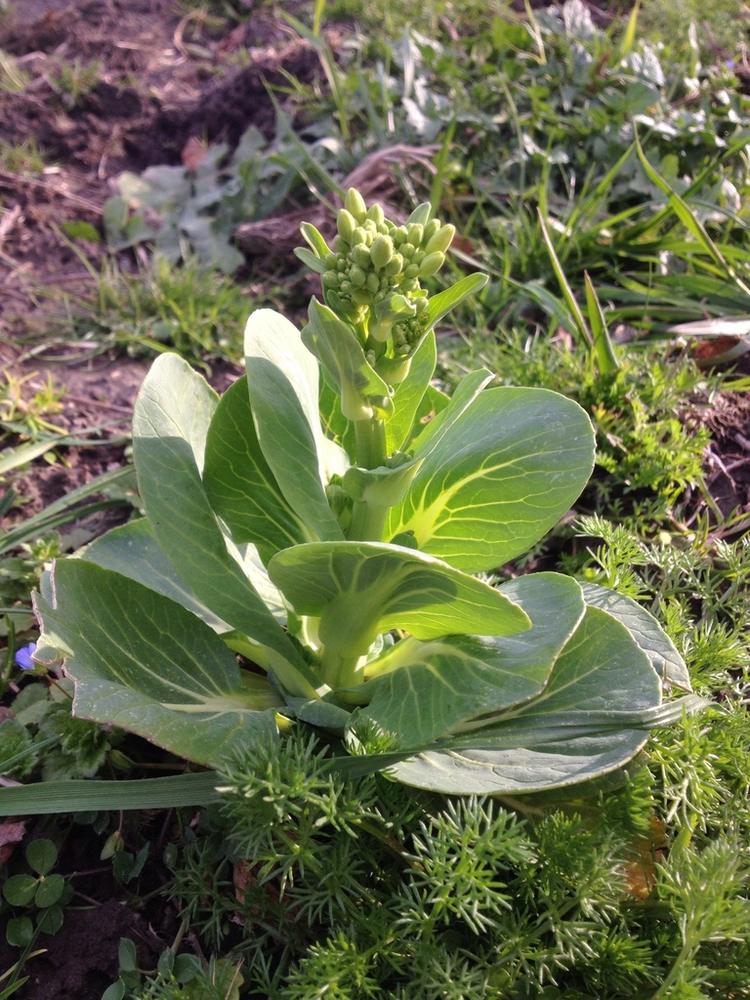 Full grown
A full-size pak choi rosette with thick white stems and broad leaves, just beginning to send up a flower stalk.
Generic white-stem pak choi at full harvest size; species-level match, not confirmed as 'Joi Choi' or another named white-stem cultivar.
Photo: Jon Sullivan· CC BY
Growing stages
What to look for, and what to do, at each point in its lifePak Choi (White Stem) runs two seasons in Decatur's Zone 8a: a fall sowing in early-mid September that carries through the mild winter into a big harvest, and a shorter spring sowing in February-March that races the heat before bolting shuts it down.
- 1
Sowing
Early-mid September (fall crop) or mid-February to early March (spring crop)You'll see Seeds are small, round, and reddish-brown, showing nothing above ground for 4-6 days.
Do Direct sow 1/4 inch deep in beds, or start in cell trays for a head start; keep the soil surface damp until sprouting.
- 2
Seedling
Days 4-16 after sowingYou'll see Round seed leaves appear first, then true leaves show the plant's spoon shape with thick, pale white midribs and dark green blades.
Do Thin direct-sown rows to 8-10 inches apart, and watch for flea beetle shot-holes.
- 3
Transplant
3-4 weeks after starting indoors, when seedlings have 2-3 true leavesYou'll see Transplant-ready seedlings are compact, 2-3 inches tall, with a small vase-shaped rosette and thick white stem bases, and a root ball that holds together when lifted.
Do Harden off over 5-7 days, then set plants at the same depth they grew, spaced 8-10 inches apart in beds or grow bags.
- 4
Cut-and-come-again or whole-plant harvest
Starting 25-30 days after sowing for baby leaves, or 45-50 days for a full vase-shaped headYou'll see The rosette forms a vase of thick, crisp, celery-white stems topped with smooth dark green leaves, reaching 10-12 inches tall at full size.
Do Harvest outer leaves as needed, or cut the whole head at the base once it fills out.
- 5
Bolting
Late spring, typically May, once daylength lengthens and temperatures push past 75-80°FYou'll see A central stalk shoots up from the middle of the rosette, leaves turn narrow and pointed, and small yellow four-petaled flowers cluster at the top.
Do Harvest what you can before leaves turn bitter, then pull the plant or leave one to flower for pollinators and seed.
- 6
Seed saving
4-8 weeks after bolting, once seed pods dry from green to brownYou'll see Flower stalks turn from yellow blooms to slim, brown, brittle pods that rattle with seed when dry.
Do Cut dry seed stalks into a paper bag, finish drying, then crush and winnow to collect seed.
Techniques — transplant, prune, propagate, divide, seed
Full sun to part shade; cool weather.
Consistent moisture.
Hydro pods / tight in-ground spacing.
Steady light feeding.
Care
- Cool-season crops — spring and fall windows; they bolt in summer heat.
- Wasabina mustard + tatsoi run permanently indoors in the 2nd hydro unit.
- Giant Red + Southern Green mustard run outdoors in the wooden structure.
Harvest
Cut-and-come-again; harvest outer leaves.
Watch for
Bolting in heat; aphids/flea beetles.