Foxglove Beardtongue New · Sep 2026
Penstemon digitalis· Foxglove beardtongue, Smooth white beardtongue, Tall white beardtongue
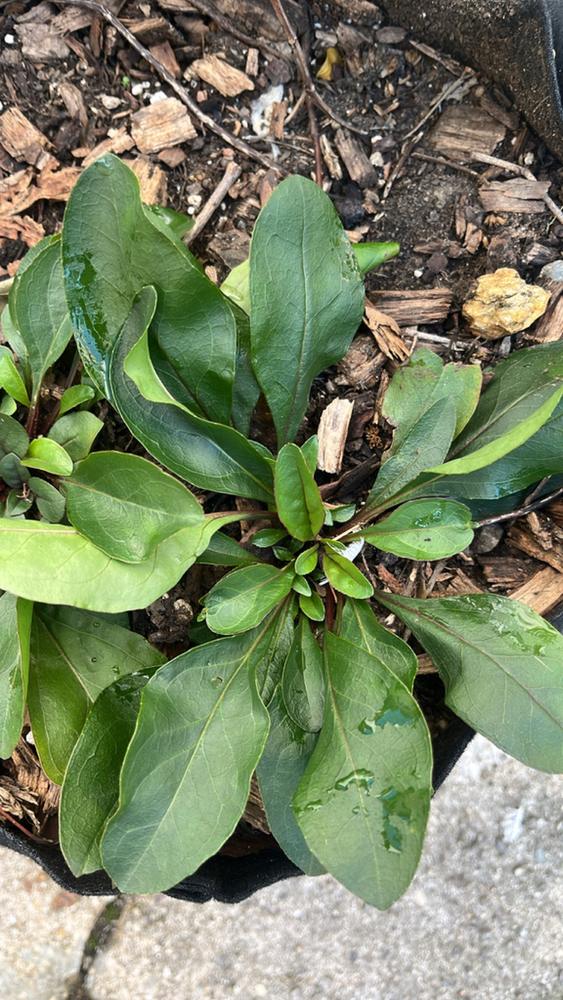 Young
YoungNovember: a first-year basal rosette of glossy oval leaves in a nursery pot - what a fall-planted foxglove beardtongue looks like before it ever blooms.
Photo: robinha· CC BY-NC
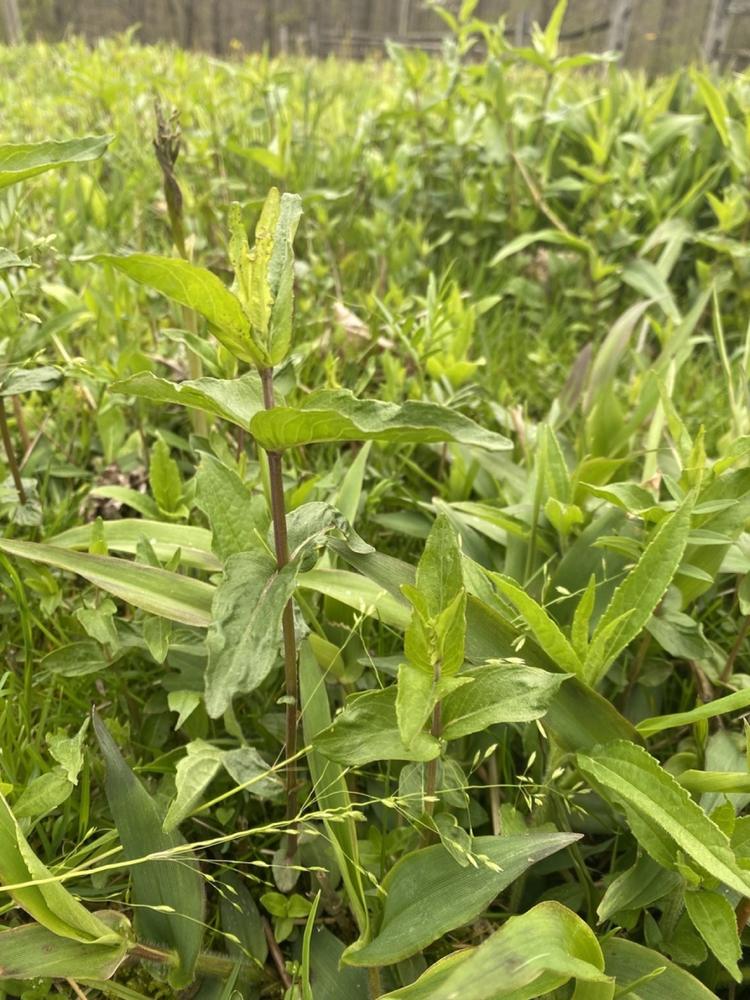 Growing
Late April: flower stems rising 12-18 in from the rosette with opposite, lance-shaped stem leaves, buds not yet formed.
Photo: Pam Curtin· CC BY-NC
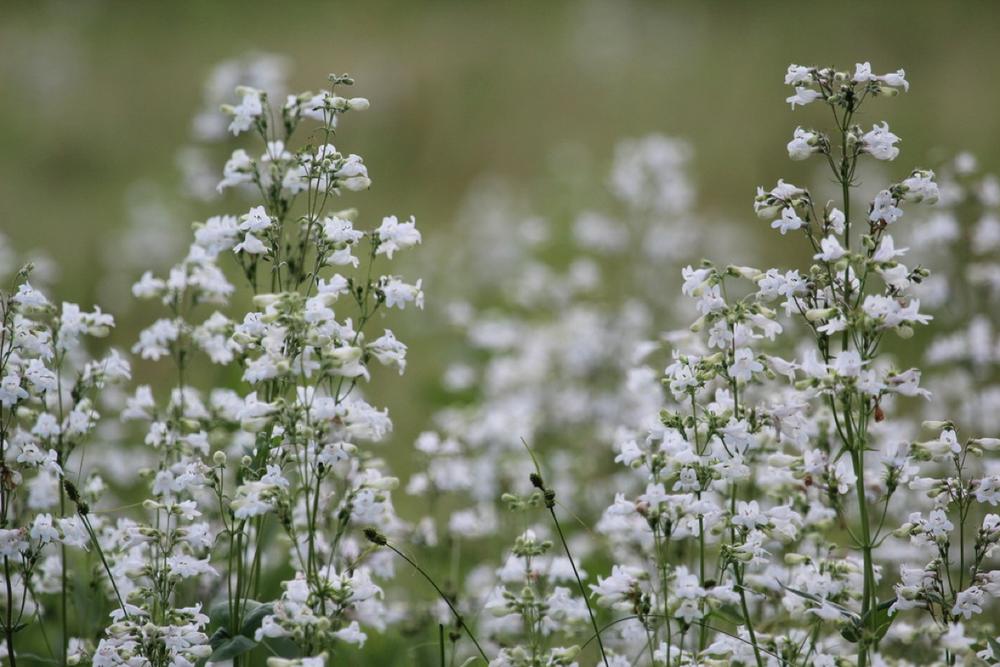 Full grown
Late May: a mature planting in full bloom, dozens of 3 ft stems topped with airy panicles of white tubular flowers.
Photo: kerohling· CC BY-NC
Zone 8a: fall (September-November) is ideal for potted rosettes, giving roots all winter to establish; February-April also works.
Growing stages
What to look for, and what to do, at each point in its lifeFoxglove beardtongue keeps a semi-evergreen basal rosette (often blushing burgundy in cold weather) through the winter, sends up 2-4 foot flower stalks of white tubular blooms with faint purple nectar guides for about four to five weeks in late April through June, then holds decorative brown seed capsules before being divided every 3-4 years since it is somewhat short-lived at 3-5 years per plant.
- 1
Winter Semi-Evergreen Rosette
December through FebruaryYou'll see The basal rosette of glossy, oval, smooth-edged leaves persists through winter, often blushing burgundy-purple in cold weather.
Do Leave the rosette alone. In February, pull off any fully dead or mushy leaves to tidy it.
- 2
Spring Growth
March into AprilYou'll see The rosette pushes fresh growth and upright flower stalks with opposite, lance-shaped stem leaves begin rising.
Do Water weekly if the spring is dry; protect fresh growth from rabbits if they are a problem in your yard (mature foliage is usually ignored).
- 3
Bloom
Late April into June, roughly 4-5 weeksYou'll see Open panicles of 1-1.25 inch white, two-lipped tubular flowers with faint purple nectar guides top stiff, upright 2-4 foot stems.
Do Enjoy the bloom; no action is required, though staking is rarely needed in full sun.
- 4
Post-Bloom Seed Capsules
June into JulyYou'll see Flower stalks fade and rounded brown seed capsules form along the dried spikes.
Do Cut spent flower stalks back to the rosette in July for a tidy look, or leave the capsules standing for winter interest and light self-sowing.
- 5
Summer Rosette
July through SeptemberYou'll see Only the basal rosette remains visible after flower stalks are cut or fade on their own.
Do Water only during extended drought; this plant is drought tolerant once established.
- 6
Division and Renewal
Every 3-4 years, early spring or fallYou'll see A clump crowds its neighbors, blooms less than in previous years, or shows a declining center as it ages.
Do Divide aging clumps, and let a few self-sown seedlings mature nearby to replace plants as they decline.
Techniques — transplant, prune, propagate, divide, seed
At a glance
- Botanical name
- Penstemon digitalis
- Family
Plantaginaceae (formerly Scrophulariaceae)
- Type
Herbaceous perennial with a semi-evergreen basal rosette
- Native range
Eastern and central United States - Maine to South Dakota, south to Virginia, Alabama and east Texas;
- Hardiness
Zones 3-8
- Height
2-4 ft in bloom (to 5 ft in rich soil); rosette 6-8 in
Full sun to part shade; strongest stems and best bloom with 6+ hours.
Dry to medium. Drought tolerant once established; tolerates occasional wet but not…
18-24 in
Well-drained loam or clay loam, pH 5.5-7 (tolerates lime). Handles Georgia clay if it…
Care
- Plant with the crown at soil level in a well-drained sunny spot; in heavy clay build a slight mound or mix in expanded shale or pine bark fines.
- Water weekly through the first summer, then only in prolonged drought.
- Cut spent flower stalks back to the rosette in July for a tidy look, or leave the seed capsules for winter interest and light self-sowing.
Good to know
Luke's tag ('Foxglove Beardtongue') is the common name of the straight species, not a cultivar. The widely sold cultivar 'Husker Red' (Dale Lindgren, University of Nebraska, 1983;
Where it fits
Coreopsis, black-eyed Susan, purple coneflower, butterfly weed, baptisia, little bluestem, prairie dropseed and catmint; blue mistflower takes over the show in fall.
Harvest
Not a harvest crop. Cut stems for arrangements as the first flowers open; strip lower leaves.
Watch for
Root rot in wet soil; flopping in shade or rich soil; occasional aphids, leaf spot and powdery mildew; short-lived, so keep seedlings coming.
Wildlife & pollinators
Heavily worked by bumblebees, mason bees (including the specialist Osmia distincta), other native bees, hummingbirds and butterflies;
Toxicity
None known. Despite the name it is not related to true foxglove (Digitalis) and has none of its toxicity.
Propagation
Seed (cold-moist stratify 30-60 days, needs light to germinate), division in spring or fall, stem cuttings in summer.
General Native / Pollinator Perennial guide
- Fall (Sept–Nov) is the best perennial planting window in Georgia: warm soil grows roots, cool air limits stress, winter rain does the watering.
- Plant at the same depth as the pot; in heavy clay set the crown 1" high and mound soil to it rather than digging a bathtub that holds water.
- Mulch 2" with pine straw or shredded bark, kept an inch off the crown.
- Water deeply 2× a week for the first month even if it rains lightly; the root ball dries faster than the bed around it.
- Leave stems and seed heads standing over winter for birds and overwintering insects; cut back late Feb–early March.
- Divide crowded clumps every 3–4 years in fall or early spring.
- Edit spreaders (rhizomes and self-sown seedlings) each spring while they're small — most natives are generous.
Sources (9)
- https://plants.ces.ncsu.edu/plants/penstemon-digitalis/
- https://plantfinder.mobot.org/PlantFinderDetails.aspx?kempercode=g590
- https://plantfinder.mobot.org/PlantFinderDetails.aspx?kempercode=i630
- https://www.wildflower.org/plants/result.php?id_plant=PEDI
- https://en.wikipedia.org/wiki/Penstemon_digitalis
- https://growitbuildit.com/foxglove-beardtongue-guide-penstemon-digitalis/
- https://hort.extension.wisc.edu/articles/husker-red-foxglove-beardtongue-penstemon-digitalis-husker-red/
- https://gnps.org/june-2020-whats-a-georgia-native/
- http://usinggeorgianativeplants.blogspot.com/2020/05/pleasing-penstemon.html