Purple Lovegrass New · Sep 2026
Eragrostis spectabilis· Purple lovegrass, Purple love grass, Purple plains lovegrass
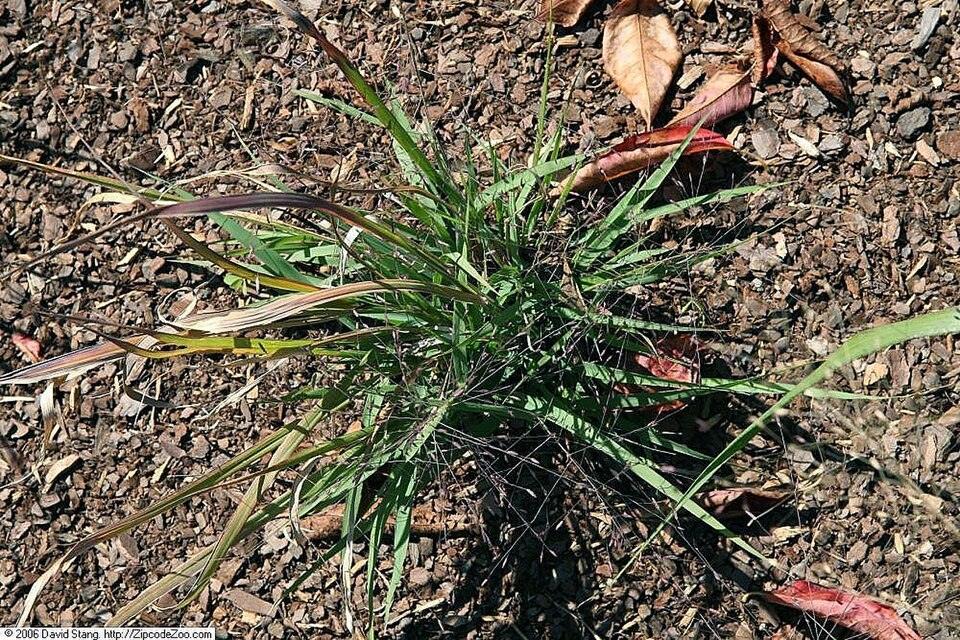 Young
YoungA small, newly established clump of Eragrostis spectabilis on bare mulch: a few flat green blades with the first thin flower stems, about what a nursery plug looks like its first season.
Photo: Photo by David J. Stang· CC BY-SA 4.0
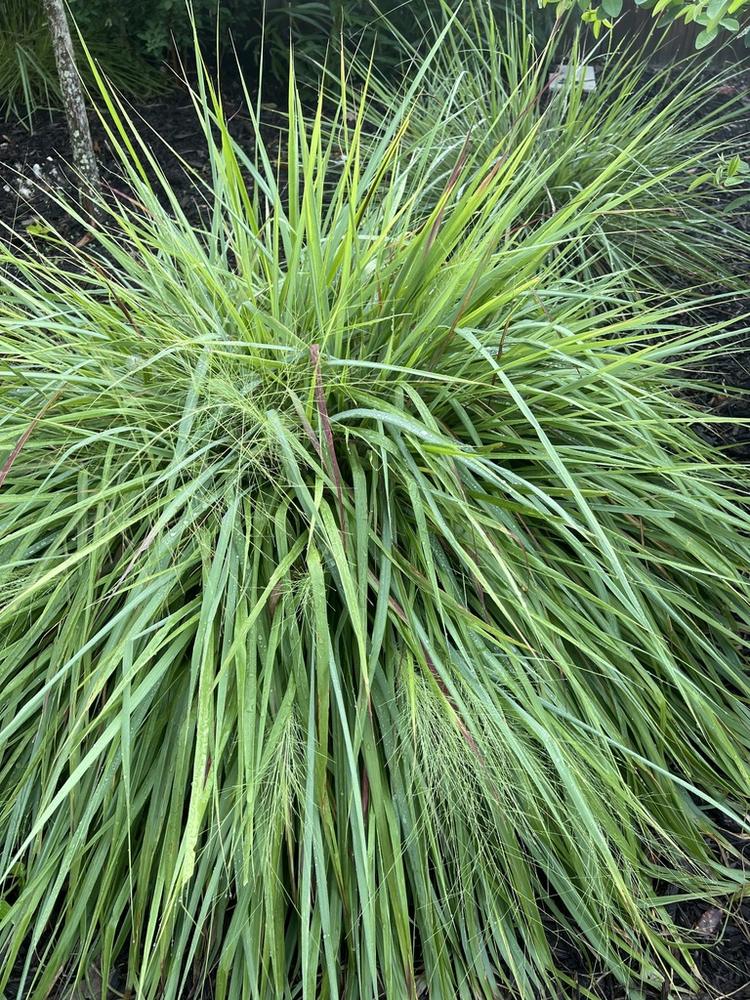 Growing
Established summer foliage clump (mid-July, Gainesville FL): a dense mound of coarse green blades about 10 in tall, just before the flower panicles rise.
Photo: kfabulich· CC BY-NC
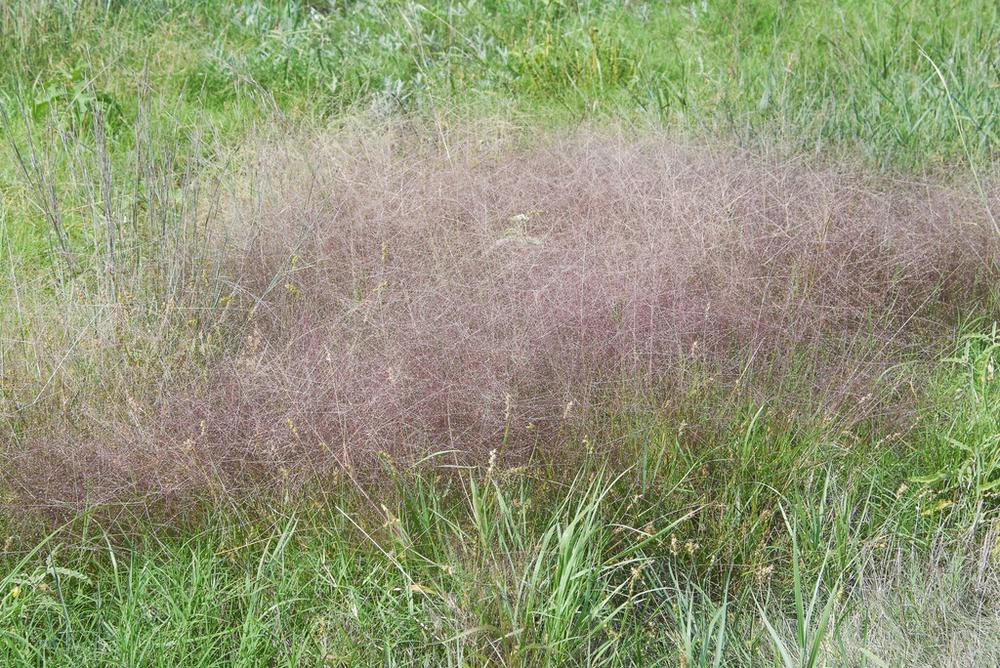 Full grown
Mature plant in full late-September bloom (Oklahoma): the airy reddish-purple flower haze roughly doubles the height of the green clump beneath it.
Photo: Jay Pruett· CC BY
Zone 8a Decatur: set out container plants September-October (ideal; roots establish over the mild winter) or April-May once soil has warmed.
Growing stages
What to look for, and what to do, at each point in its lifePurple lovegrass greens up slowly and quietly through spring and early summer, then steals the show in late summer and fall with clouds of airy pink-purple seed heads, before going dormant tan and brittle over winter until you cut it back hard in late winter for the cycle to start again.
- 1
Spring Green-Up
Mid to late April into May, Zone 8aYou'll see Thin wiry green blades emerge slowly from the base of last year's crown, well after cool-season grasses and many perennials have already leafed out. The clump looks sparse and low, only 4-8 inches tall, and easy to mistake for a struggling plant.
Do Be patient and do not fertilize heavily or replace the plant. This is a warm-season grass and it is normal for it to lag weeks behind everything else. Make sure old cut stubble is cleared away so new blades get light.
- 2
Vegetative Growth
June through early AugustYou'll see The clump bulks up into a dense, fine-textured mound 12-18 inches tall and wide, foliage a soft blue-green, fully upright with a fountain-like habit. No flowering stems yet.
Do Little maintenance needed. Water only during extended drought (lovegrass is very drought tolerant once established). Do not shear or pinch; this species flowers on stems that develop later in the season and cutting now removes the fall show.
- 3
Purple Seed Heads
Late August through October, peaking in SeptemberYou'll see This is the signature stage: airy, diffuse panicles in shades of pink to reddish-purple rise 6-12 inches above the foliage in a haze that seems to float over the clump, especially striking backlit by low afternoon sun. The whole plant can look like a pink-purple cloud.
Do Do not cut back or deadhead now. Leave the seed heads standing to enjoy the display, feed birds, and let seed mature and drop for natural reseeding if you want the colony to spread. Only trim individual stalks early if you specifically want to prevent reseeding in a bed.
- 4
Dormancy
November through FebruaryYou'll see Foliage and seed stalks fade to straw-tan and become dry and brittle. The clump holds its shape through most of winter, rustling in wind, though heavy ice or snow can flatten it temporarily.
Do Leave the dried clump standing through winter for structure, wildlife cover, and seed for birds. Do not cut back yet.
- 5
Late-Winter Cutback
Late February to mid-March, before new green growth appearsYou'll see The clump is still fully tan and dry, with old growth showing no green at the base.
Do Cut the entire clump back to about 3-4 inches above the ground using shears or a string trimmer, before new blades emerge.
- 6
Dividing Clumps
Early spring, right after cutback and just as new growth resumes (March-April)You'll see The clump has a dense fibrous root mass at the base; older clumps (3+ years) may show a dead, thinning center ring with vigorous growth only around the outer edge, a sign it is time to divide.
Do Dig the whole clump, split it into sections with a spade or by hand, and replant divisions immediately at the same depth, spaced 12-18 inches apart.
Techniques — transplant, prune, propagate, divide, seed
At a glance
- Botanical name
- Eragrostis spectabilis
- Family
Poaceae (grass family)
- Type
Warm-season native perennial bunchgrass (ornamental grass)
- Native range
Native across the eastern and central United States from Maine to Minnesota south to Florida, Texas and Arizona, and…
- Hardiness
Zones 5-9
- Height
Foliage 8-12 in; 18-24 in when the flower haze is up in late summer
Full sun (6 or more hours). Flops and flowers poorly in shade.
Dry to medium. Very drought tolerant once established; tolerates an occasional wet spell…
12-18 in apart for a drift or mass; 18-24 in as individual accents
Happiest in lean, sandy or gravelly, well-drained soil of any pH;
Care
- Plant in the poorest, sunniest, best-drained spot available; do not amend heavily or fertilize, because lean soil keeps clumps tight and upright.
- Water weekly through the first summer, then only during long droughts.
- Leave the foliage and seed heads standing over winter for birds and texture, then cut back to 2-3 in in late February or early March before new growth.
Good to know
Purple lovegrass is a small native grass grown almost entirely for its August-October pink-purple cloud of flowers, which reads best in a mass or where morning or evening sun shines through it.
Where it fits
Front of sunny borders and along paths where the fall haze can be backlit by low sun.
Harvest
Cut seed heads for dried arrangements as they color up.
Watch for
No serious insect or disease problems; occasional aphids, spittlebugs or leaf spot.
Wildlife & pollinators
Larval host plant for the Zabulon skipper butterfly. Tiny but prolific seeds feed sparrows, juncos and other songbirds plus small mammals, and the…
Toxicity
None known; a non-toxic grass for pets, people and livestock.
Propagation
Seed (surface-sow, it needs light; very easy) or division of clumps in spring as new growth starts. Self-sows readily on open soil.
General Warm-Season Native Grass guide
- Plant in fall or spring in any well-drained soil, including poor, sandy or rocky ground.
- Warm-season grasses green up late (April–May) — don't assume winter-brown clumps are dead.
- Leave the seed heads and foliage standing through winter for structure and birds.
- Cut back to 3–4" in late Feb–early March before new growth.
- Divide in spring every 3–5 years if the center dies out.
- Allow some self-sowing in a meadow setting; deadhead if you want it contained.