Raspberry
Raspberry ×2
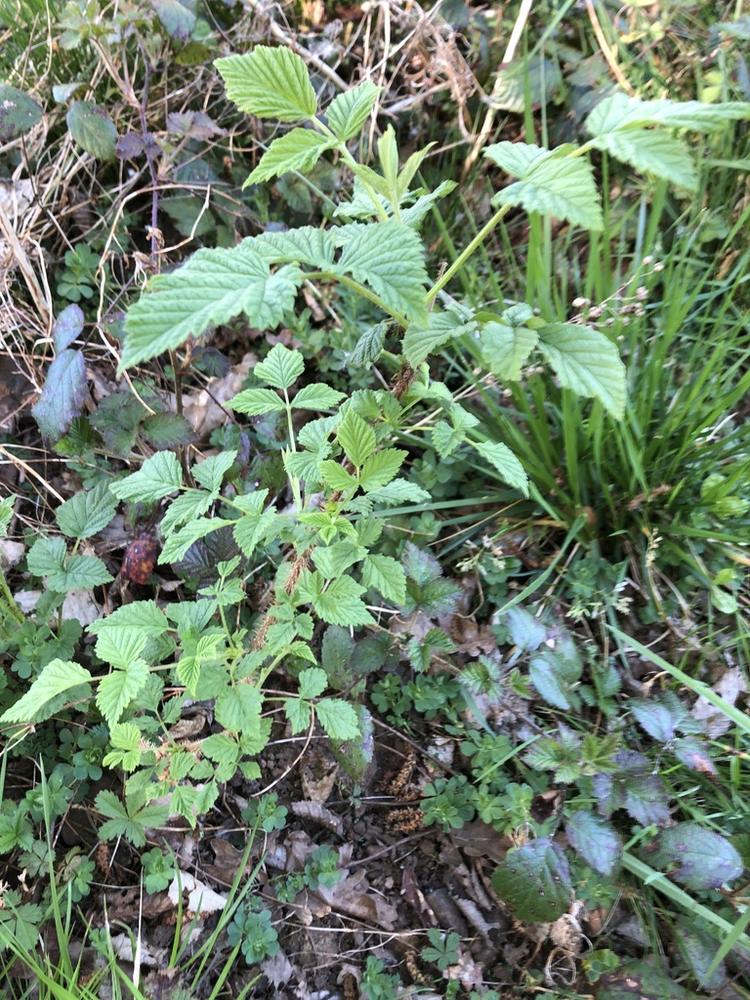 Young
YoungNew raspberry cane (Rubus idaeus) emerging in early spring, held in hand to show scale of the young shoot with first compound leaves
Photo: gerardbertrand· CC BY
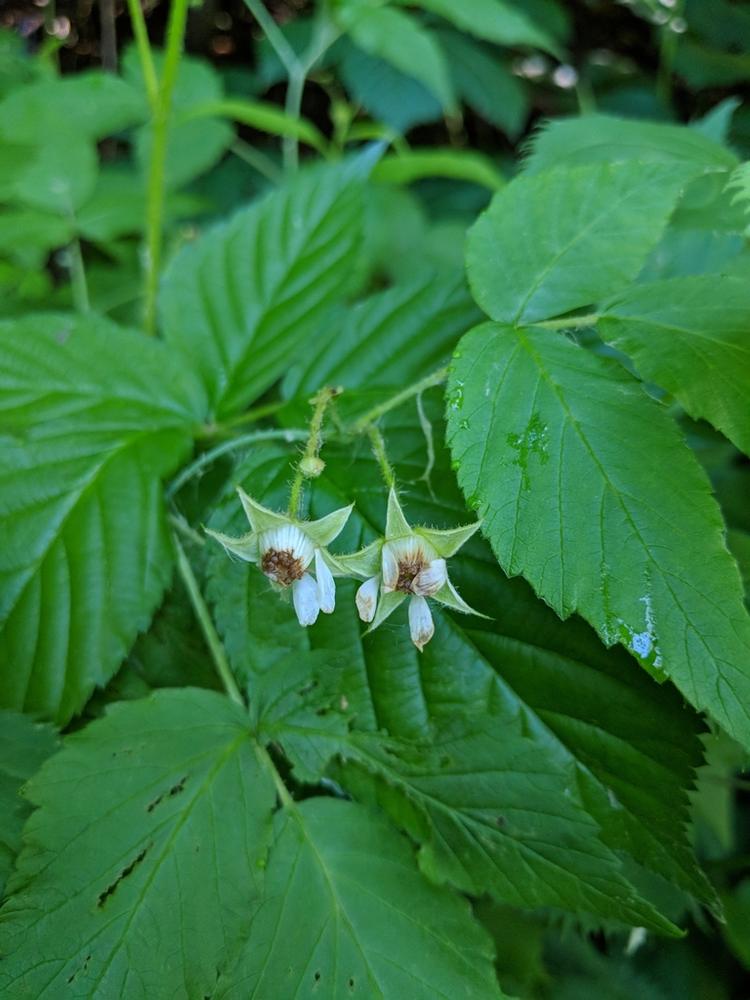 Growing
Raspberry plant in flower, drooping white five-petaled blossoms among the toothed compound leaves
Photo: Benoit Renaud· CC BY
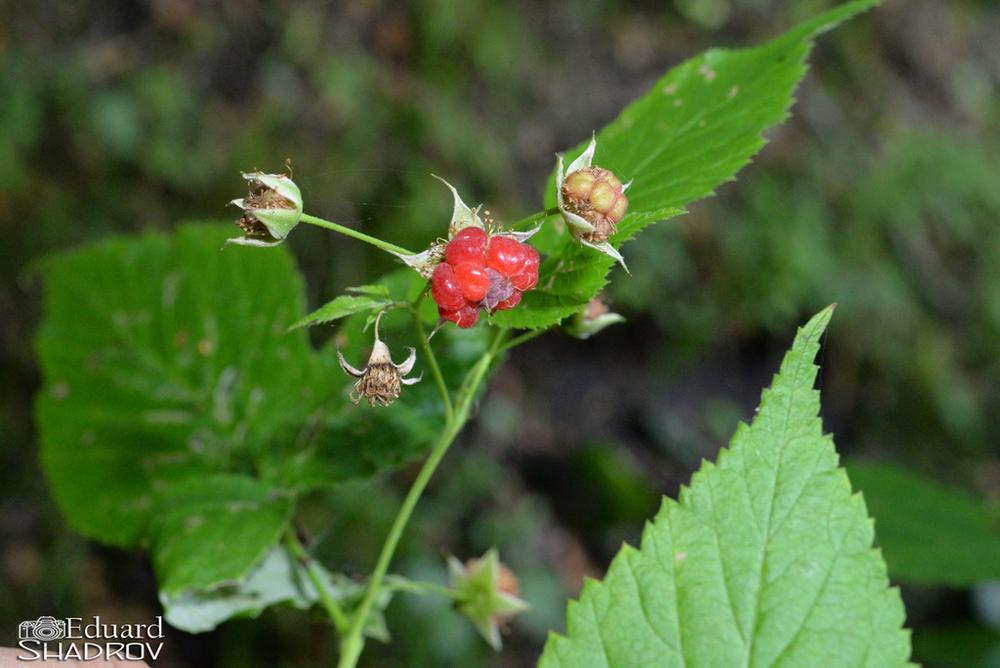 Full grown
Ripe red raspberries (Rubus idaeus) clustered on the cane, ready for harvest
Photo: Эдуард· CC BY-NC
Growing stages
What to look for, and what to do, at each point in its lifeRaspberries in Decatur run on a two-year cane cycle: new green primocanes grow all season, overwinter (for summer-bearing types) as woody floricanes that bloom and fruit the next year, then die — so the planting is a constant rotation of cutting out spent canes and thinning new ones, with harvest windows in early summer and/or fall depending on type.
- 1
Primocane Emergence
Mar - JunYou'll see New canes push up from the base and roots as thin, bright green, flexible shoots with soft thorns and small compound leaves, growing quickly — several inches a week in good weather.
Do Let them grow; thin out the weakest ones once a cluster of canes gets crowded.
- 2
Primocane Maturation
Jun - SepYou'll see Canes reach full height (4-6 feet), bark begins to toughen and dull from bright green to a duller green-brown, and lateral side-shoots start to form near the top.
Do Tip-prune primocanes once they reach about 30-36 inches to encourage branching, and tie tall canes to a trellis wire.
- 3
Dormancy (Floricanes Overwinter)
Late Nov - FebYou'll see Bare, woody, brown canes stand through winter. Older floricanes (canes that grew last year) look thicker and grayer-brown than younger green-brown primocanes right next to them in the same clump.
Do Do the main structural pruning now for summer-bearing types; cut everything to the ground for fall-bearing types grown as an annual-cut system.
- 4
Bloom
Overwintered floricanes: Apr-May. Primocane-fruiting tips: Jul-AugYou'll see Small white five-petaled flowers cluster where leaves meet the cane, opening in succession along each fruiting lateral.
Do Leave pollination to bees; keep soil consistently moist through bloom.
- 5
Green Fruit
2-4 weeks after bloomYou'll see Small, hard, pale green berry clusters form where flowers were, gradually swelling and turning from green to a light straw color before coloring up.
Do Keep even moisture and mulch to conserve it; net if birds are a problem.
- 6
Ripening & Harvest
Summer-bearing: Jun. Fall-bearing: Sep-Oct (light frost tolerant)You'll see Berries pass from green to pink to fully red (or gold/black depending on variety), plumping up and developing a slight dull sheen when ripe rather than looking hard and glossy.
Do Pick every 2-3 days by gently pulling — a ripe berry slides off its white core (receptacle) easily, leaving the core on the plant.
- 7
Post-Harvest Cane Removal
Right after each cane finishes fruitingYou'll see Fruited floricanes look spent: duller bark, dried fruit stems (strigs) left where berries were picked, and often some leaf yellowing, while nearby primocanes are still green and vigorous.
Do Cut every floricane that just finished fruiting down to the ground, ideally within a few weeks of the last pick.
- 8
Propagation
Tip-layering: Aug-Sep. Suckers: dormant season or early springYou'll see Long primocane tips arching down and touching soil will naturally root where they touch, forming a small plantlet with its own roots by fall. Root suckers pop up as new canes several inches to a few feet from the parent plant, connected underground.
Do Bury an arching tip 3-4 inches deep to root it, or dig and transplant rooted suckers.
Techniques — transplant, prune, propagate, divide, seed
Full sun
Even moisture during fruiting.
Give canes room and support.
Moderate spring feeding.
Care
- Know your type: summer-bearing fruits on second-year canes; everbearing fruits on first-year tips.
- Prune out spent/dead canes annually to keep airflow and yield.
Harvest
Pick when berries slip off the core easily.
Watch for
Cane diseases and spreading suckers — thin and tidy yearly.