Eastern Redbud ×3
Cercis canadensis
Spring bloom.
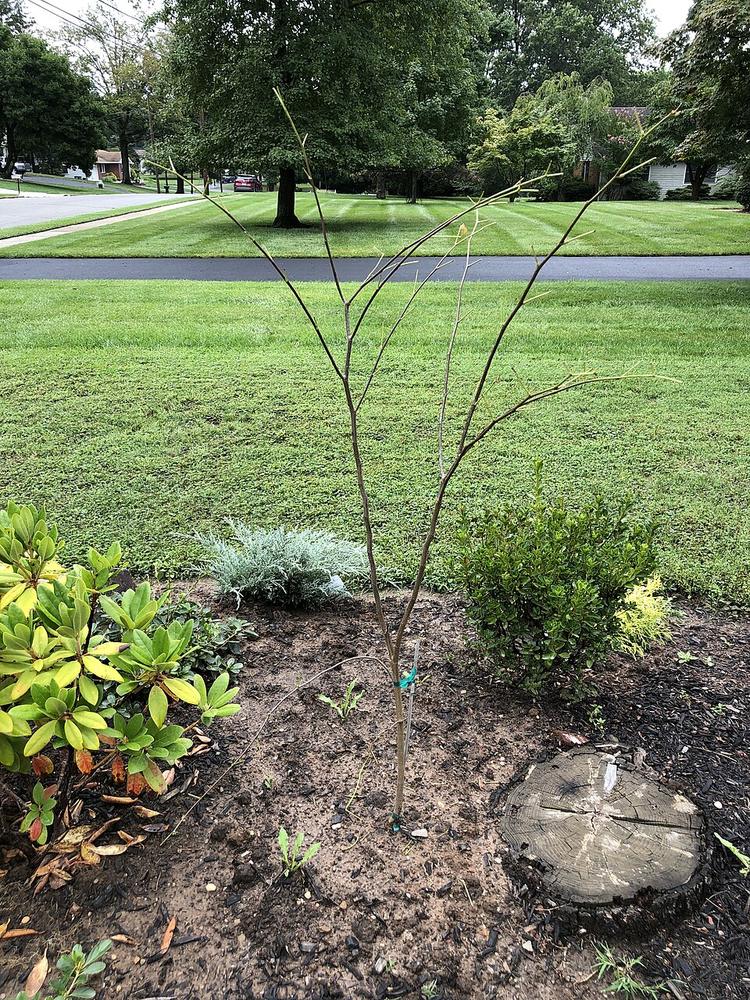 Young
YoungBare, recently-planted eastern redbud sapling with a few thin branches, staked in a residential landscape bed, September (no leaves/flowers).
Photo: Famartin· CC BY-SA 4.0
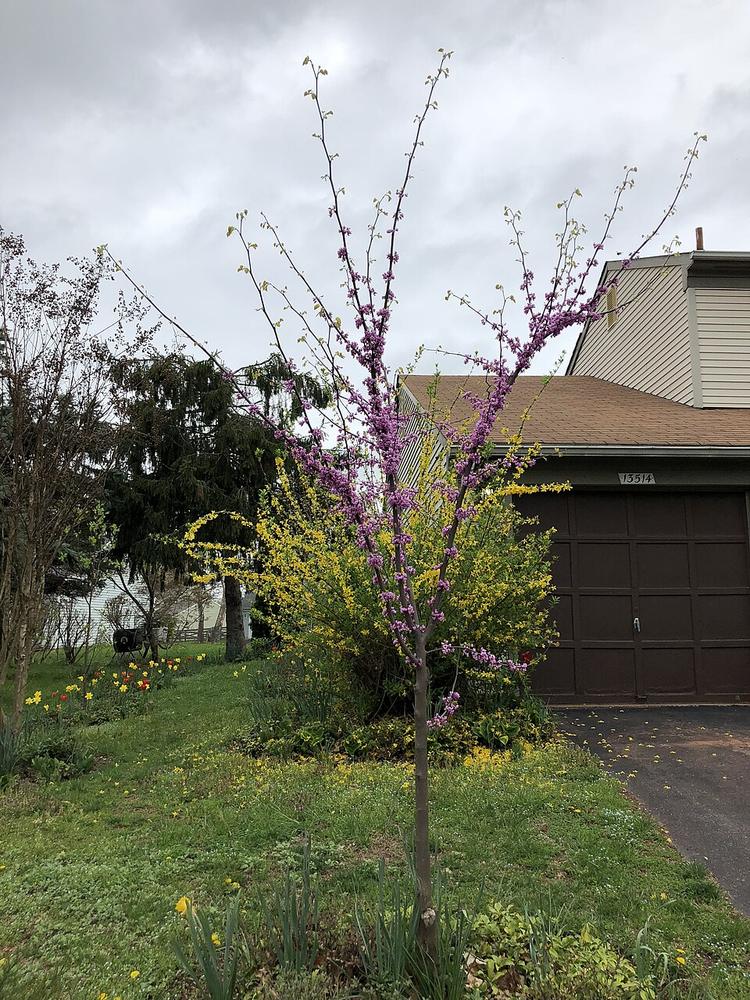 Growing
Young eastern redbud sapling in full bloom, magenta-pink flowers studding its bare branches in front of a suburban house, mid-April.
Photo: Famartin· CC BY-SA 4.0
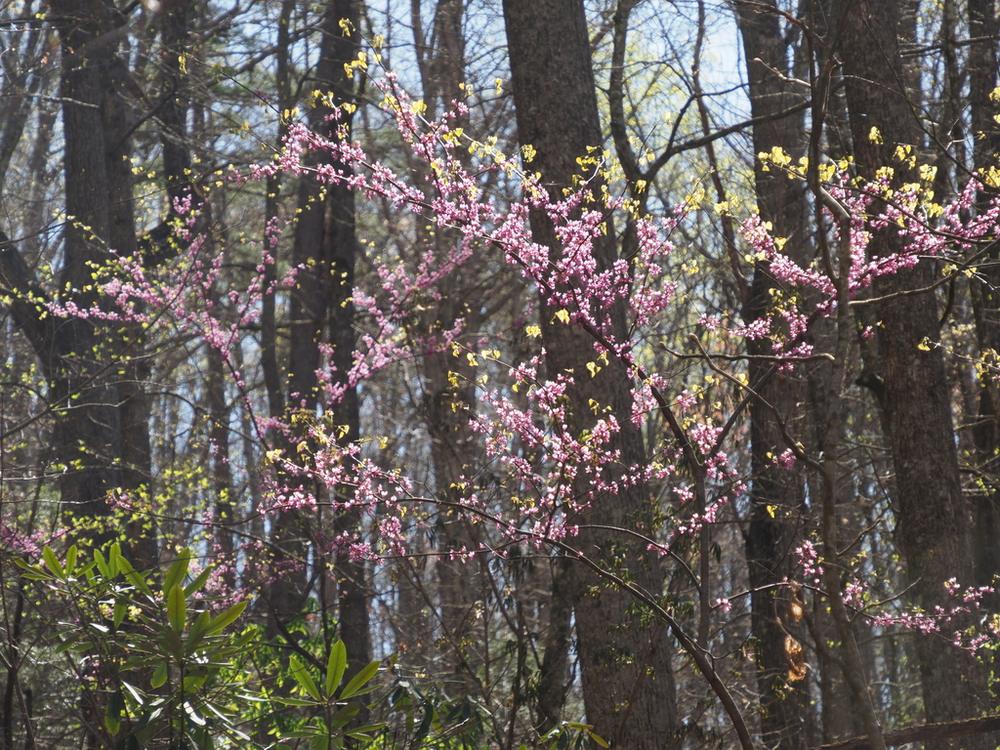 Full grown
Full-grown eastern redbud tree canopy in bloom, masses of pink-magenta flowers covering the branches against a wooded backdrop.
Photo: Suzanne Dingwell· CC BY-NC
Growing stages
What to look for, and what to do, at each point in its lifeYour three eastern redbuds cover their bare branches - and sometimes the trunk itself - in small magenta-pink pea-like flowers in March-April before any leaves emerge, then hold flat brown seed pods into fall and winter, needing only light corrective pruning in the dormant season since a redbud's naturally graceful, wide-spreading vase shape is best left to develop mostly on its own.
- 1
Establishment Years
First 2-3 growing seasons after plantingYou'll see Bark is thin and smooth, canopy growth is modest, and new leaves may wilt in afternoon heat if underwatered.
Do Water deeply once or twice a week during the growing season, keep a 2-3 inch mulch ring out to the drip line but away from the trunk, and stake only if the tree rocks visibly in wind.
- 2
Dormant Structure Check
December through February, while fully leaflessYou'll see With leaves off, you can see the trunk and branch framework clearly, including any crossing branches or competing leaders.
Do Do only light corrective pruning now - remove dead, damaged, or crossing wood. Save any larger shaping cuts for after bloom.
- 3
Bud Break and Bloom
March into April, before leaves emergeYou'll see Small magenta-pink, sweetpea-like flowers erupt directly from bare branches and sometimes straight from the trunk itself.
Do Enjoy the bloom and avoid any pruning now, since redbud sets its flower buds the previous summer.
- 4
Leaf-Out and Seed Pod Formation
April into JuneYou'll see Heart-shaped leaves emerge as the flowers fade, and flat, dry seed pods 2-4 inches long begin forming where blossoms were.
Do No action needed; if any structural shaping is wanted, this post-bloom window is the time to do it.
- 5
Summer Growth
May through AugustYou'll see The canopy fills in with heart-shaped leaves; any vigorous, fast, upright shoots at the trunk base are root suckers.
Do Remove root suckers and any water sprouts on limbs as you notice them.
- 6
Fall Color and Persisting Pods
October into November, ahead of first frost (~Nov 12)You'll see Foliage yellows, and the brown, dried seed pods from earlier in the season hang on the bare branches.
Do Enjoy the fall color; leave pods in place for winter interest or collect some for seed.
- 7
Winter Dormancy
December through FebruaryYou'll see Fully leafless, revealing the tree's smooth gray-brown bark and gnarled branch structure.
Do This returns to the dormant structure check - assess the framework and do only minimal corrective cuts.
Techniques — transplant, prune, propagate, divide, seed
Full sun to part shade by species
Deep weekly water through the first 1–2 establishment years.
Plant for mature size and clearance.
Minimal once established.
Care
- Water deeply while establishing; mulch the root zone (keep mulch off the trunk).
- See the plant's note for species-specific hazards (e.g. Washington Hawthorn thorns).
Harvest
Ornamental — grown for form, bloom, and shade.
Watch for
Establishment drought stress; site thorny species away from paths and the pool.