Tomato (Red Husky Cherry)
Red Husky
Cherry.
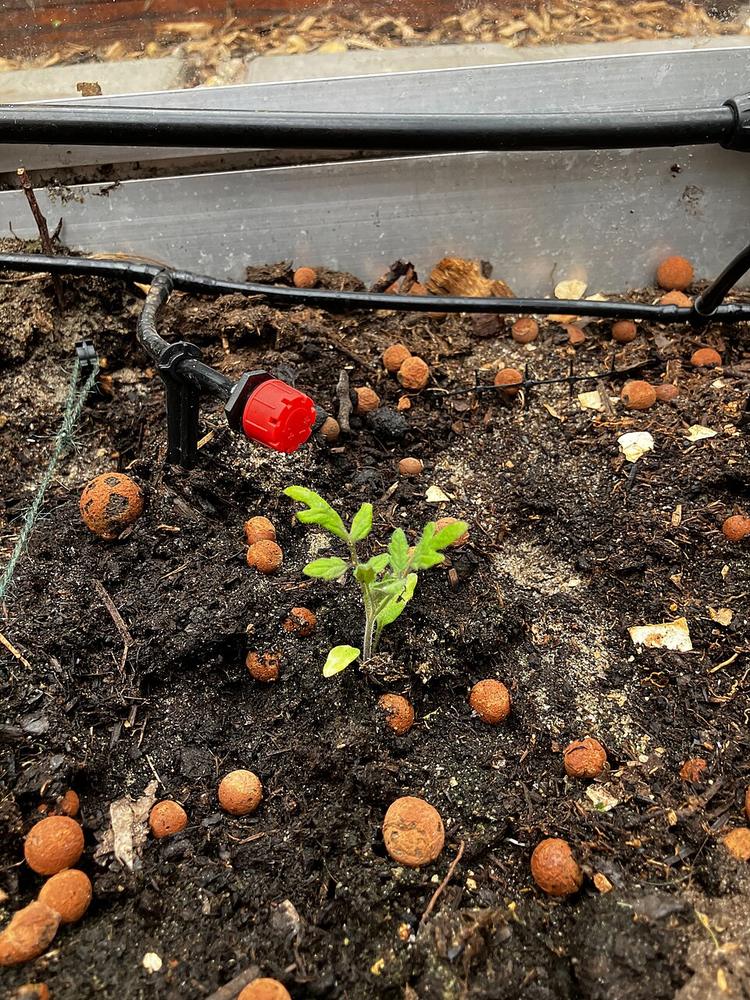 Young
YoungFreshly transplanted tomato seedling with first true leaves in garden soil
Generic tomato seedling
Photo: Mbehrisch· CC BY-SA 4.0
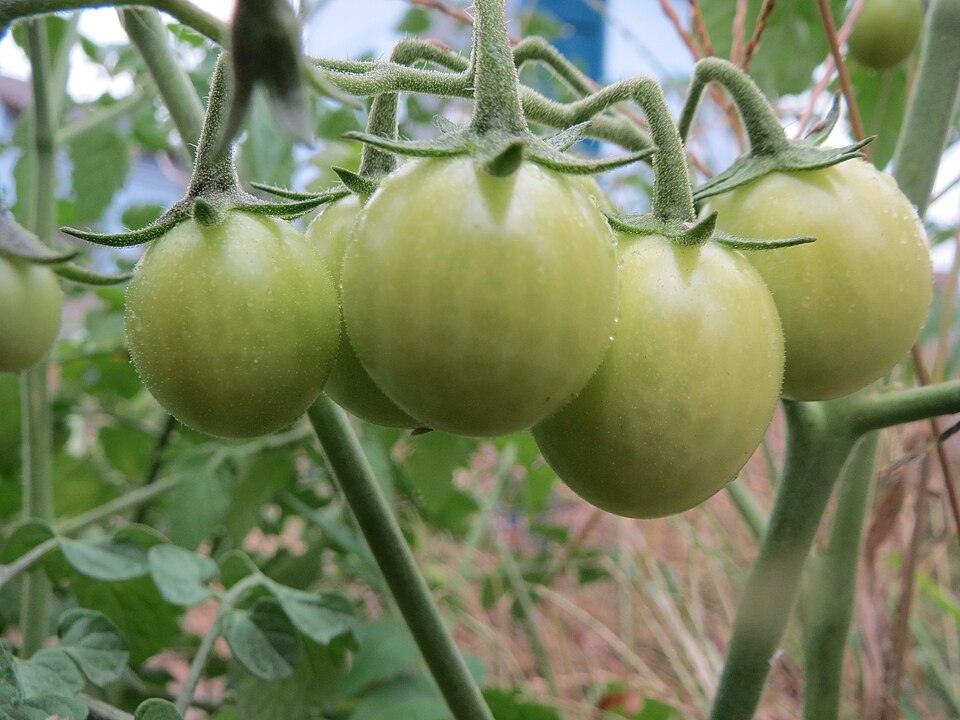 Growing
A cluster of round cherry-sized tomatoes still green on the truss, before ripening
Generic round cherry-type tomato plant; not the Husky Cherry Red cultivar specifically
Photo: AnRo0002· CC0
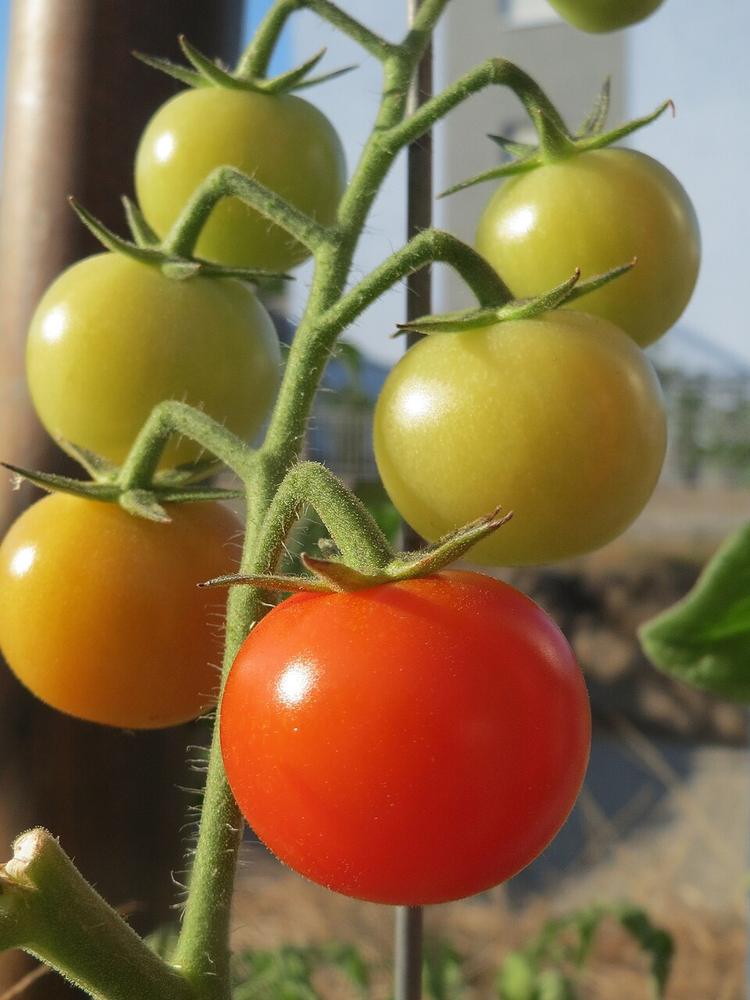 Full grown
A cluster of round cherry tomatoes on the vine, with one fully ripe red fruit in front and others still ripening
Generic red round cherry tomato on the vine; not the Husky Cherry Red cultivar specifically
Photo: AnRo0002· CC0
Growing stages
What to look for, and what to do, at each point in its lifeHusky Cherry Red is a dwarf F1 hybrid indeterminate cherry tomato that goes in after the Mar 28 last frost, stays compact at 3-4 feet with minimal pruning, and delivers heavy clusters of sweet 1 inch red fruit in a small footprint from early summer right up to the Nov 12 first frost.
- 1
Sowing Seed Indoors
Late Jan to mid-Feb, about 6-8 weeks before the Mar 28 last frostYou'll see Seeds are flat tan-yellow ovals. Within 5-10 days at 70-80F a pale hooked stem emerges, followed by two smooth oval seed leaves, before the true serrated tomato leaves appear.
Do Sow 1/4 inch deep in sterile seed-starting mix under grow lights kept close to the tray, with gentle bottom heat if needed.
- 2
Seedling and Hardening Off
Weeks 2-8 after sowing, roughly mid-Feb through late MarYou'll see By 4-6 weeks the plant has several sets of true leaves and a sturdy, compact stem. Leggy, pale, stretched growth signals insufficient light.
Do Pot up to a larger container as roots fill the cell, then harden off outdoors gradually over 7-10 days before transplant.
- 3
Transplanting Into the Bed or Grow Bag
After Mar 28 last frost, once soil has warmedYou'll see A ready transplant is 8-10 inches tall with a thick stem and 4-6 true leaves.
Do Strip the lower leaves and bury the stem deeply, straight down or on an angle, so most of the buried portion can root.
- 4
Minimal Pruning and Compact Branching
Weeks 3-8 after transplant, roughly mid-Apr through late May, continuing all seasonYou'll see The plant branches into a dense, compact bush naturally limited to about 3-4 feet, noticeably shorter and sturdier than a full-size indeterminate vine, with thick stems that need little staking to stay upright.
Do Leave most branching alone; only remove the very lowest growth near the soil line and any crowded or diseased stems.
- 5
Flowering
Weeks 6-10 after transplant, roughly late May through June, then continuing in flushes all summerYou'll see Small yellow flowers form in clusters (trusses) along the compact stems, setting heavily for the plant's small size.
Do Let bees and wind handle pollination outdoors; hand pollinate by gently vibrating trusses only in a screened bed or hydroponic setup where pollinators cannot reach.
- 6
Continuous Fruiting and Harvest
About 65 days from transplant to first ripe fruit, then continuing to first frost, roughly June through early NovYou'll see Round, 1 inch red cherry tomatoes ripen in large clusters along the compact stems, giving a big yield for the plant's small footprint.
Do Pick ripe fruit every couple of days by the handful, and keep an eye on cluster weight since even a compact plant can be pulled down by a heavily loaded truss.
- 7
Why Husky Cherry Red Seed Is Not Saved
Anytime during fruiting, when deciding whether to save seedYou'll see Ripe fruit looks uniform and true to type on the plant you are growing, since it is an F1 hybrid grown from a single cross made by the seed company.
Do Buy fresh Husky Cherry Red seed or transplants each season rather than saving seed from your own fruit.
Techniques — transplant, prune, propagate, divide, seed
Full sun
Even moisture; cherries crack easily with water swings.
24" / 1 per Gardyn center-column pod
Light, steady feeding.
Care
- High-sugar types (Sweet 100/150, yellow cherry) are best for fresh eating and bright, light infusions.
- In the Gardyn tower, cherry tomatoes may outgrow the unit — monitor and prune.
Harvest
Pick ripe and often to keep production going.
Watch for
Splitting from inconsistent water.