Tomato (San Marzano) New · Sep 2026
Solanum lycopersicum 'San Marzano'· San Marzano tomato, San Marzano dell'Agro Sarnese-Nocerino
Two plants added Sept 13. Planted this late in Zone 8a they have about 60 days to first frost (~Nov 12): put them in the sunniest spot you have — a 15–20 gal bag or pot each, or Bed A's east edge — stake them, pinch suckers hard so energy goes to the first two trusses, and pick anything showing color before frost to ripen indoors. Long-term this is the classic paste tomato; Roma stays the main 2026 sauce crop.
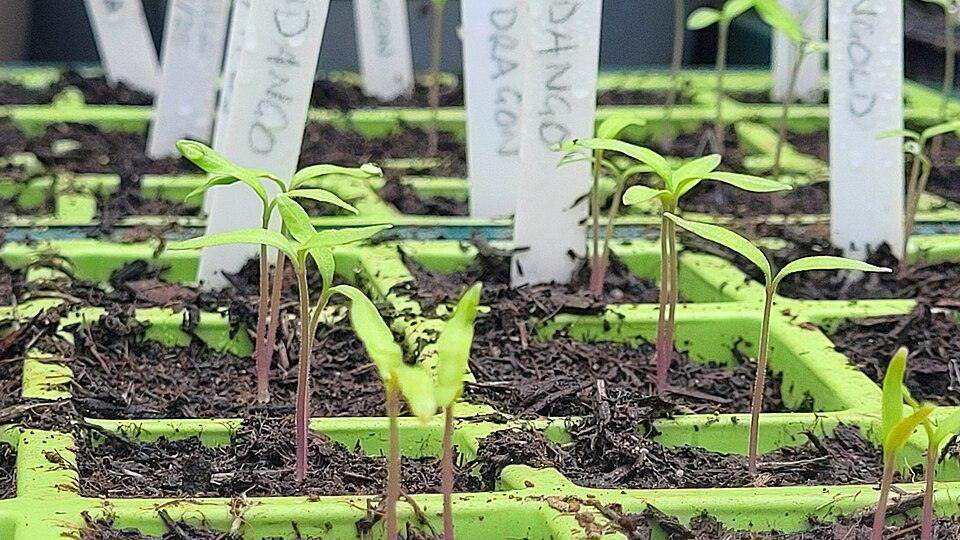 Young
YoungYoung tomato seedlings with true leaves in seed trays (generic tomato seedling, not cultivar-specific - San Marzano seedlings are indistinguishable from other tomato seedlings at this stage)
Species-level photo (not this exact cultivar).
Photo: Jonathan Billinger· CC BY-SA 2.0
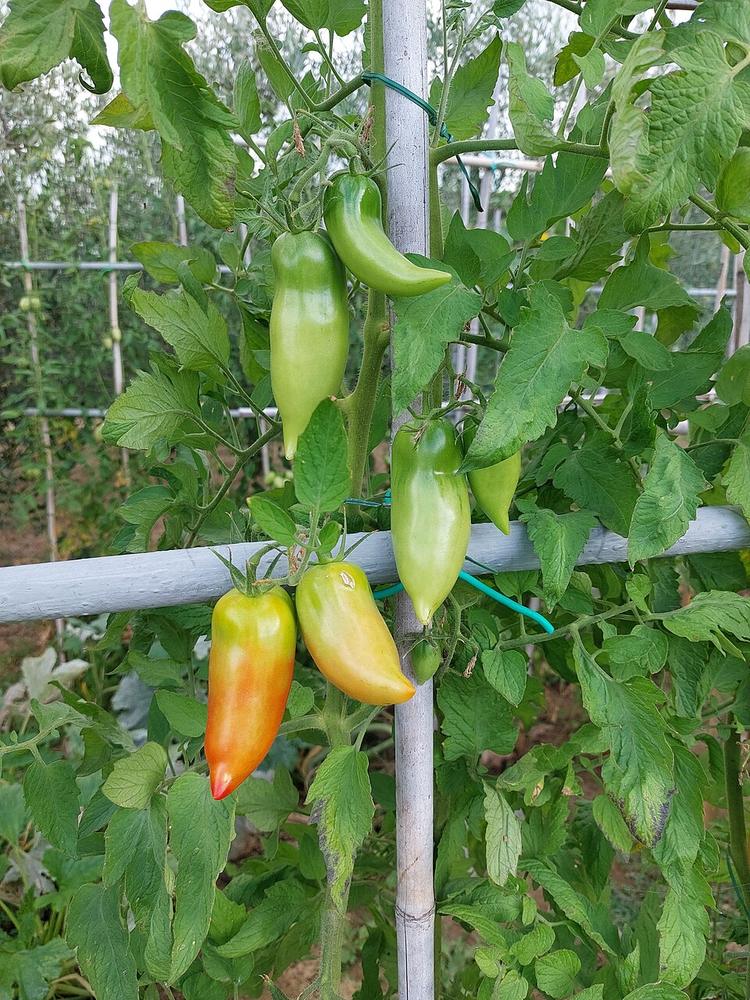 Growing
San Marzano plant with a cluster of long, cylindrical green paste tomatoes ripening on the vine, showing the characteristic elongated shape
Photo: Anna.Massini· CC BY-SA 4.0
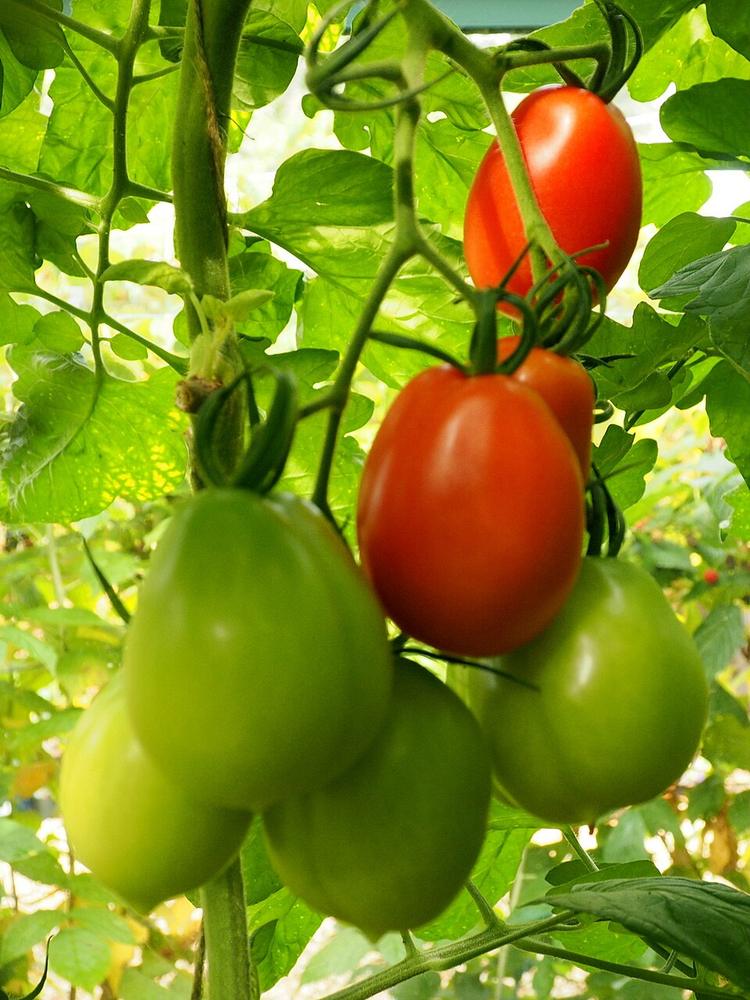 Full grown
Ripe red San Marzano tomatoes hanging on the vine alongside still-green fruit, showing the full-size cylindrical paste-tomato shape at harvest stage
Photo: Jonathan Billinger· CC BY-SA 2.0
Zone 8a spring: transplant outdoors mid-April, after the last frost (Decatur average ~March 20) once nights stay reliably above 50°F; start seed indoors 5-7 weeks earlier (late February).
Growing stages
What to look for, and what to do, at each point in its lifeSan Marzano is an Italian heirloom indeterminate paste tomato that normally goes in after the Mar 28 last frost and fruits continuously to the Nov 12 frost, but the two plants Luke added Sept 13 are going in late with only about 60 days left before frost, so this guide leads with that late-season push: sunniest spot, hard pruning to focus energy, and picking anything colored before the cold hits.
- 1
Late Sept 13 Planting: Racing the Frost
Transplanted Sept 13, 2026, with roughly 60 days left before the Nov 12 first frostYou'll see A young transplant with 4-6 true leaves going into soil that is still warm from summer but with a shrinking daylight and heat window ahead of it.
Do Put both plants in the sunniest spot available, a 15-20 gallon grow bag or pot each, or the east edge of Bed A, stake immediately, and pinch suckers hard from the start so energy goes to the first two flower trusses rather than new vegetative growth.
- 2
Sowing Seed Indoors (Normal-Season Timing)
Late Jan to mid-Feb, about 6-8 weeks before the Mar 28 last frost, for a full-season planting in future yearsYou'll see Seeds are flat, tan-yellow ovals. Within 5-10 days at 70-80F a pale hook-shaped stem pushes up, followed by two smooth oval seed leaves (cotyledons), before the true serrated tomato leaf appears.
Do Sow 1/4 inch deep in sterile seed-starting mix under grow lights kept close to the tray, with gentle bottom heat if the room is cool.
- 3
Deep Transplanting Into the Bed
In a normal season: after Mar 28 last frost, once soil has warmedYou'll see A ready transplant is 8-12 inches tall with a thick stem and 4-6 true leaves.
Do Strip the lower leaves and bury the stem deeply, either straight down or in a shallow trench, so most of the buried portion can root.
- 4
Vegetative Growth and Hard Sucker Pruning
Weeks 3-8 after transplant in a normal season; from day one for the late Sept plantingYou'll see The plant sends up new shoots (suckers) from the crotch where each leaf branch meets the main stem. Left alone, every sucker becomes its own leader with its own leaves and flower trusses.
Do Pinch out suckers weekly, training to 1-2 main leaders; for the late Sept planting, prune harder than usual, removing essentially all side growth so the plant's limited remaining season goes entirely into the first trusses that have already set or are about to.
- 5
Flowering
Weeks 6-10 after transplant in a normal season; within the first couple weeks for the late Sept plantingYou'll see Small yellow star-shaped flowers form in clusters (trusses) along the stem.
Do Let bees and wind handle pollination outdoors; hand pollinate by gently vibrating trusses in a screened bed or hydroponic setup.
- 6
Fruit Set and Racing the Frost
For the late Sept planting: whatever sets over the following weeks, through the Nov 12 first frost; in a normal season, continuing from midsummer to frostYou'll see Oblong, thick-walled paste fruit with a pointed blossom end swells slowly; San Marzano's classic shape is longer and narrower than Roma, with fewer seeds and thicker flesh.
Do For the late planting, watch closely as frost approaches and pick any fruit showing color, even a blush, before a hard freeze; ripen these indoors on a windowsill or in a paper bag rather than leaving them on the vine.
- 7
Seed Saving by Wet Fermentation
From a fully ripe fruit in a full season, or from the best fruit the late planting manages to ripenYou'll see A fully ripe, elongated San Marzano fruit with no cracking is the right pick; the seeds inside sit in a gel sac that must be broken down before drying.
Do Scoop seeds and gel into a labeled jar with a little water, let it ferment a few days until a mold film forms, then rinse and dry the sunk seeds thoroughly before storing.
Techniques — transplant, prune, propagate, divide, seed
At a glance
- Botanical name
- Solanum lycopersicum 'San Marzano'
- Family
Solanaceae
- Type
Warm-season annual vegetable (indeterminate paste tomato)
- Native range
Cultivated heirloom selected in the Agro Sarnese-Nocerino area near Naples, Italy (volcanic soils at the foot of Mount…
- Hardiness
Zones Grown as an annual in all US zones; USDA 8a is well within the frost-free growing season needed
- Height
5-6 ft vine, taller if not topped; needs a tall stake, cage, or trellis
Full sun, 6-8+ hours daily for best fruit set and to reduce disease pressure
Even, consistent moisture, about 1-2 inches per week; avoid letting the root zone swing…
24-36 inches between staked/caged plants, with 3-4 ft between rows for airflow and easier…
Well-drained, fertile loam, pH 6.2-6.8. In Decatur's clay: work in 2-3 inches of compost…
Care
- Set transplants deep, burying two-thirds of the stem (strip lower leaves) to encourage a stronger root system
- Stake or cage at planting time - this variety is a heavy, vigorous indeterminate vine and will sprawl and snap without support
- Mulch heavily (straw, shredded leaves) right after planting to even out soil moisture and cut down on soil-splash diseases
Good to know
True San Marzano tomatoes are grown in the Agro Sarnese-Nocerino region of Campania, Italy near Mount Vesuvius and hold EU Protected Designation of Origin (DOP) status since 1996 for canned product bearing the name -…
Where it fits
Basil, marigold, and alliums (onion, garlic) are classic tomato companions and fit Luke's existing beds;
Harvest
Pick when fruit is fully red and slightly soft to the touch, twisting or clipping at the stem;
In the kitchen
The classic Italian canning and sauce tomato - thick, dry, meaty flesh with a small seed cavity and few seeds, lower acidity and sweeter than a…
Watch for
Prone to blossom-end rot (calcium uptake disrupted by uneven watering, common in clay soils and paste types generally) - manage with mulch and steady…
Wildlife & pollinators
Flowers offer pollen only (no nectar) and need buzz pollination - bumblebees and other native bees vibrate the flower to release pollen;
Toxicity
Foliage, stems, and unripe green fruit contain solanine and are toxic to dogs, cats, and horses if eaten in quantity (GI upset, drooling, lethargy);
Propagation
Open-pollinated heirloom - seed saved from an isolated plant breeds true to type. Ferment, rinse, and dry seed as described in care notes;
General Roma / Paste Tomato guide
- DO NOT prune determinate Roma — every flower is a potential fruit.
- Calcium + consistent water are critical: a determinate dump magnifies any blossom-end rot.
- Yield push: from ~25 lb/plant baseline toward 40–50 lb/plant with calcium, deep water, mulch, feeding.
Used in 1 recipe
Sources (11)
- https://en.wikipedia.org/wiki/San_Marzano_tomato
- https://www.botanicalinterests.com/products/san-marzano-pole-tomato-seeds
- https://seedracks.southernexposure.com/products/san-marzano-tomato-seed-packet
- https://plants.ces.ncsu.edu/plants/solanum-lycopersicum/
- https://secure.caes.uga.edu/extension/publications/files/html/B577/B577PlantingChart.pdf
- https://site.extension.uga.edu/gardener/2025/04/growing-good-tomatoes/
- https://trueleafmarket.com/products/tomato-seeds-san-marzano-indeterminate
- https://www.johnnyseeds.com/vegetables/tomatoes/heirloom-tomatoes/san-marzano-ii-organic-tomato-seed-3405G.html
- https://commons.wikimedia.org/wiki/File:Pomodori_San_Marzano_in_maturazione_-_biologici.jpg
- https://commons.wikimedia.org/wiki/File:Tomato_%27San_Marzano%27_-_geograph.org.uk_-_6276859.jpg
- https://commons.wikimedia.org/wiki/File:Tomato_seedlings_2025_-_geograph.org.uk_-_7958071.jpg