Scabiosa
'Butterfly Blue' type
Pollinator favorite. Divide Sept–Oct or the following spring.
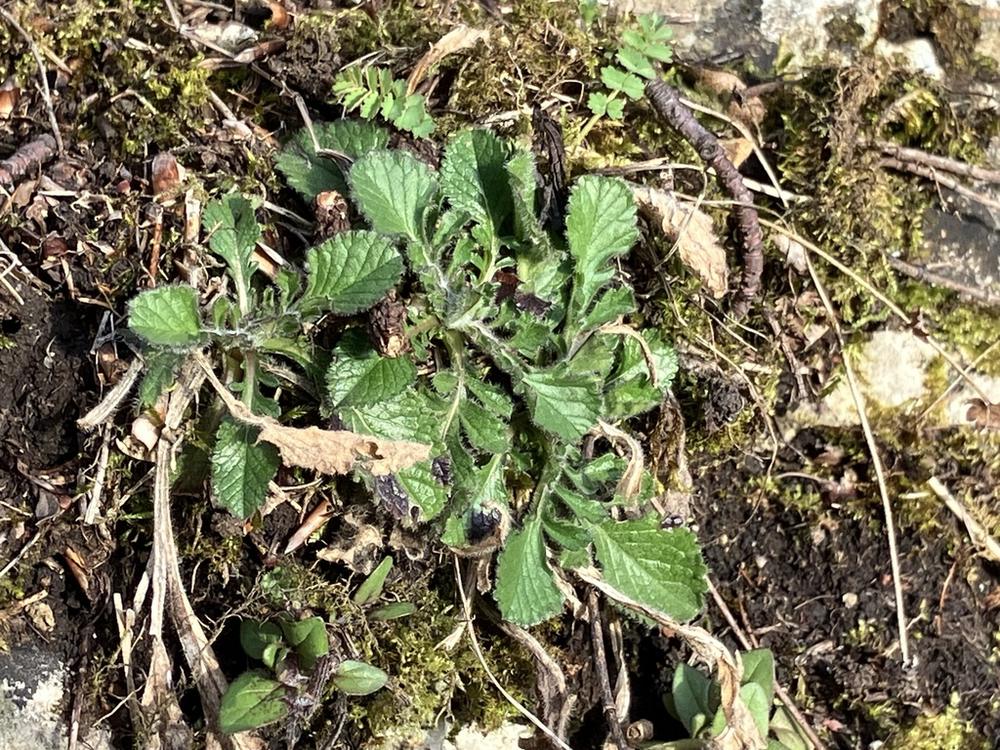 Young
YoungFresh basal rosette of scalloped grey-green scabiosa foliage emerging in early spring, no flower stalks yet.
Generic Scabiosa columbaria basal rosette (species-level, wild plant); no young-growth shot of 'Butterfly Blue' specifically was found.
Photo: Stephan Pflume· CC BY-NC
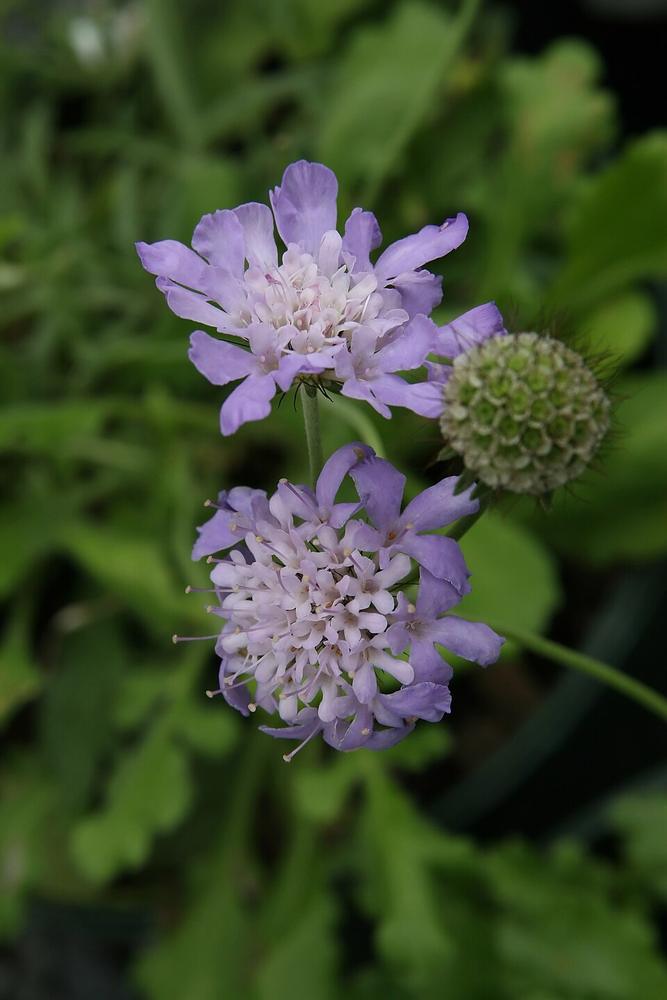 Growing
Bushy 'Butterfly Blue' clump with visible foliage, one still-closed globe bud, and two lavender-blue flowers just opening.
Photo: Photo by David J. Stang· CC BY-SA 4.0
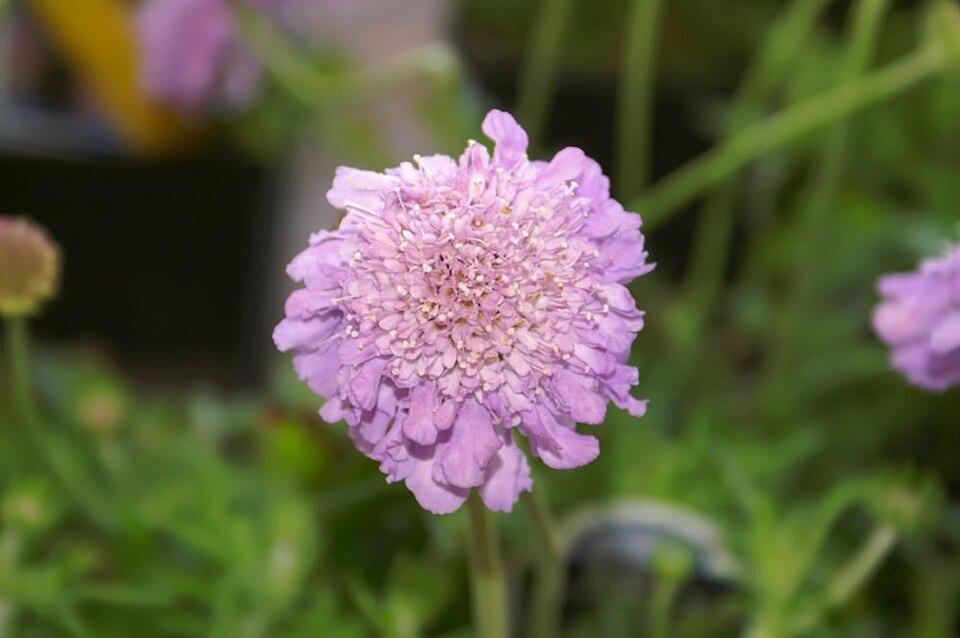 Full grown
Scabiosa columbaria 'Butterfly Blue' in full bloom, a single lavender pincushion flower on its wiry stem, photographed at the US National Arboretum.
Photo: Photo by David J. Stang· CC BY-SA 4.0
Growing stages
What to look for, and what to do, at each point in its lifeScabiosa 'Butterfly Blue' is a pollinator-favorite perennial that forms a low rosette before sending up wiry stems topped with lavender-blue pincushion flowers from May through frost, rewarding weekly deadheading with continuous rebloom, and gets divided every few years in September-October or the following spring to keep it vigorous in its full-sun, well-drained spot.
- 1
Establishing
First growing season after plantingYou'll see A young rosette looks small relative to its eventual size, with roots not yet filling the surrounding soil.
Do Water deeply 2-3 times a week for the first month, tapering to once a week as it establishes. Make sure the site drains well - this plant is intolerant of wet soil.
- 2
Spring Rosette Growth
March into AprilYou'll see A low rosette of scalloped, grey-green foliage forms before any flower stems rise.
Do Top-dress lightly with compost; no other action needed yet.
- 3
Bloom Onset
MayYou'll see The first lavender-blue, pincushion-shaped flowers open on wiry stems above the foliage.
Do Begin the weekly deadheading routine as soon as the first flowers fade.
- 4
Repeat Bloom Season
May through first frost (~Nov 12), with weekly deadheadingYou'll see New lavender-blue flowers continue opening steadily as long as spent ones are removed.
Do Deadhead weekly, snipping the flower stem down to a lower leaf junction or side bud rather than just below the flower head.
- 5
Fall Slowdown
September into OctoberYou'll see Bloom production tapers as days shorten, even with continued deadheading.
Do This is a good window to divide the clump if it needs it.
- 6
Winter Dormancy
November through FebruaryYou'll see Foliage dies back or holds a low rosette through Decatur's mild winters, depending on how cold it gets.
Do Clear away any fully dead foliage to tidy the bed; no cutting into live rosette growth.
- 7
Division
September-October or the following spring, every few yearsYou'll see The clump has become congested or bloom has noticeably declined compared to previous years.
Do Dig and divide the clump, replanting vigorous sections.
Techniques — transplant, prune, propagate, divide, seed
Varies by species (see notes)
Varies — match to species (moisture-lovers vs. dry).
Right plant, right place.
Most ornamentals/wildflowers want LEAN soil — do not over-fertilize.
Care
- Divide most clumping perennials in fall (Sept–Oct).
- See the plant's own note for species-specific timing and cautions.
Harvest
Grown for bloom/pollinators, not harvest.
Watch for
Some spread aggressively (e.g. Liriope spicata via stolons) — mind placement.