Southern Shield Fern New · Sep 2026
Thelypteris kunthii· Southern shield fern, Southern wood fern, Kunth's maiden fern
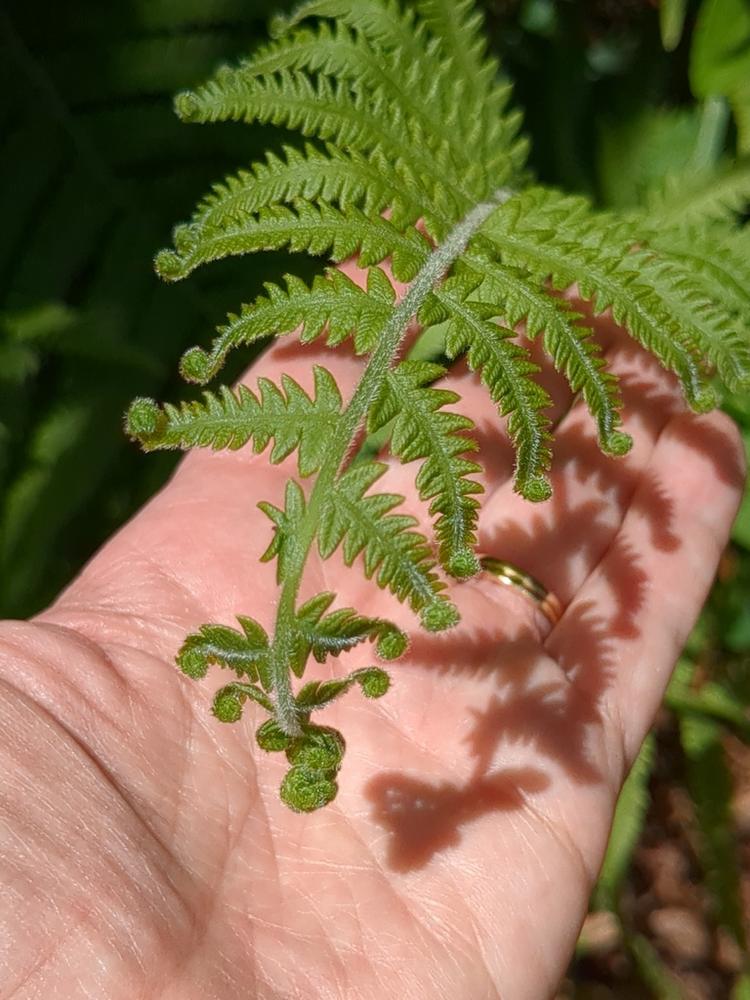 Young
YoungYoung fiddlehead stage (mid-May, Stockbridge GA): a small new frond with the tips of its pinnae still curled as croziers, held in hand for scale.
Photo: hid_g· CC BY-NC
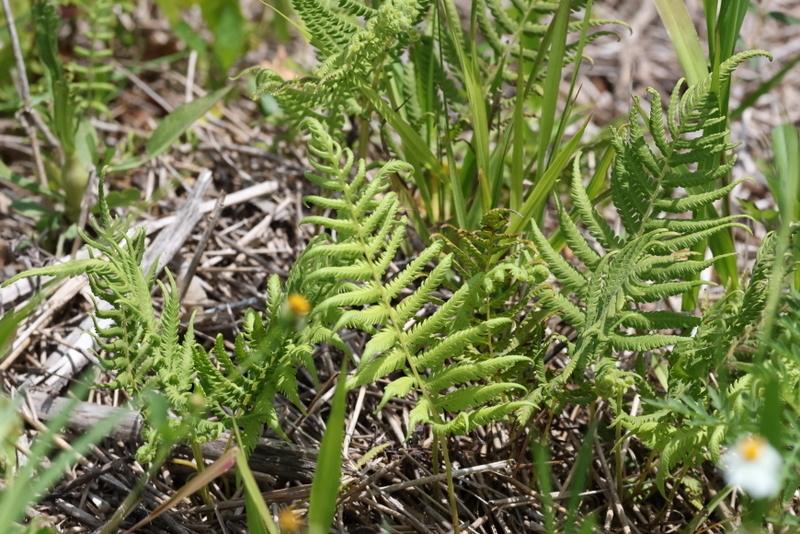 Growing
Unfurling fronds in late April (south Florida): several fresh yellow-green fronds expanding from the rhizome, the crozier tips still visible at the top of each one.
Photo: Corey Callaghan· CC BY-NC
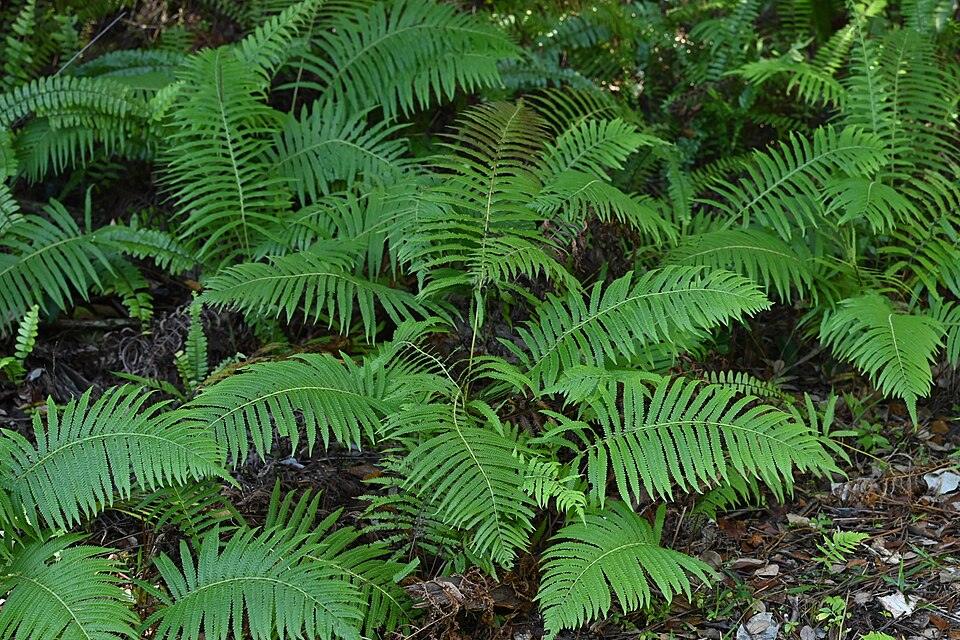 Full grown
Mature colony of long, arching, bright green fronds forming a solid ground cover in shade, the look of an established planting in its second or third summer.
Photo: Krzysztof Ziarnek, Kenraiz· CC BY-SA 4.0
Zone 8a Decatur: plant container ferns September-October or March-April; fall planting gives the best root establishment before summer heat. Divide in early spring (March) just as fiddleheads appear, or in early fall.
Growing stages
What to look for, and what to do, at each point in its lifeThe southern shield fern (Thelypteris kunthii) dies back to the ground each winter in Decatur's Zone 8a climate and returns each spring as a wave of fiddleheads that unfurl into a lush colony of arching fronds, gradually widening year over year via creeping rhizomes until Luke divides it to keep it in bounds or to start new patches.
- 1
Winter dormancy
December through FebruaryYou'll see Fronds die back to brown, collapsed foliage at the base or disappear almost entirely after a hard freeze, leaving bare ground where the colony was. The rhizomes survive underground, unaffected by the cold.
Do Cut back and remove dead frond debris in late winter, before new fiddleheads emerge, to tidy the bed and reduce slug and disease habitat.
- 2
Fiddleheads emerging
Late spring, among the last ferns to emerge, typically April into MayYou'll see Tightly coiled, fuzzy green-brown spirals push up from the soil, each looking like a small scroll or the curled head of a violin. They stand a few inches tall at first and slowly uncurl upward and outward over 1-2 weeks.
Do Leave fiddleheads completely undisturbed as they unfurl, this is not a fern for eating fiddleheads (some fern species are edible, but do not assume this one is or forage it). Keep the bed consistently moist during this flush of growth.
- 3
Frond expansion
May through JuneYou'll see Fronds fully unfurl into arching, finely divided light-to-medium green fern leaves, typically reaching 2-3 feet tall and wide in good conditions. New fronds continue emerging from the crown and spreading rhizomes through this period.
Do Water during dry spells to support lush growth, though established plantings tolerate short droughts once rooted. No pruning is needed at this stage, let the colony fill in.
- 4
Colony spread
Ongoing through the growing season, most visible year to year rather than week to weekYou'll see New fronds pop up progressively farther from the original planting spot as underground rhizomes extend outward, gradually knitting individual clumps into one continuous, naturalistic-looking colony rather than a single tight clump.
Do Monitor the colony's edges each season and decide whether to let it continue spreading or to install a barrier or cut back the rhizomes at the boundary you want to hold.
- 5
Spore production
Summer, on mature frondsYou'll see Small round to oblong brown or tan dots called sori appear in rows on the undersides of mature fertile fronds. These are not pests or disease, they are the fern's reproductive structures.
Do No action needed. Leave sori-bearing fronds in place; they are a normal, healthy sign of a mature fern.
- 6
Fall decline
October through November, around the first frost (~Nov 12)You'll see Fronds begin to yellow, brown, and flatten as cold weather arrives, eventually collapsing to the ground after a hard freeze.
Do Leave the declining fronds in place through fall if a tidy look is not a priority, they can offer some winter ground cover and slowly break down, or cut them back once fully brown.
Techniques — transplant, prune, propagate, divide, seed
At a glance
- Botanical name
- Thelypteris kunthii
- Family
Thelypteridaceae (marsh fern family)
- Type
Deciduous native perennial fern (semi-evergreen only in frost-free areas)
- Native range
Southeastern United States from South Carolina to Florida and west to Texas, south through Mexico, Central America,…
- Hardiness
Zones 7-10
- Height
2-3 ft; fronds can reach 4 ft in moist shade
Part shade to full shade. Tolerates morning sun or a few hours of direct sun if the soil…
Medium to moist. Keep evenly moist the first season, after which it tolerates short…
18-24 in apart for ground cover that knits together in 2-3 seasons;
Any moist soil: sand, loam, clay or limestone, acid to neutral pH.
Care
- Plant with the crown at soil level in shade with reliable moisture; water 2-3 times a week for the first 8-10 weeks, then weekly during dry spells the first summer.
- Mulch 2-3 in with pine straw, shredded leaves or hardwood mulch to hold moisture and feed the soil; top up every fall.
- Leave the browned fronds in place over winter to shelter the crown, then cut them to just above the crown in late February or early March before new fiddleheads emerge.
Good to know
The tag name Thelypteris normalis (Souther Shield) is an older synonym still used in the nursery trade; the accepted name is Thelypteris kunthii, and some recent floras use Pelazoneuron kunthii or Christella normalis.
Where it fits
Underplant for dogwoods, oaks and azaleas; combine with wild ginger, foamflower, Solomon's seal, hellebores, hostas and river oats.
Harvest
Not a harvest crop (fiddleheads of this species are not eaten).
Watch for
No serious pests or diseases; occasional slugs, snails and fungal leaf spot in crowded, soggy plantings.
Wildlife & pollinators
Fronds give cover for toads, lizards and ground-feeding birds. Deer resistant (ferns are rarely browsed). No known larval host relationships.
Toxicity
None known for pets or people; not on the ASPCA toxic plant list. It is not a fern grown for edible fiddleheads.
Propagation
Division of rhizomes in early spring or fall (easiest). Spores sown on sterile moist mix in summer take 1-2 years to reach planting size.
General Shade Fern guide
- Plant in fall or early spring in humus-rich, moist soil; amend clay with 2–3" compost or leaf mold.
- Mulch with shredded leaves — ferns are woodland plants and love a leaf layer.
- Leave dead fronds over winter to insulate the crown; cut to the ground in late Feb before fiddleheads emerge.
- Divide in early spring every 3–4 years or to spread the colony.
- Never let it dry out the first summer; wilting fronds are the early warning.