Strawberry
Hanging-bag strawberries
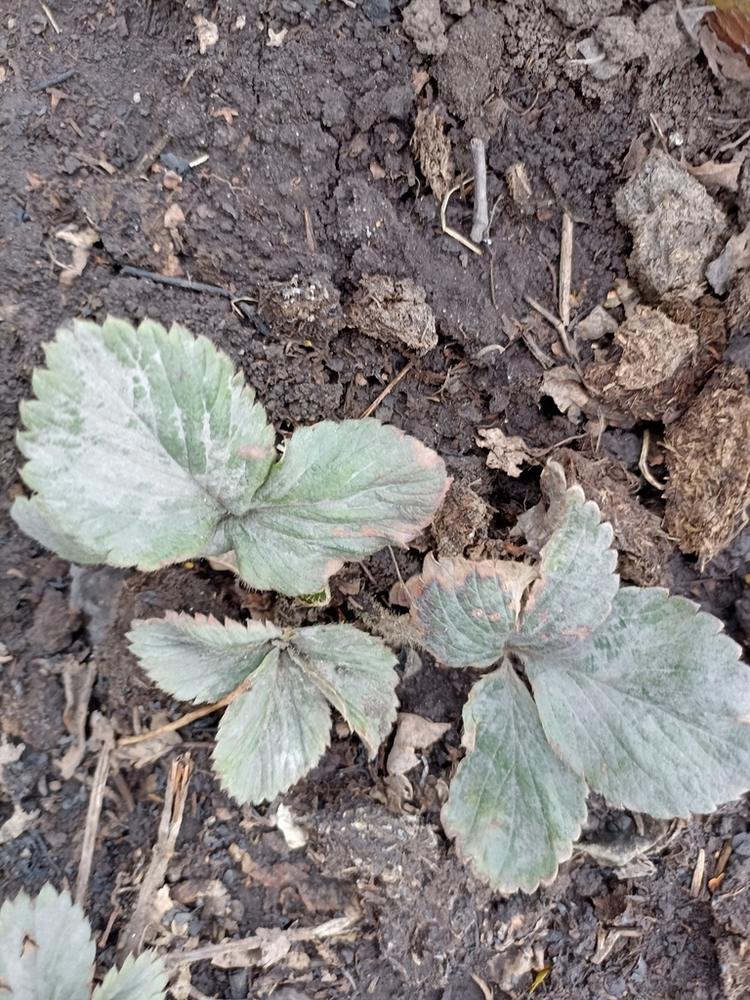 Young
YoungNewly emerged young strawberry plantlets (Fragaria x ananassa) with just a few small trifoliate leaves, growing in bare garden soil
Photo: Лиза Лазуткина 💕😍❤· CC BY-NC
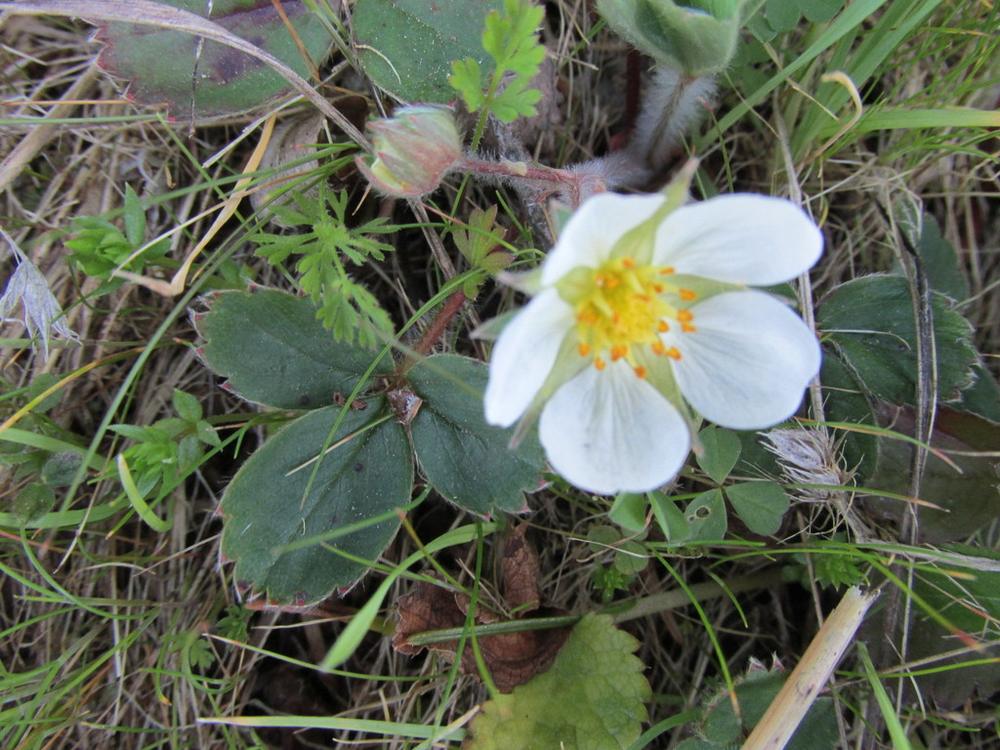 Growing
Strawberry plant in bloom, single white five-petaled flower with yellow center among the leaves
Photo: carrievaughn· CC BY-NC
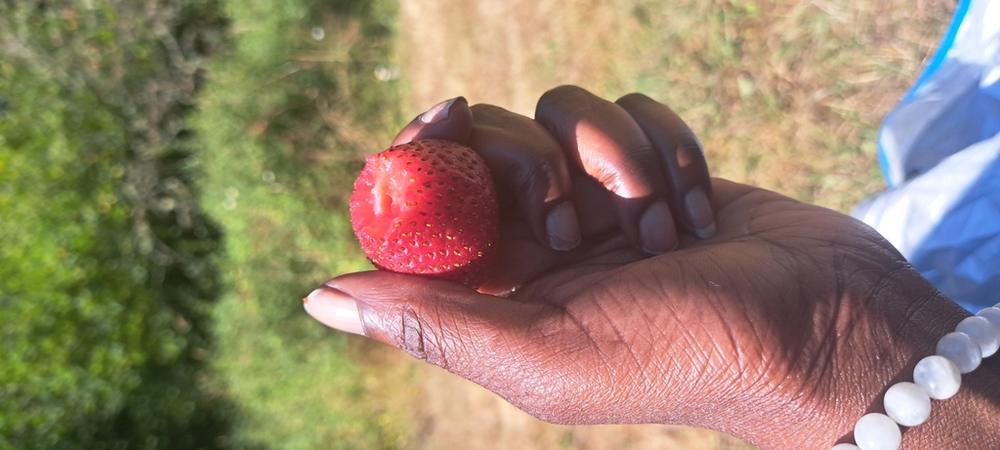 Full grown
Fully ripe red strawberry (Fragaria x ananassa) held in hand at harvest size
Photo: Raina Akua· CC BY-NC
Growing stages
What to look for, and what to do, at each point in its lifeIn hanging bags in Decatur, strawberries flush new leaves in late winter, bloom and fruit hard in April-May, then spend summer sending out runners you can peg down for free new plants, before renovation pruning and light winter protection resets the crown for another year.
- 1
Crown Wake-Up
Late Jan - FebYou'll see The low, tight crown (the thick stub at the base) pushes out small, crinkled, bright green trifoliate leaves after sitting dormant or semi-dormant through the coldest weeks.
Do Remove any dead or blackened leaves from last season and start light feeding as new growth appears.
- 2
Vegetative Flush
Late Feb - MarYou'll see Leaves multiply quickly, the crown thickens, and small flower clusters begin forming tucked down in the center of the crown, still closed.
Do Keep soil evenly moist and feed with a balanced or fruit-focused fertilizer.
- 3
Bloom
Late Mar - AprYou'll see White five-petaled flowers with a yellow center open in small clusters just above the leaves, opening over 1-2 weeks per plant.
Do Leave flowers alone for bees; protect from hard freezes if blooms are open during a cold snap.
- 4
Fruit Set & Green Berries
AprYou'll see Petals drop and the small green center swells into a hard, pale green, bumpy berry with the seeds (achenes) sitting flush on the surface.
Do Keep watering consistent — irregular watering now causes misshapen or hollow berries.
- 5
Ripening & Harvest
Late Apr - Jun (with possible light fall rebloom on everbearing/day-neutral types)You'll see Berries turn from pale green to white to red, coloring from the tip up to the stem end (the shoulders near the calyx are often the last part to fully redden).
Do Pick when fully red including the shoulders, snapping the stem rather than pulling the berry.
- 6
Runner Production
Jun - AugYou'll see Long, thin, leafless stems (stolons) shoot out sideways from the crown after fruiting, each one carrying a small plantlet with tiny leaves and root nubs at intervals along its length.
Do Peg down the runner plantlets where you want new plants, or snip off runners you don't want to keep the mother plant vigorous.
- 7
Renovation After Harvest
Right after the main harvest finishes, typically JunYou'll see Older leaves look tired, sun-scorched, or diseased (spotted) compared to fresh new growth pushing from the crown center.
Do Trim off the oldest, worst leaves (not the crown), remove unwanted runners, and refresh the soil surface with compost and fertilizer.
- 8
Fall Flower Bud Formation
Sep - OctYou'll see Plants look like a compact rosette of fresh leaves; nothing visibly flower-like yet, but next spring's flower buds are being initiated inside the crown in response to shortening days and cooling temperatures.
Do Keep plants fed and watered through fall so they enter winter with a strong, healthy crown.
- 9
Winter Protection
Nov - FebYou'll see Growth slows and outer leaves may flatten or bronze slightly in cold snaps; the crown stays alive at soil level.
Do Insulate hanging bags on nights forecast into the teens, and mulch or move ground plantings.
Techniques — transplant, prune, propagate, divide, seed
Full sun
Consistent moisture; hanging bags dry out fast.
Hanging bags / 8–12" in ground.
Light, steady feeding through fruiting.
Care
- Hanging bags keep fruit clean and away from slugs.
- Pinch early runners to push energy into fruit, or peg runners to propagate new plants.
Harvest
Pick fully red; they don't ripen further off the plant.
Watch for
Slugs, birds, and rot where fruit touches wet soil.