Wild Ginger New · Sep 2026
Asarum canadense· Canadian wild ginger, Canada wild ginger, Wild ginger
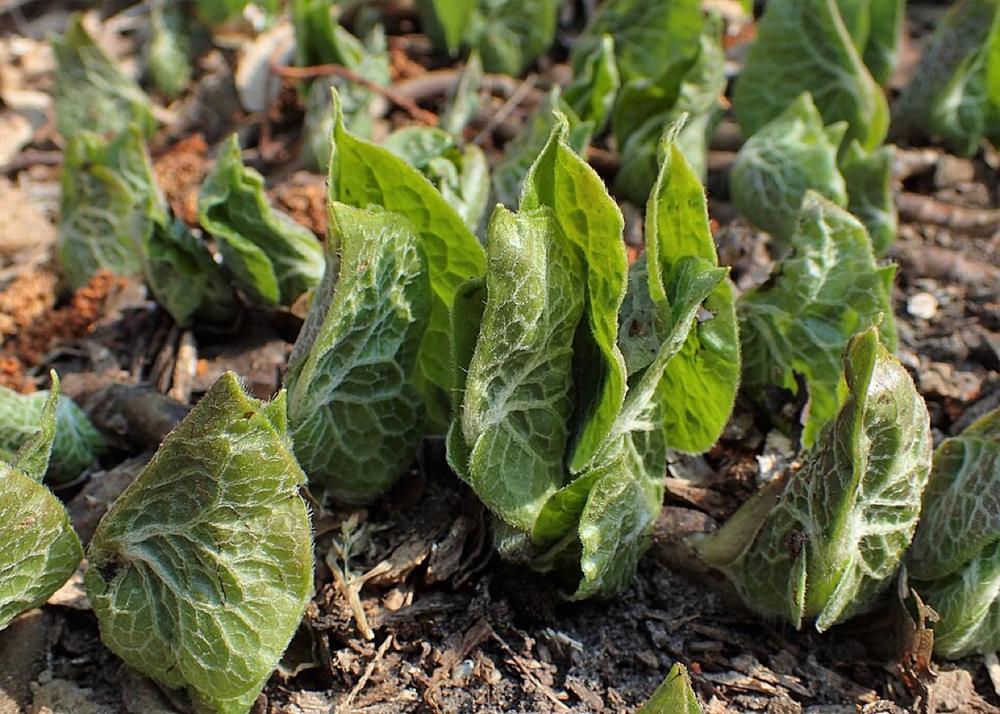 Young
YoungEarly spring emergence: tightly folded, felted, heart-shaped leaves pushing up through mulch before they unfurl (what a newly planted or just-waking patch looks like in March).
Photo: Krzysztof Ziarnek, Kenraiz· CC BY-SA 4.0
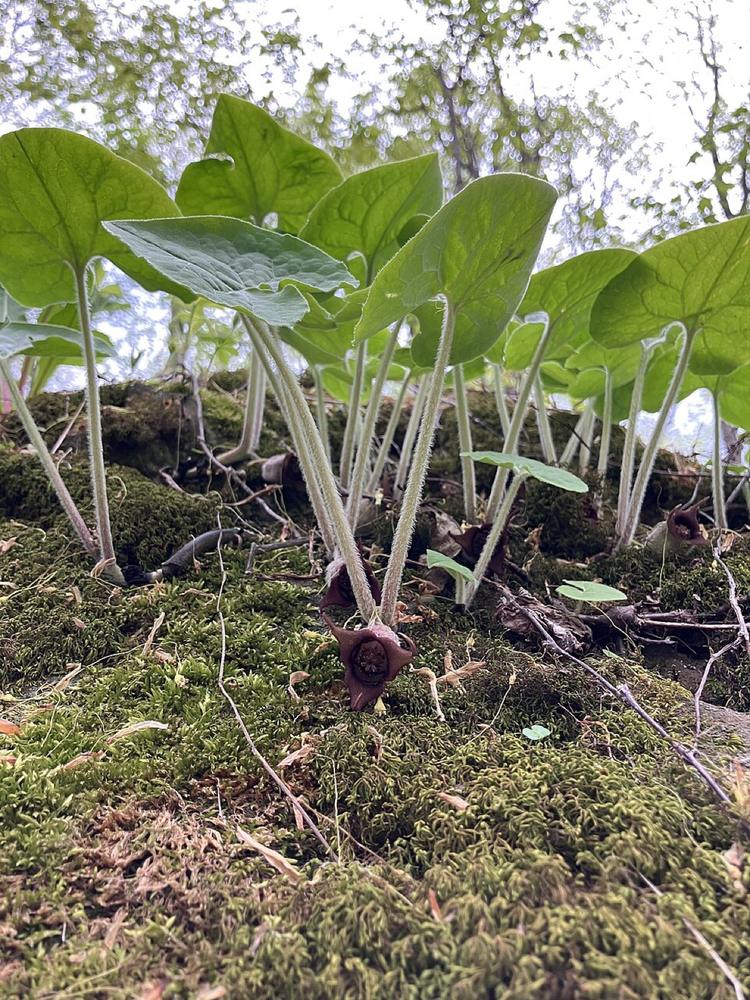 Growing
Established clump in April seen from ground level: paired hairy-stalked leaves opening overhead with the maroon, three-lobed flower sitting at the soil surface between them.
Photo: Gogerr· CC BY-SA 4.0
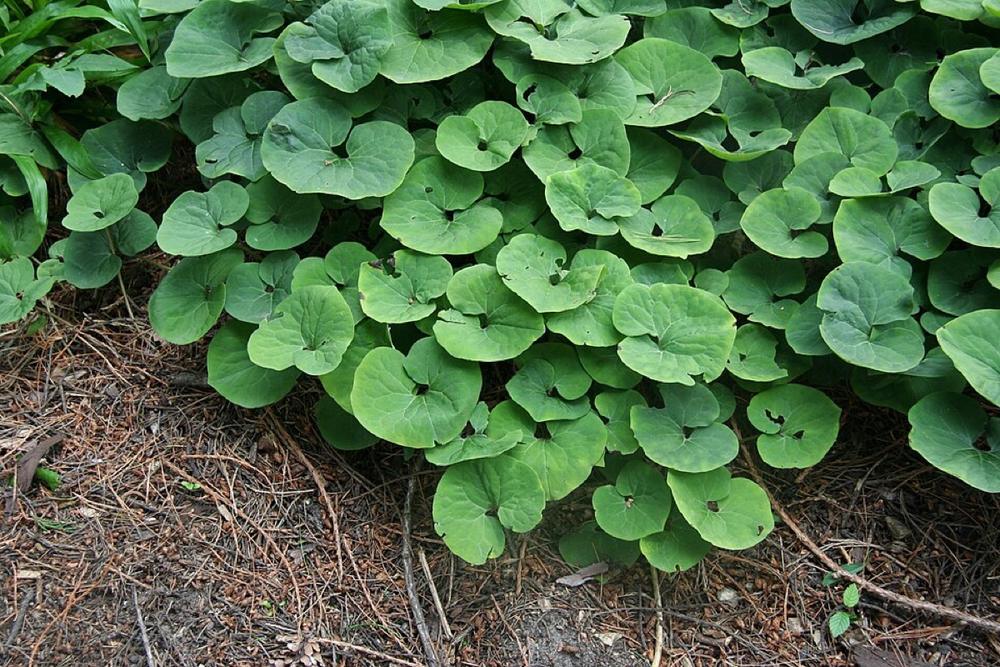 Full grown
Mature groundcover mat in summer: a solid 8-10 in deep carpet of overlapping heart-shaped leaves along a shady bed edge.
Photo: Michael Wolf· CC BY-SA 3.0
Zone 8a: plant in fall (September-November) or late winter to early spring (February-March) while it is cool; fall planting lets roots settle before summer. Avoid planting June-August.
Growing stages
What to look for, and what to do, at each point in its lifeWild ginger (Asarum canadense) is a shade-loving groundcover that emerges in March as felted, folded shoots, opens paired heart-shaped leaves over a small maroon flower hidden at soil level between the leaf stalks in April-May, then spreads slowly by shallow rhizomes into a dense mat, dying back completely after fall frost with no cutback needed.
- 1
Spring Emergence
March, as soil warmsYou'll see Tightly folded, felted, heart-shaped shoots push up through mulch or leaf litter, not yet unfurled.
Do Leave them alone; no action needed except keeping the area consistently moist.
- 2
Leaf Unfurl and Hidden Bloom
April into MayYou'll see Paired, softly hairy, heart- to kidney-shaped leaves 3-6 inches across open on fuzzy stalks, with a single 1 inch cup-shaped maroon to brownish-purple flower sitting at soil level in the fork between the two leaf stalks.
Do Lift a leaf gently to see the flower if you want to; no care action is needed.
- 3
Establishing Groundcover
First growing season after plantingYou'll see The plant stays modest in size, putting energy into its rhizome network rather than visible spread.
Do Water deeply once a week through the first summer and any drought; mulch 1-2 inches with shredded leaves. No fertilizer is needed beyond a spring compost top-dress.
- 4
Summer Mat
June through August, from the second year onwardYou'll see Leaves knit together into a denser mat as the shallow rhizomes spread; plants set 12 inches apart typically close the gap within 2-3 years.
Do Keep watering during drought and check new leaves for slug and snail damage, using iron phosphate bait if holes appear.
- 5
Fall Dieback
October into November, around first frost (~Nov 12)You'll see Leaves yellow and collapse to the ground after frost.
Do Leave the old leaves in place to rot down as natural mulch; no cutback is needed. Mark the patch so you don't disturb it while it is dormant and invisible.
- 6
Division
Early spring before growth starts, or September-OctoberYou'll see A patch has filled in enough that separating part of it would not visibly thin the remaining planting.
Do Gently separate rhizome sections, each with a few leaves and roots attached, and replant immediately.
Techniques — transplant, prune, propagate, divide, seed
At a glance
- Botanical name
- Asarum canadense
- Family
Aristolochiaceae
- Type
Deciduous herbaceous perennial groundcover (rhizomatous)
- Native range
Eastern North America from Manitoba and Quebec south to the Fall Line in Georgia, Alabama and Louisiana.
- Hardiness
Zones 4-8 (MOBOT and NC State list 4-6, but it is native to the Georgia Piedmont and does well in Zone 8a given shade…
- Height
6-12 in
Part shade to full shade. Morning sun at most; no afternoon sun in Georgia.
Consistently moist. Poor drought tolerance - leaves wilt and scorch in dry spells;
12 in for a groundcover; 6-8 in for faster fill.
Rich, humusy, moist but well-drained woodland soil, pH 6-7 (tolerates acidic).
Care
- Plant in real shade under deciduous trees or on the north side of the house; sun-baked spots kill it in a Georgia summer.
- Mulch 1-2 in with shredded leaves in fall and again in spring; leaf litter is its natural mulch and feeds the soil.
- Water deeply once a week the first summer and during any drought; never let the bed dry out completely.
Good to know
Tag was misspelled Asarurn canadese; the correct name is Asarum canadense. It is more heat tolerant than the glossy evergreen European ginger (Asarum europaeum) and is the right choice for Atlanta shade.
Where it fits
Christmas fern, foamflower, hellebores, hostas, bloodroot, trillium, Solomon's seal, under azaleas and dogwoods; excellent edging along shady paths.
Harvest
Not a harvest crop. Cut stems for arrangements as the first flowers open; strip lower leaves.
Watch for
Slugs and snails on spring foliage; heat and drought scorch in sun; otherwise no serious pests or diseases. Not aggressive.
Wildlife & pollinators
Flowers are pollinated by ground-level flies and beetles; seeds carry a fatty elaiosome that ants collect (myrmecochory).
Toxicity
Contains aristolochic acid, a kidney toxin and carcinogen, in leaves, stems and especially rhizomes.
Propagation
Division in early spring or fall (easiest and fastest); rhizome cuttings in summer;
General Native / Pollinator Perennial guide
- Fall (Sept–Nov) is the best perennial planting window in Georgia: warm soil grows roots, cool air limits stress, winter rain does the watering.
- Plant at the same depth as the pot; in heavy clay set the crown 1" high and mound soil to it rather than digging a bathtub that holds water.
- Mulch 2" with pine straw or shredded bark, kept an inch off the crown.
- Water deeply 2× a week for the first month even if it rains lightly; the root ball dries faster than the bed around it.
- Leave stems and seed heads standing over winter for birds and overwintering insects; cut back late Feb–early March.
- Divide crowded clumps every 3–4 years in fall or early spring.
- Edit spreaders (rhizomes and self-sown seedlings) each spring while they're small — most natives are generous.
Sources (6)
- https://plants.ces.ncsu.edu/plants/asarum-canadense/
- https://plantfinder.mobot.org/PlantFinderDetails.aspx?kempercode=b460
- https://www.wildflower.org/plants/result.php?id_plant=ASCA
- https://en.wikipedia.org/wiki/Asarum_canadense
- https://www.prairiemoon.com/asarum-canadense-wild-ginger
- https://www.inaturalist.org/observations/14350240