Organic Wasabi Mustard
Wasabi
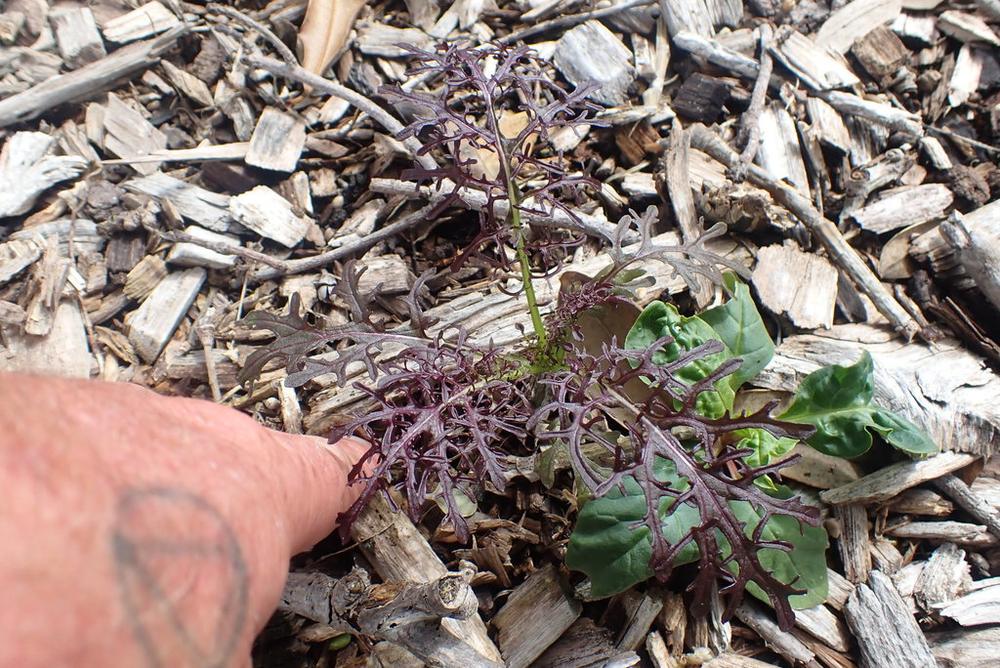 Young
YoungA small purple-red frilly-leaved mustard seedling emerging in wood-chip mulch.
Generic Brassica juncea seedling; not confirmed as the finely serrated 'Wasabina' cultivar specifically.
Photo: Dave Holland· CC BY-NC
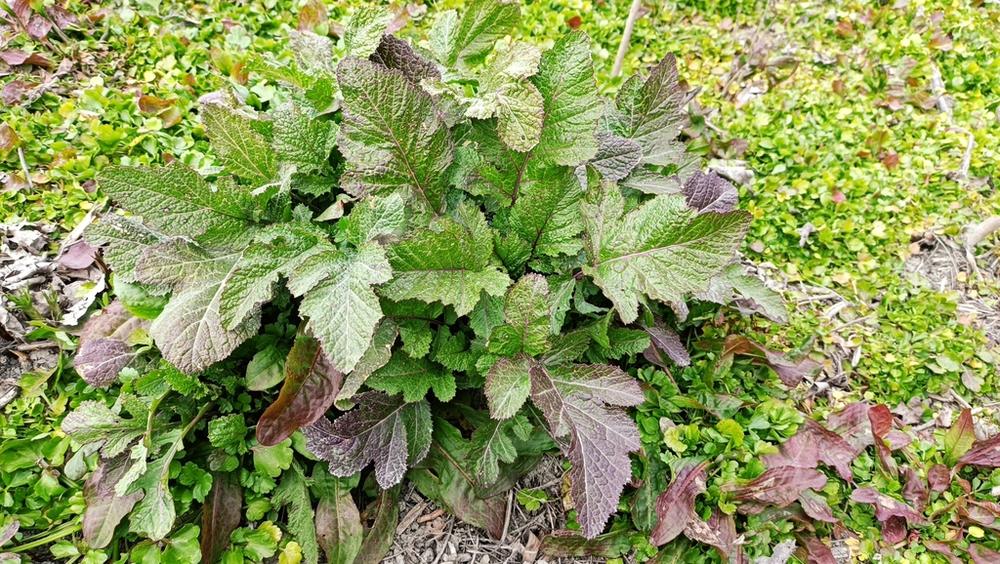 Growing
An established bushy mustard plant with purple-tinged, deeply serrated leaves, before flowering.
Generic Brassica juncea (leaf mustard); has the ragged/serrated leaf character of Wasabina but species-level, not the confirmed cultivar.
Photo: roberto casadei· CC BY-NC
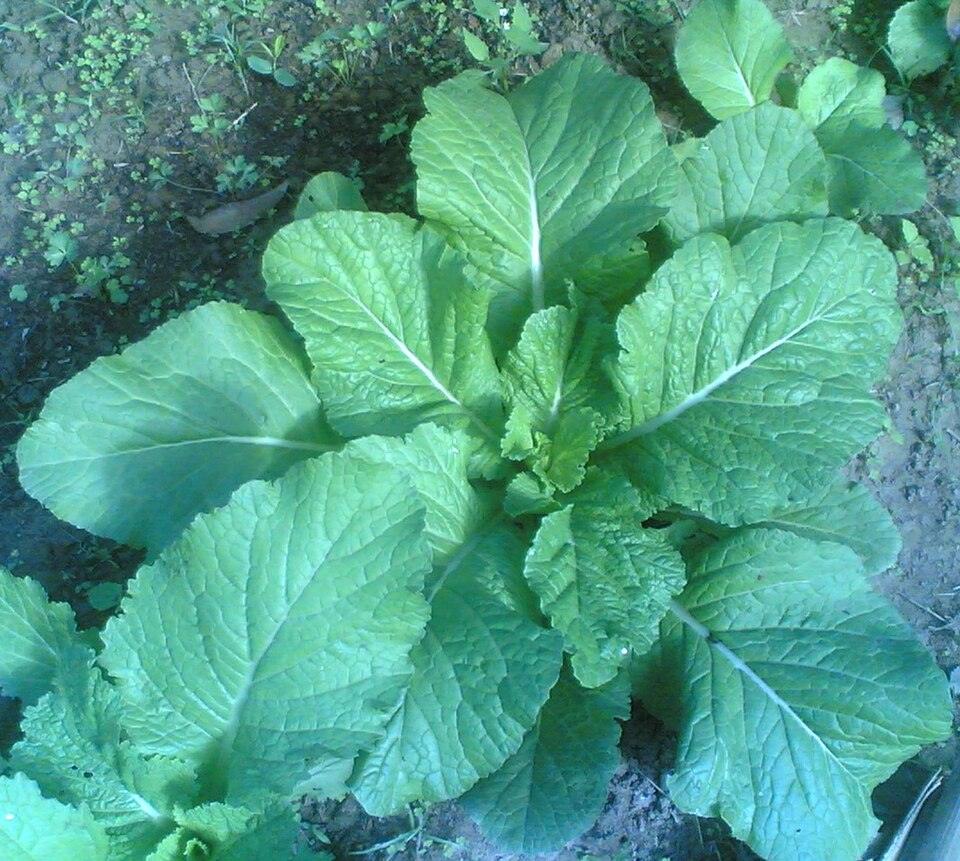 Full grown
A full-grown mustard greens plant with broad, crinkled, dark-green leaves at harvest size.
Generic Brassica juncea mustard greens; broader leaf than the finely cut Wasabina type, but a good mature leafy-clump reference.
Photo: মৌচুমী· CC BY-SA 3.0
Growing stages
What to look for, and what to do, at each point in its lifeOrganic Wasabi Mustard 'Wasabina', grown for its serrated leaves with a fresh wasabi-like bite, follows the same fall-through-spring rhythm as other mustards in Decatur's Zone 8a, sown in September for a winter harvest and again in February-March before spring heat pushes it to bolt.
- 1
Sowing
Early-mid September (fall crop) or mid-February to early March (spring crop)You'll see Seeds are small and round, reddish-brown, and show nothing above ground for 4-8 days.
Do Direct sow 1/4 inch deep and keep the soil surface consistently moist until sprouting.
- 2
Seedling
Days 4-18 after sowingYou'll see Round seed leaves appear first, then deeply lobed, serrated true leaves with a jagged, oak-leaf-like edge begin to show.
Do Thin to 4-6 inches apart, and watch for flea beetle shot-holes.
- 3
Cut-and-come-again harvest
Baby leaf at 20-25 days after sowing, full size at 40-45 daysYou'll see Leaves form a spreading clump of deeply serrated, bright green leaves reaching 6-10 inches, with a sharper, more intense flavor as leaves mature.
Do Harvest outer leaves first, or shear the whole plant an inch above the crown for a quick regrow.
- 4
Bolting
Late spring, typically May, once daylength lengthens and temperatures push past 75-80°FYou'll see A central stalk shoots up, leaves become sparse and pointed, and small yellow four-petaled flowers cluster at the top.
Do Harvest what you can before leaves turn bitter, then pull the plant or leave a few to flower for pollinators and seed.
- 5
Seed saving
4-8 weeks after bolting, once seed pods dry from green to brownYou'll see Flower stalks turn from bright yellow blooms to slim, brown, brittle pods that rattle with seed when dry.
Do Cut dry seed stalks into a paper bag, finish drying, then crush and winnow to collect seed.
Techniques — transplant, prune, propagate, divide, seed
Full sun to part shade; cool weather.
Consistent moisture.
Hydro pods / tight in-ground spacing.
Steady light feeding.
Care
- Cool-season crops — spring and fall windows; they bolt in summer heat.
- Wasabina mustard + tatsoi run permanently indoors in the 2nd hydro unit.
- Giant Red + Southern Green mustard run outdoors in the wooden structure.
Harvest
Cut-and-come-again; harvest outer leaves.
Watch for
Bolting in heat; aphids/flea beetles.