Basil
Genovese
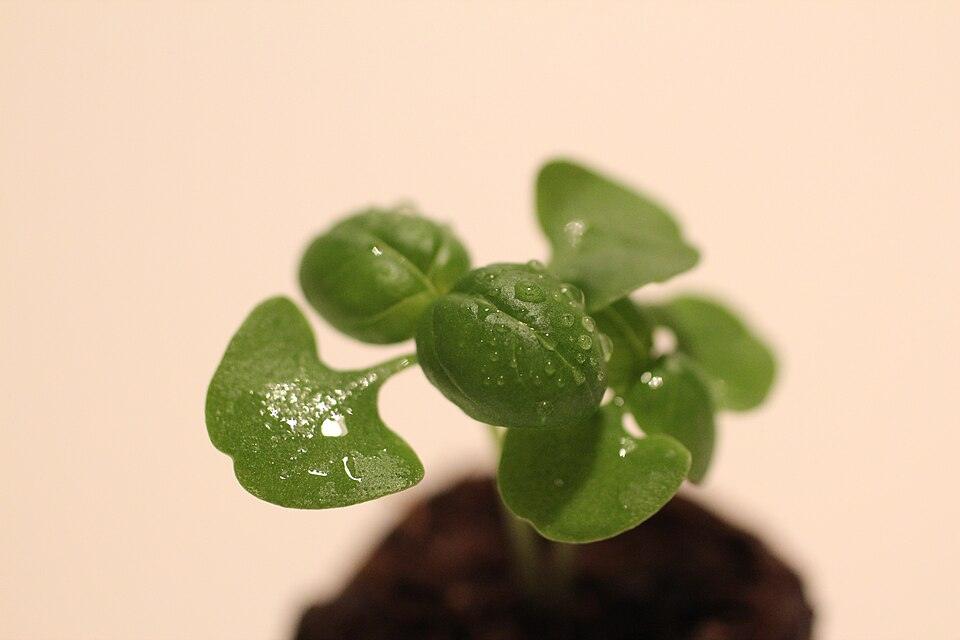 Young
YoungA small basil seedling with several true leaves, freshly transplanted.
Generic sweet basil seedling; not confirmed as the Genovese cultivar specifically.
Photo: Pixelmaniac pictures (Leave a reply)· CC0
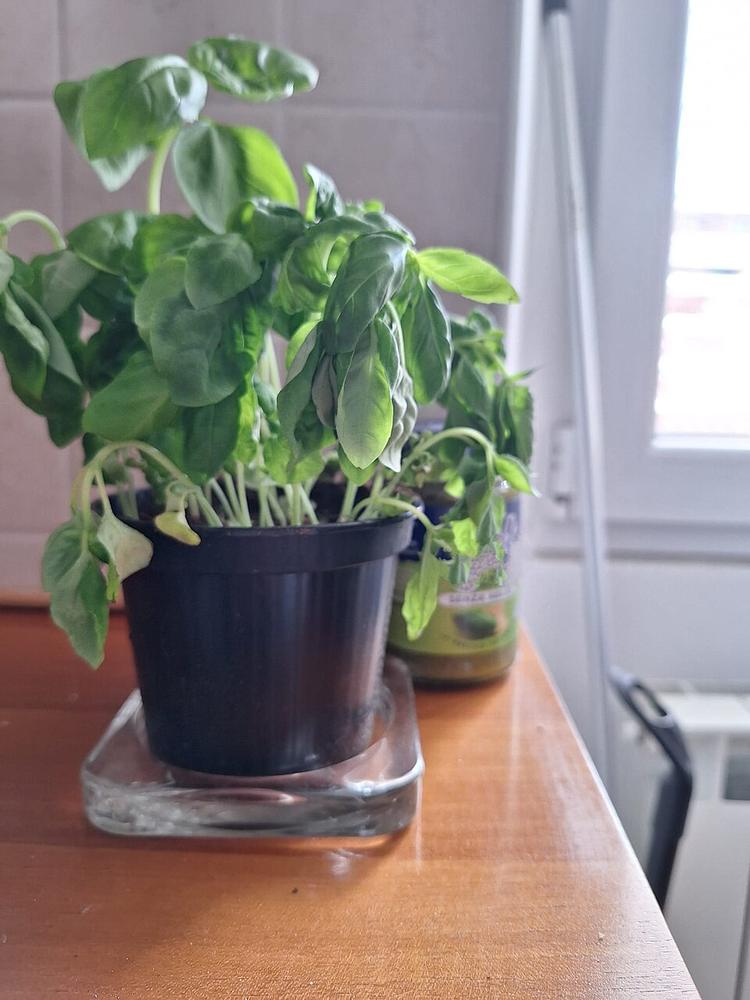 Growing
A bushy, leafy potted basil plant well before flowering.
Generic sweet basil (broad-leaf type consistent with Genovese in appearance); cultivar not verified.
Photo: Gabriele120104· CC BY-SA 4.0
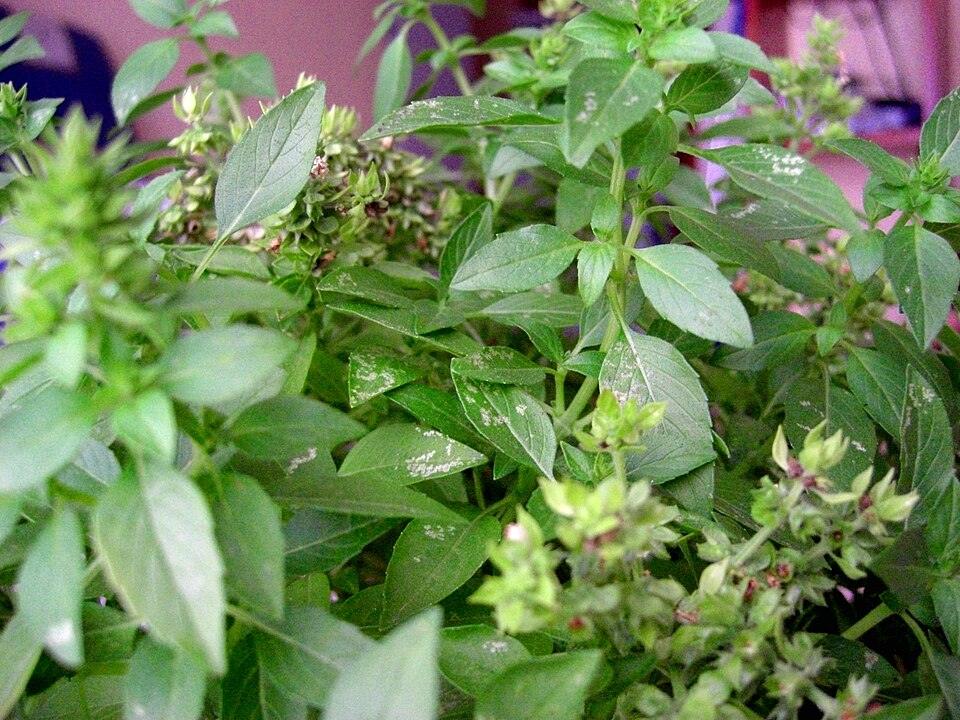 Full grown
A full-grown basil plant in flower ("Planta de Albahaca en flor").
Generic Ocimum basilicum in flower; not confirmed as Genovese specifically.
Photo: Jjvaca· CC BY-SA 3.0
Growing stages
What to look for, and what to do, at each point in its lifeIn Decatur, Genovese basil goes from a spring seedling to a bushy, waist-high producer with the broad, glossy green leaves classic for pesto, one you pinch and harvest continuously all summer, then it dies fast and completely at the season's first real frost around mid-November.
- 1
Seed & Sowing
Start indoors 6-8 weeks before last frost (early to mid February), or direct sow after soil warms in AprilYou'll see Seeds are tiny, black, and slightly shiny; nothing to see for 5-10 days until a pair of round, smooth cotyledon leaves pushes up, noticeably lighter green than the true leaves that follow.
Do Sow 1/4 inch deep in moist seed-starting mix under warm conditions, or wait for soil to reach 60-70F outdoors before direct sowing.
- 2
Seedling
Days 10-25 after sowing, Feb-March indoors or April-May outdoorsYou'll see The first true leaves (broad, pointed, textured, smelling sweetly of basil when brushed) appear above the round cotyledons; by day 25 you'll typically see 2-3 sets of true leaves on a stem 2-4 inches tall.
Do Thin or pot up crowded seedlings to 2-3 inch cells, keep soil evenly moist, and begin light feeding once the first true leaves appear.
- 3
Transplant & Establish
Mid-April through May, once nights stay reliably above 50FYou'll see Plants settle in within a week, showing perky new leaf growth at the top; wilting the first few days after transplant is normal stress that should resolve.
Do Transplant into beds or grow bags spaced 10-12 inches apart in full sun with rich, well-drained soil, and water well immediately after.
- 4
Vegetative Growth & Branching
Late April through August, the main production windowYou'll see A well-pinched plant becomes a dense, rounded bush 12-24 inches tall and wide with dozens of growing tips instead of one central stalk; the broad, glossy green leaves are the classic Genovese shape prized for pesto.
Do Pinch growing tips every 1-2 weeks, harvest leaves regularly from the top down, and remove any flower spikes as soon as you spot them to keep the plant in leaf-production mode.
- 5
Flowering & Seed Set
Any time June-October if flower spikes are left unpinched, especially as days shorten in late summerYou'll see A spike of small white flowers rises from a stem tip; leaves below the flowers get smaller and leaf flavor turns slightly more bitter and less sweet once flowering is well underway.
Do Keep removing flower spikes on plants you're harvesting for leaves, but deliberately let a few spikes bloom and go to seed on one or two plants if you want to save seed or feed pollinators.
- 6
Seed Saving
September-October, once flower spikes have dried brown on the plantYou'll see Dried spikes turn tan-brown and brittle, with tiny black seeds visible in the papery calyxes when you rub a spike between your fingers.
Do Cut whole dried spikes into a paper bag, let them finish drying indoors for a week, then rub them over a bowl to release seed and screen out chaff.
- 7
Decline & Frost Death
Late September through the first frost, around November 12You'll see Even before frost, cooler nights below 50F slow growth and can turn leaf edges black or yellow; at actual frost (32F), leaves and stems go black and mushy within hours, and the plant is dead, not dormant.
Do Harvest everything usable before the first frost warning, take cuttings to root indoors if you want to keep the plant going, and pull dead plants after frost hits.
Techniques — transplant, prune, propagate, divide, seed
Full sun
Consistent moisture; don't let it wilt hard.
Distributed as a companion — ~1 per bag edge, interplanted around tomatoes/peppers.
Heavy feeder — feed regularly.
Care
- Sow ¼" deep. Pinch flower buds immediately — Decatur basil bolts by July.
- Distributed strategy (not bed-dedicated): ~18 in-ground/bag plants + AeroGarden rounds.
- Run AeroGarden Round 2 mid-May so it arrives as Round 1 declines.
Harvest
Peak June–July: ~18 mature plants yield ~15–40 cups leaves/week → ~8–20 pesto freezer portions/week. Freeze pesto in batches.
Watch for
Bolting in summer heat; pinch continuously.