Pepper (Purple Cayenne)
Purple Cayenne
Hot. Gardyn tower. Violet color when fully ripe — used for Purple Reign jelly.
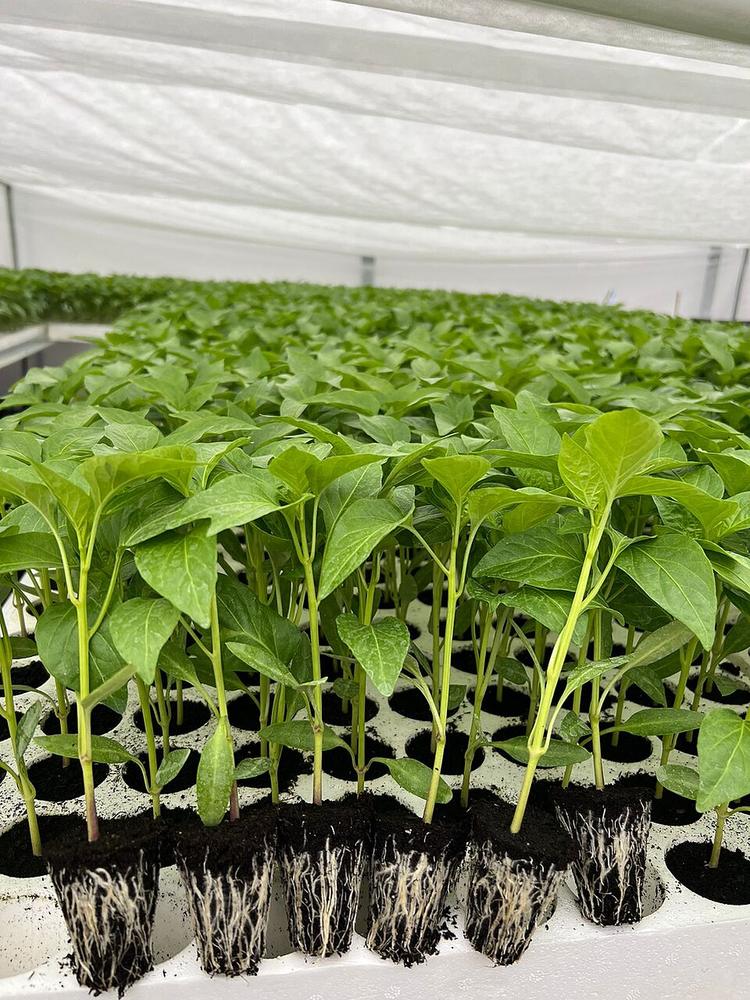 Young
YoungA tray of pepper seedlings with true leaves, roots visible in soil blocks.
Generic pepper seedling (Capsicum annuum); purple cayenne seedlings are not visually distinct from other pepper seedlings before purple pigment develops.
Photo: AgroFidanishtjaHavolli· CC BY-SA 4.0
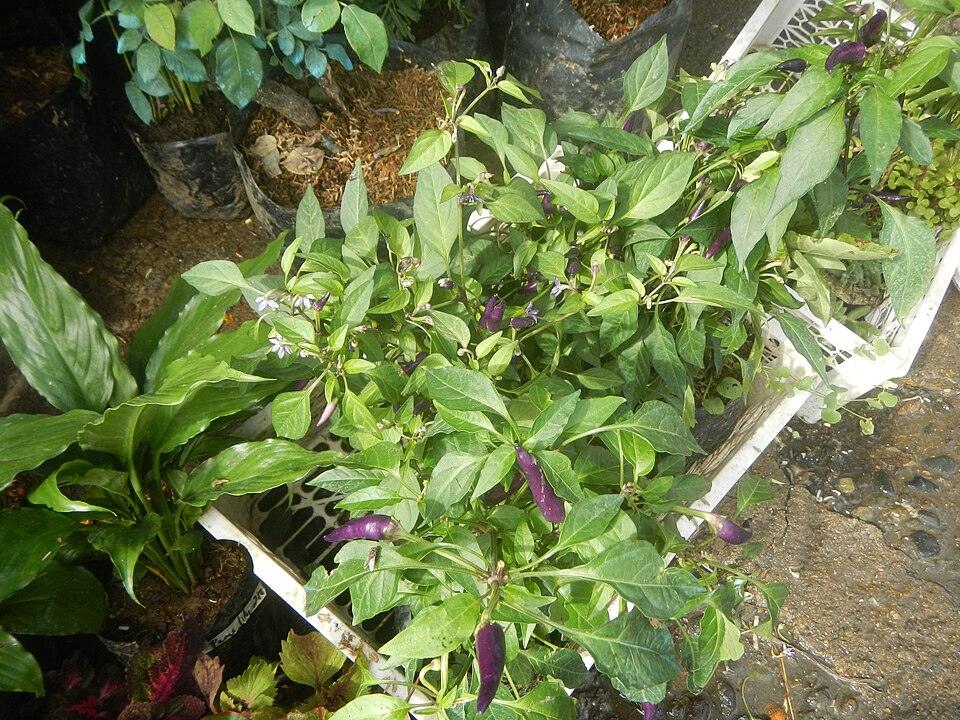 Growing
A green-leaved pepper plant with small, slender purple fruit forming alongside white flowers.
Generic purple ornamental/cayenne-type Capsicum annuum; cultivar not confirmed, but the elongated purple immature-fruit shape and habit match a purple cayenne closely.
Photo: Judgefloro· CC0
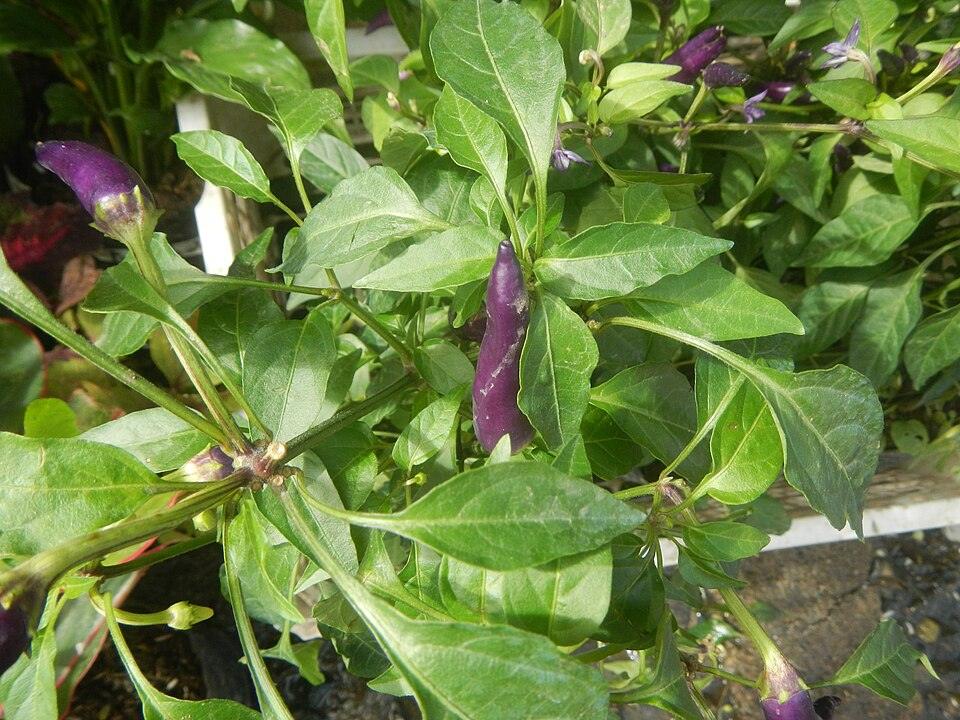 Full grown
A single full-size, fully purple elongated pepper pod on the plant.
Shows the deep-purple ripening stage typical of purple cayenne types, but not yet turned red. Despite extensive searching (purple cayenne, purple chili plant, Black Pearl pepper, purple-to-red ripening), no on-plant photo showing a purple cayenne fully ripened to red was found on Commons or iNaturalist; this is the best available 'ripening' stage photo.
Photo: Judgefloro· CC0
Growing stages
What to look for, and what to do, at each point in its lifePurple Cayenne is a tall, open-pollinated heirloom hot pepper in Decatur's Zone 8a, grown here in the Gardyn tower, with striking purple stems and foliage and slender 2-3 inch pods that ripen from deep purple-black through red, valued both for its high heat (roughly 30,000-50,000 SHU) and its violet color when fully ripe.
- 1
Seedling
Weeks 1-8 after sowing, started indoors mid-to-late January for transplant after last frost (~Mar 28)You'll see Oval cotyledons first, then pointed true leaves that often show an early purple or dark tinge, a varietal trait rather than a stress sign; growth is slow and steady.
Do Keep soil warm (75-85F, a heat mat speeds and evens germination) and give strong, close light right away to prevent stretching.
- 2
Transplant
Late March through mid-April, once nighttime lows hold above 55F and soil has warmedYou'll see A ready transplant has 4-6 true leaves, often already showing purple-tinged stems, and a sturdy stem overall, ideally no flower buds yet.
Do Harden off over 5-7 days, transplant into warm soil, and stake or support this tall, stately plant early, or set it into its Gardyn tower slot.
- 3
Establishing / early branching
First 2-3 weeks after transplantYou'll see Resumed leaf growth, new side branches forming on the tall, upright frame, and the first flower buds appearing at the growing tip.
Do Top or pinch the plant once and remove the first flower bud(s) to push branching before letting it fruit freely.
- 4
Flowering and fruit set
Late May through SeptemberYou'll see Small white flowers, sometimes purple-tinged, open along the branches on purple-green foliage and swell into tiny purple-black peppers within days of pollination.
Do Keep watering consistent through fruit set; the purple tinge on flowers and foliage is a normal varietal trait, not a stress signal.
- 5
Ripening
75-85 days from transplant to full ripeness, since this variety runs on the longer side for cayenne typesYou'll see Dozens of 2-3 inch slender pods ripen from deep purple-black through red as they mature, giving the plant a striking two-tone look with fruit at different stages at once.
Do Pick some pods at the deep purple-black stage for their most striking color and slightly sweeter edge, or let them finish to red for full cayenne heat and classic flavor.
- 6
Harvest and drying
Ongoing through the season, with a final push before first frost (~Nov 12)You'll see Firm, glossy pods at your target color are ready; this thin-walled type dries easily compared to thick-walled hot peppers.
Do Pick with scissors or pruners, and string whole pods into a ristra for easy air drying.
- 7
Seed saving
From fully ripe red, overripe fruit at the end of the seasonYou'll see Seeds are pale tan, flat, and firm inside a fully red, fully ripe pod; seed from purple-stage fruit that hasn't fully matured is underdeveloped and won't germinate well.
Do Isolate from other pepper varieties before flowering if true seed matters, then harvest seed from a fully red fruit and dry it thoroughly before storing.
Techniques — transplant, prune, propagate, divide, seed
Full sun, warmth-loving
Even, moderate moisture.
18–24" apart
Heavy feeder; ease off nitrogen at flowering.
Care
- Always wear nitrile gloves when seeding hot peppers; never touch your face.
- Work in a well-ventilated area for cayenne or large quantities of jalapeño.
- Purple Cayenne: wait until deep purple/violet for best color and heat.
Harvest
Riper = hotter and more colorful. Fully ripe purple cayennes give the strongest violet for Purple Reign jelly.
Watch for
Capsaicin handling is the main hazard — gloves and ventilation.