Radish Planned
French Breakfast / Cherry Belle
Planned seed-start; 25–30 days — sow every 2 weeks Sept–Nov and again Feb–Mar.
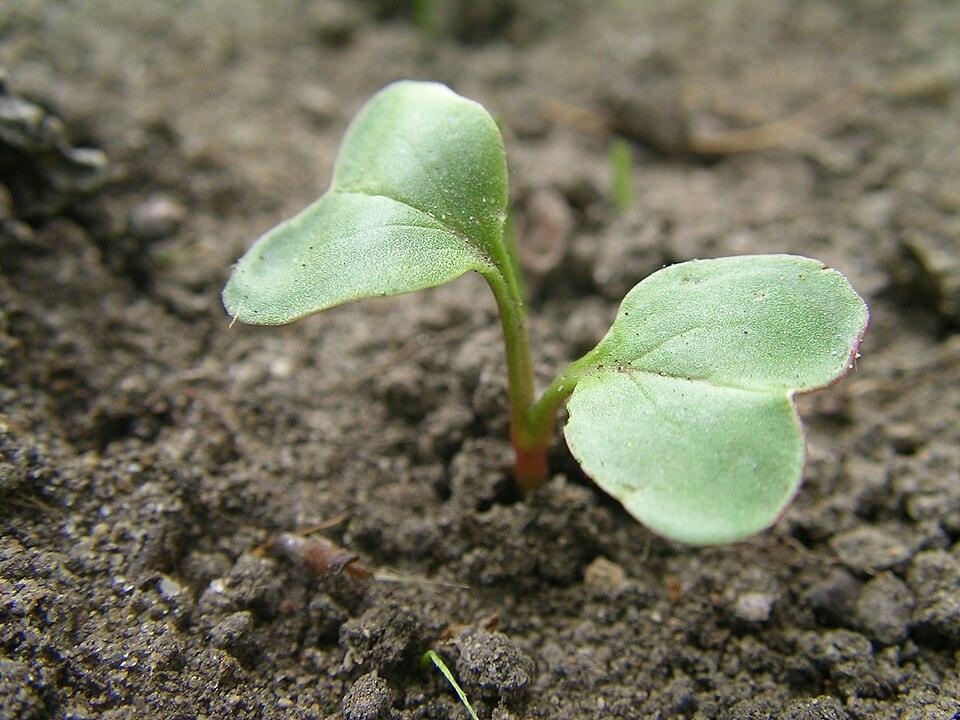 Young
YoungA 5-day-old radish seedling with just-opened cotyledons, emerging from soil
Generic Raphanus sativus seedling; not identified to the 'French Breakfast'/'Cherry Belle' cultivar.
Photo: Oledd· CC BY-SA 3.0
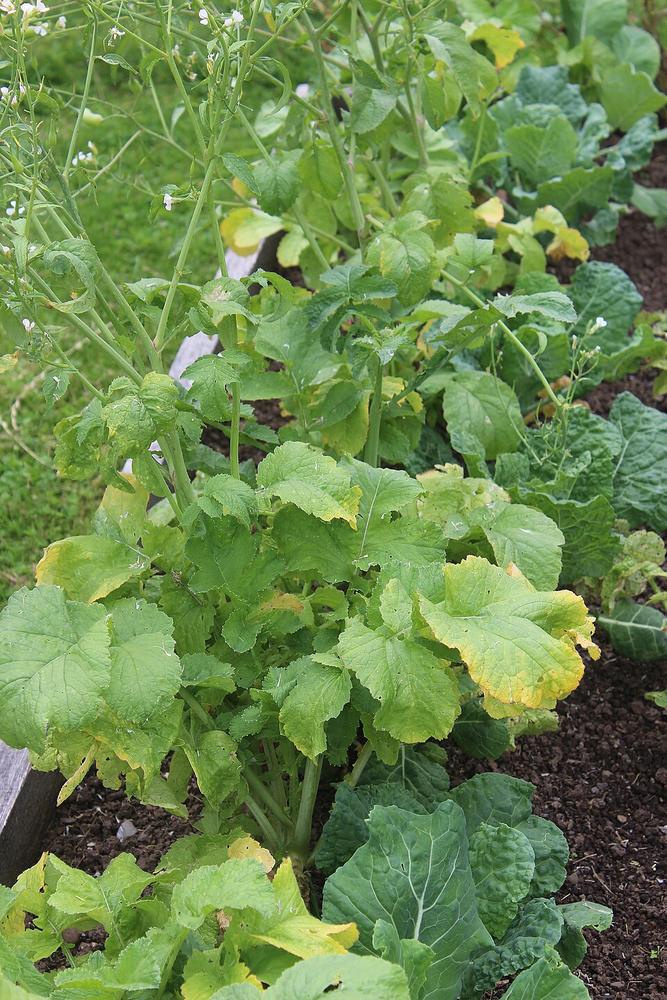 Growing
A leafy row of established radish plants (top left, with a few starting to bolt/flower) in a monastery vegetable garden
Generic radish foliage row; cultivar not specified.
Photo: Dguendel· CC BY 4.0
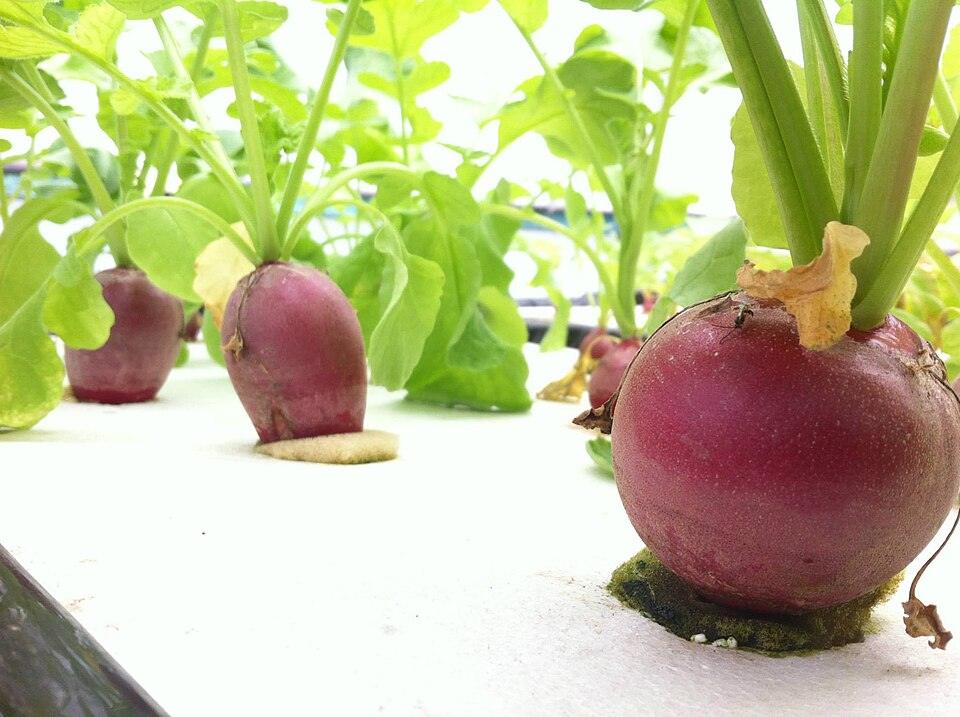 Full grown
Round, red, harvest-size radish roots with leafy tops, still attached to the plant
Round red radish (hydroponically grown); shape and color closely resemble 'Cherry Belle' but the exact cultivar is not confirmed.
Photo: David Arqueas· CC BY-SA 4.0
Growing stages
What to look for, and what to do, at each point in its lifeRadish (grown here as French Breakfast and Cherry Belle, both fast open-pollinated heirlooms) is the quickest crop in the garden, direct-sown every 2 weeks from September through November and again February through March, ready to pull in as little as 25-30 days.
- 1
Direct sowing
Sow every 2 weeks September-November (fall) and again February-March (spring)You'll see Seed is sown directly into loosened soil; nothing is visible above ground for the first several days.
Do Sow radish seed 1/4-1/2 inch deep directly where it will grow, never in trays for transplanting, and start a new short row every 2 weeks to keep a rolling harvest coming.
- 2
Germination
3-5 daysYou'll see Radishes pop up quickly as small, rounded seed leaves.
Do Keep the top inch of soil moist, watering lightly once a day if the surface dries, until seedlings emerge.
- 3
Thinning
10-14 days after sowing, once seedlings have their first true leavesYou'll see Rows look crowded with small round seedlings touching or overlapping.
Do Thin to a final spacing of 1-2 inches apart.
- 4
Root development
2-4 weeks after thinningYou'll see Leafy tops fill in while the round or elongated root swells underground, invisible except where it begins to show at the soil surface.
Do Keep soil evenly moist (about 1 inch of water a week) and weed-free.
- 5
Harvest
21-35 days after sowingYou'll see The top of the root, its shoulder, begins to push up and show color right at the soil surface, and you can often feel the root's width by brushing soil aside at the base of the leaves.
Do Check shoulders regularly once in the expected window, and pull promptly once ready; harvest by gripping leaves near the base and pulling straight up.
- 6
Same-Season Seed Saving
Can bolt to seed the same season if a plant is left through rising heat or long daylengthYou'll see A radish left past root maturity sends up a stalk with small four-petaled white or pink flowers within its first season, followed by dry seed pods.
Do Let one or two plants continue past root maturity into flowering rather than pulling them, then collect pods once dry.
Techniques — transplant, prune, propagate, divide, seed
Full sun
Even moisture — 1" per week; keep the seedbed damp until germination (carrots take 10–21…
Carrots 2–3", beets 3–4", radishes 1–2", in rows 6–12" apart; thin early
Compost worked in before sowing; low nitrogen (forks roots and grows tops).
Care
- Loose, rock-free soil 8–12" deep — grow bags with a fluffy mix beat Georgia clay for carrots.
- Sow shallow (¼") and cover the bed with a board or burlap until carrots sprout, then remove.
- Thin ruthlessly at 2" tall; crowded roots stay small.
Harvest
Radish 25–30 days, beets 50–60 (greens earlier), carrots 65–75 days. Loosen with a fork before pulling.
Watch for
Poor germination from crusted or dry seedbeds, forked carrots from rocks/fresh manure, root maggots (row cover), rabbits on tops.