Rosemary
Rosemary
Lean soil, fast drainage. May need covered porch in hard freezes. Used in Roasted Garlic Confit & Cherokee Rose Sophisticate.
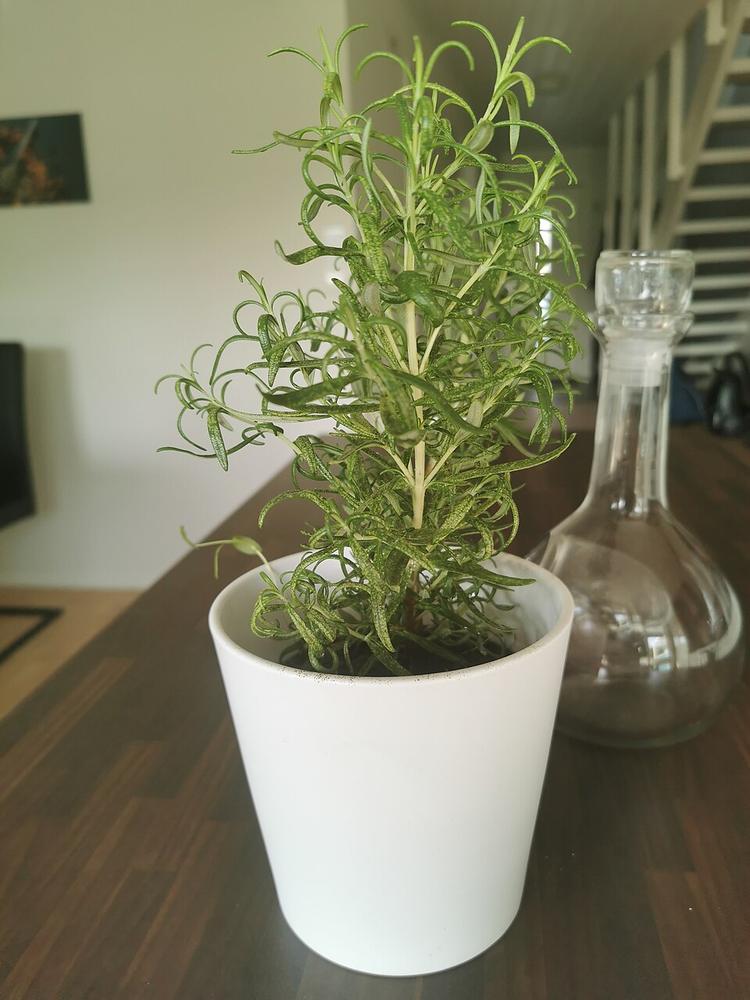 Young
YoungSmall potted rosemary plant, single young stem with soft new growth, not yet a branching shrub.
Generic Salvia rosmarinus (rosemary); no cultivar specified.
Photo: Netha Hussain· CC BY-SA 4.0
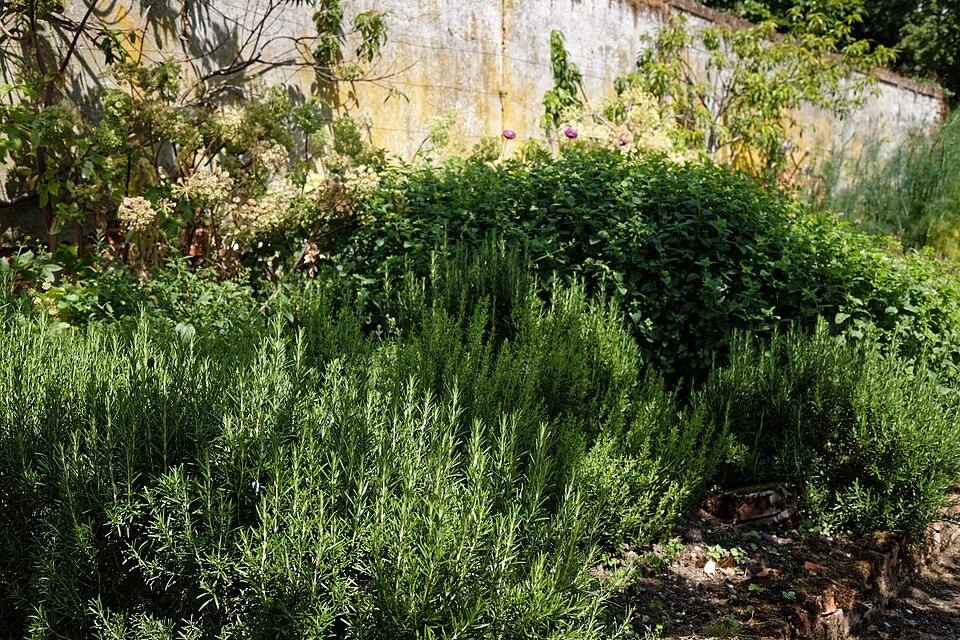 Growing
Established rosemary shrubs in a garden border, bushy foliage, not yet flowering.
Generic Salvia rosmarinus (rosemary); no cultivar specified.
Photo: Acabashi· CC BY-SA 4.0
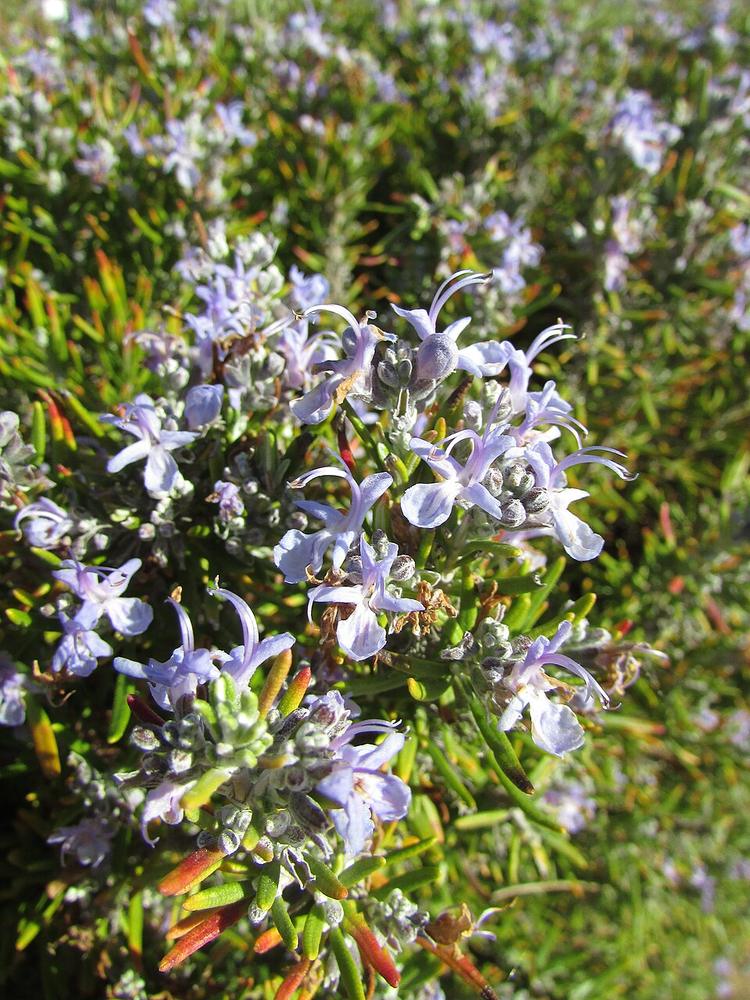 Full grown
Mature rosemary shrub in full bloom with pale lavender-blue flowers, close-up.
Generic Salvia rosmarinus (rosemary); no cultivar specified.
Photo: Kolforn (Kolforn) I'd appreciate if you could mail me (Kolforn@gmail.com) if you· CC BY-SA 4.0
Growing stages
What to look for, and what to do, at each point in its lifeRosemary is a perennial Mediterranean woody shrub in Decatur's Zone 8a, best started from a nursery start rather than seed, that needs lean, fast-draining soil and can grow into a substantial 2-4 foot shrub over a few years, occasionally needing a covered porch on the coldest nights.
- 1
Nursery Start & Planting
Plant from a nursery start in spring (April-May) or early fall (September-early October)You'll see A young nursery plant arrives as a small, already woody-based upright clump 6-10 inches tall in a 4-inch or gallon pot, with narrow, needle-like, resinous leaves.
Do Plant into well-drained soil or a raised bed/grow bag in full sun, at the same depth it was growing in the pot, spaced 18-24 inches from its neighbors given its eventual size, and water in well.
- 2
Establishing (Year One)
First growing season after planting, spring through fallYou'll see New soft green growth extends from the woody base; the plant roughly doubles in size but stays compact and hasn't yet developed the thick, upright, gnarled structure of a mature shrub.
Do Water during dry spells but avoid overwatering, pinch tips occasionally to encourage branching, and hold off on heavy harvesting until well established.
- 3
Mature Growth & Harvest
Year two onward, main harvest spring through fall, and often pickable year-round in mild wintersYou'll see Plants form a dense, upright, woody shrub that can reach 2-4 feet tall, with resinous, needle-like leaves on woody lower stems and soft green new growth at the tips.
Do Harvest regularly from the soft new growth, always leaving plenty of green leafy stem behind, and never cut back into the bare woody base.
- 4
Bloom & Post-Bloom Shearing
Blooms mainly May-JuneYou'll see Small tubular, purple-blue flowers appear along the stems, attracting heavy bee traffic.
Do Let blooms fully open for pollinators, then shear the plant lightly right after flowering finishes to keep it compact.
- 5
Winter Dormancy
Late November through February, with occasional nights in the teensYou'll see Growth slows and foliage stays evergreen through typical winters, but the real danger sign is dark, mushy, or blackened stem bases rather than cold-nipped tips; a hard freeze or an ice storm can also cause visible tip burn.
Do Stop fertilizing, cut back watering significantly, ensure good drainage, and be ready to move a containerized plant to a covered porch on the coldest nights.
- 6
Renewal & Replacement
Every 3-5 years, or as the shrub gets leggy and woody at the baseYou'll see An aging plant shows more bare woody stem than leafy green, a hollowed-out or splayed-open center, and fewer new shoots each year even after post-bloom shearing.
Do Take cuttings or layer a few low stems from the declining plant before it fails entirely, and plan to replace the original with the rooted offspring.
Techniques — transplant, prune, propagate, divide, seed
Full sun
Low — let soil dry between waterings; hates wet feet.
Give airflow; well-drained or gritty soil.
LEAN soil — do NOT over-fertilize. Rich soil/excess water makes them floppy and bland.
Care
- Rosemary, thyme, oregano, sage, savory, lavender all want lean, fast-draining conditions.
- Surface-sow seed (light-dependent); easier from cuttings/transplants.
- Light trim after flowering keeps them compact.
Harvest
Snip sprigs as needed; flavor is strongest just before flowering. Rosemary, thyme used across the jam line.
Watch for
Root rot from overwatering/heavy soil is the main killer. Rosemary may need a covered porch in hard freezes.