Pepper (Sweet Long)
Sweet Long
Sweet base for Sunset Sweet & Garden Verde jellies.
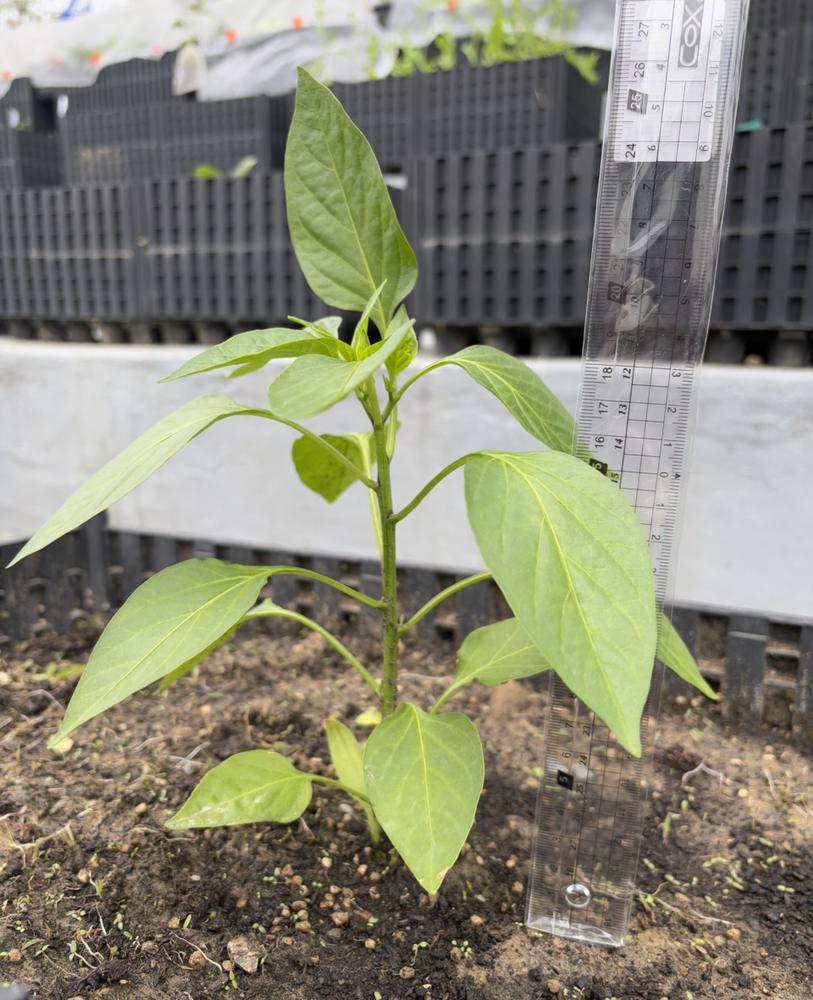 Young
YoungYoung pepper transplant with several true leaves (shown against a ruler for scale), pre-flower.
Generic Capsicum annuum seedling; not specifically Corno di Toro/Marconi.
Photo: 欸不是· CC0
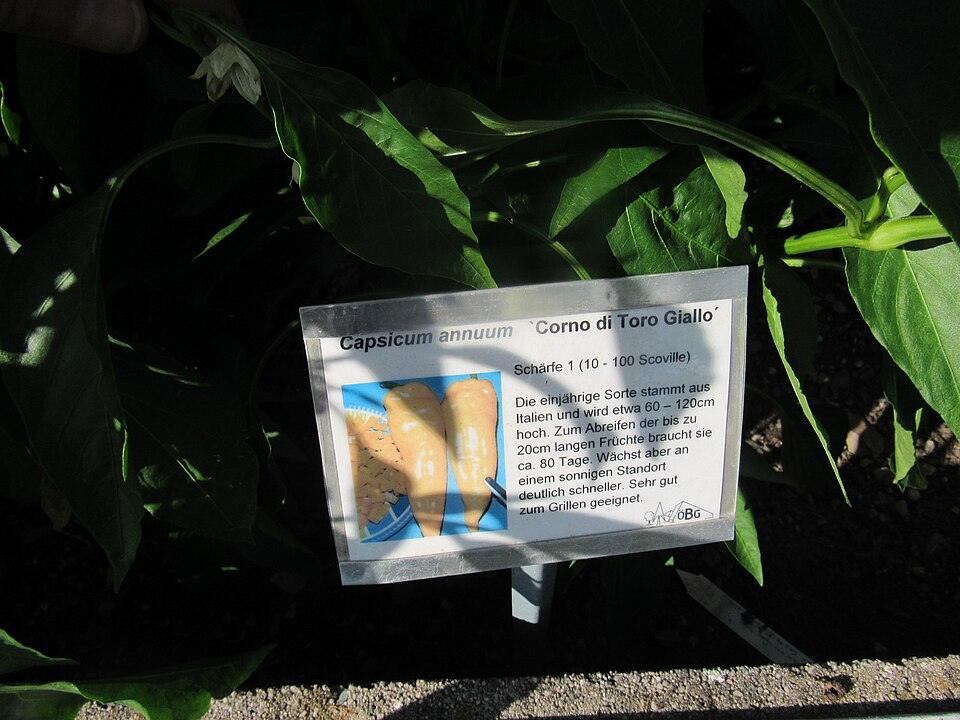 Growing
Capsicum annuum 'Corno di Toro Giallo' plant (labeled specimen at a botanical garden) with buds/early flowers, pre-fruit.
Photo: Schubbay· CC BY-SA 4.0
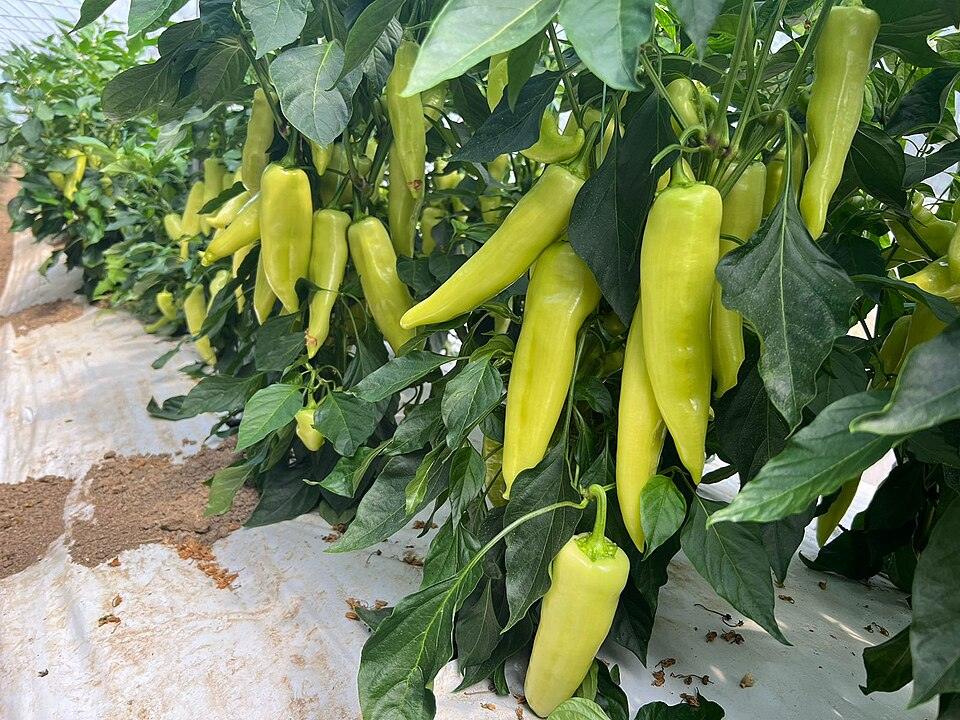 Full grown
Heavily fruiting pepper plant with numerous pale yellow-green, elongated horn/Marconi-shaped pods hanging in a greenhouse row.
Generic sweet long/horn-type Capsicum annuum (labeled as a farm's pepper crop); matches the Corno di Toro/Marconi fruit shape and color closely but specific cultivar not confirmed.
Photo: AgroFidanishtjaHavolli· CC BY-SA 4.0
Growing stages
What to look for, and what to do, at each point in its lifeThe Sweet Long pepper is an elongated, tapering Italian-frying/Corno di Toro-type sweet pepper in Decatur's Zone 8a, typically an open-pollinated type, that goes in after the last frost in late March/early April and produces long, twisting, thin-walled pods from June into fall.
- 1
Seedling
Weeks 1-8 after sowing, started indoors 8-10 weeks before last frost (mid-to-late January for a late-March/early-April transplant)You'll see Two smooth oval cotyledons first, then pointed, slightly glossy true leaves; growth is noticeably slower than tomatoes, and a healthy seedling is compact and deep green rather than tall and pale.
Do Keep soil consistently warm (75-85F, a heat mat helps a lot) and give strong light as soon as leaves appear so the stem stays sturdy instead of stretching.
- 2
Transplant
Late March through mid-April, after nighttime lows are reliably above 55FYou'll see A hardened-off transplant should have 4-6 true leaves, a thick stem, and no flower buds yet. Wilting or purpling of leaves after planting signals the soil or air is still too cold.
Do Harden off over 5-7 days, then transplant into warmed bed or grow bag soil slightly deeper than it sat in its pot; stake or loosely tie the plant since long, heavy pods can weigh branches down.
- 3
Establishing / early branching
First 2-3 weeks after transplantYou'll see New leaf growth resumes, the plant starts putting out side branches, and the first flower buds appear at the growing tip or first fork.
Do Top or pinch the plant once, remove the very first flower bud(s), and keep watering even and consistent while roots establish.
- 4
Flowering and fruit set
Late May through September, peaking in the heat of summerYou'll see Small white, star-shaped flowers (5-6 petals) open along the branches; pollinated flowers swell and quickly begin elongating into the characteristic long, tapering, sometimes twisted pod shape.
Do Keep water consistent (drought stress can cause blossom drop) and avoid heavy nitrogen fertilizer once flowering starts, since it pushes leaves over fruit.
- 5
Ripening and harvest
60-70 days from transplant to full-length green or pale fruit, then another 2-3 weeks on the plant to fully colorYou'll see Fruit elongates into a long, tapering, often gently twisted or curved pod, starting pale green to yellow-green, then shifting toward red or orange as it fully ripens.
Do Harvest some pale/green for the classic mild frying-pepper flavor and to keep the plant producing, or let others color fully for a sweeter finish.
- 6
Seed saving
From fully mature, fully colored, overripe fruit at the end of the seasonYou'll see Seeds are cream to tan colored, flat, and firm inside a fully colored fruit; seeds from pale or green fruit are underdeveloped and won't germinate reliably.
Do Isolate from other pepper varieties before flowering if you want true seed, then scoop seed from a fully ripe fruit, dry it fully, and label by variety and date.
- 7
Overwintering indoors (optional)
Before first frost (~Nov 12) through late winterYou'll see A healthy candidate for overwintering is a productive plant without disease or pest issues; after cutting back it will look bare with just a few short stems.
Do Dig up (or move the grow bag), cut the plant back by about a third to a half, pot it if needed, and move it to a sunny window or under grow lights for winter.
Techniques — transplant, prune, propagate, divide, seed
Full sun, warmth-loving
Even, moderate moisture.
18–24" apart
Heavy feeder; back off nitrogen at flowering.
Care
- Pinch early flowers until a strong branched 'Y' forms for a sturdier, more productive plant.
- Basil interplanted at bag edges deters aphids/whiteflies.
Harvest
Pick when fully colored for maximum sweetness.
Watch for
Aphid pressure peaks May–June and Sept–Oct in Atlanta.