Pepper (Jalapeno)
Jalapeno
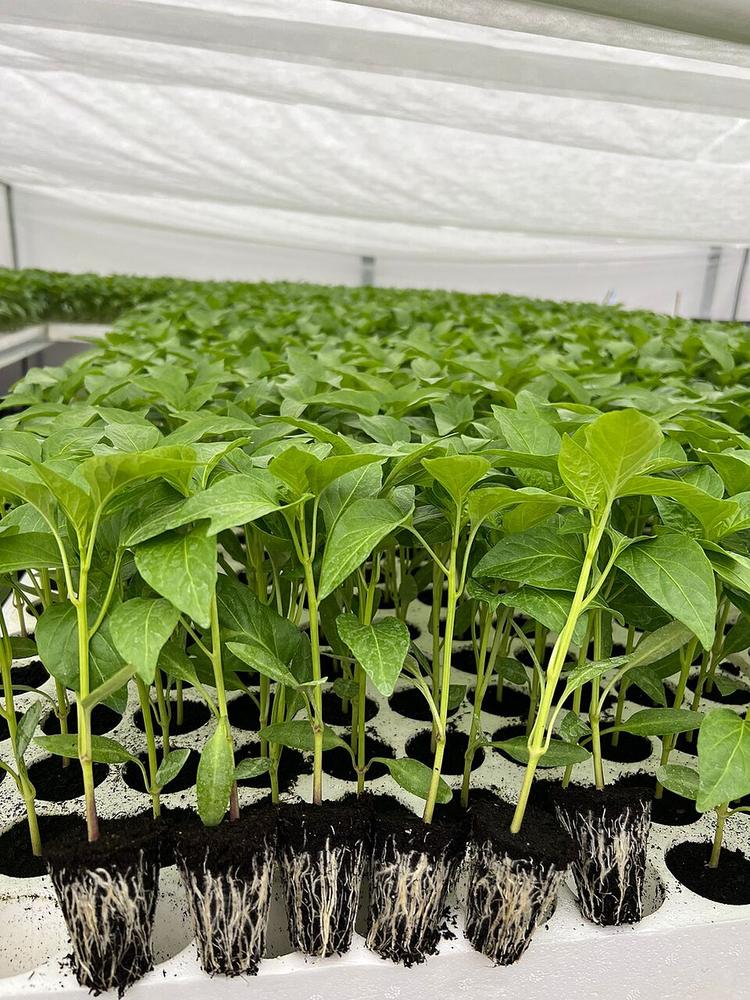 Young
YoungA tray of pepper seedlings with true leaves, roots visible in soil blocks.
Generic pepper seedling (Capsicum annuum); jalapeño seedlings are not visually distinct from other pepper seedlings at this stage.
Photo: AgroFidanishtjaHavolli· CC BY-SA 4.0
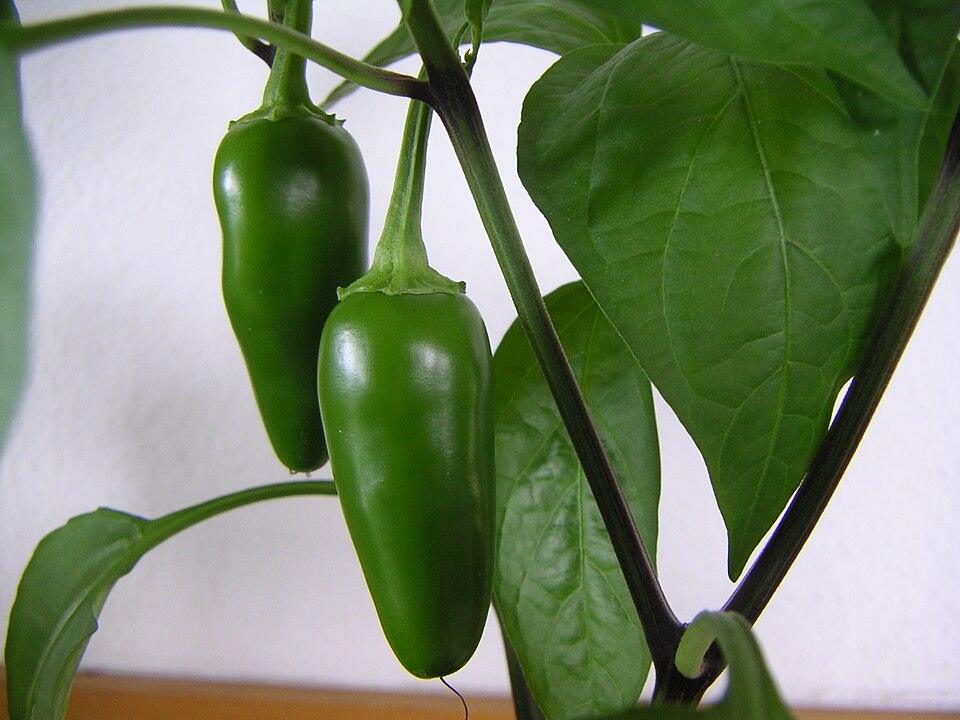 Growing
Immature green jalapeño fruit (Capsicum annuum var. annuum) hanging on the plant.
Photo: Wikimedia Commons· CC BY-SA 3.0
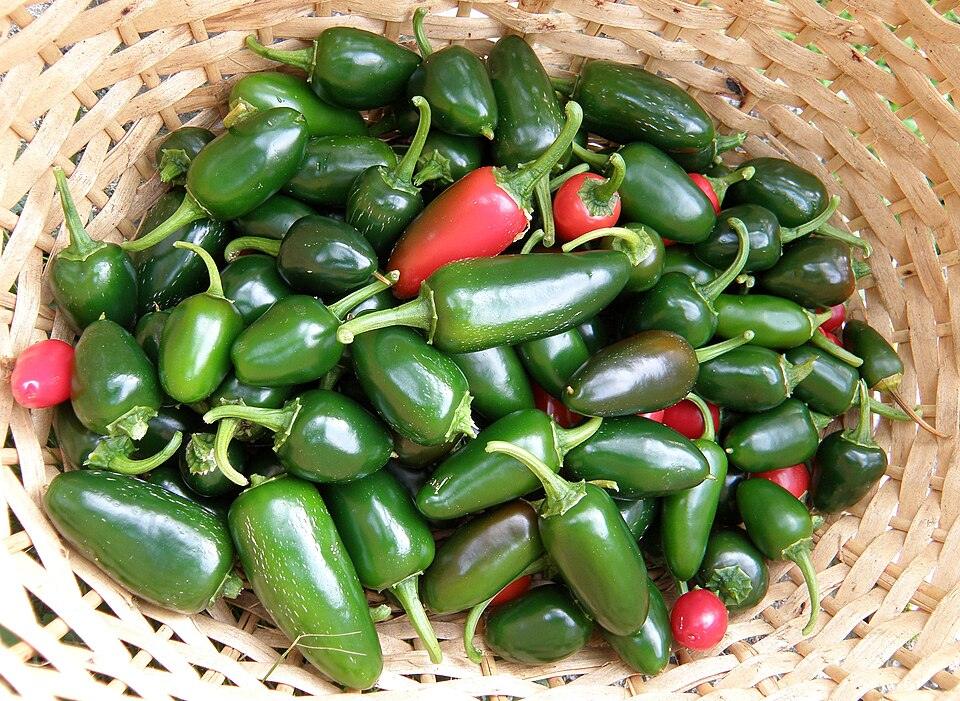 Full grown
A harvested basket of jalapeños, mostly green with several fully ripened red pods mixed in, showing the mature red-ripe color.
Photo: Epp· CC BY-SA 3.0
Growing stages
What to look for, and what to do, at each point in its lifeJalapeno is the standard, widely open-pollinated hot pepper in Decatur's Zone 8a, following the same slow-start, warm-season arc as sweet peppers, prone to attractive corking as it sizes up, and useful both fresh at the green stage and smoked-and-dried into chipotle once fully red.
- 1
Seedling
Weeks 1-8 after sowing, started indoors mid-to-late January for transplant after last frost (~Mar 28)You'll see Oval cotyledons first, then pointed true leaves; growth is slow and steady, and a healthy seedling stays compact and deep green.
Do Keep soil warm (75-85F, a heat mat speeds and evens germination) and give strong, close light right away to prevent stretching.
- 2
Transplant
Late March through mid-April, once nighttime lows hold above 55F and soil has warmedYou'll see A ready transplant has 4-6 true leaves and a sturdy stem, ideally no flower buds yet.
Do Harden off over 5-7 days, transplant into warm soil, and stake or cage this upright, heavy-fruiting plant early.
- 3
Establishing / early branching
First 2-3 weeks after transplantYou'll see Resumed leaf growth, new side branches forming, and the first flower buds appearing at the growing tip.
Do Top or pinch the plant once and remove the first flower bud(s) to push branching before letting it fruit freely.
- 4
Flowering and fruit set
Late May through SeptemberYou'll see Small white, star-shaped flowers open along the branches and swell into tiny green peppers within days of pollination.
Do Keep watering consistent through fruit set; once plants are established, easing water back slightly on purpose later can help build a bit more heat.
- 5
Corking and ripening
Roughly 60-75 days from transplant to first mature-size green fruit; full color change to red takes another 2-4+ weeksYou'll see Watch for corking: light tan to brown, cork-like streaks or striations on the skin, caused by rapid growth splitting the surface as the fruit sizes up; fruit then shifts from green to red as it fully ripens.
Do Treat corking as a good sign of flavor and near-ripeness rather than a defect, and decide per-fruit whether to pick green or let it fully color red.
- 6
Harvest and drying
Ongoing through the season, with a final push before first frost (~Nov 12)You'll see Firm, glossy fruit at your target size and color is ready; jalapeno's thicker wall makes it slower to air-dry than a thin-fleshed pepper.
Do Pick with scissors or pruners, and route extra fruit toward a dehydrator or smoking-then-drying rather than plain air drying.
- 7
Seed saving
From fully mature (red, color-ripened), overripe fruit at the end of the seasonYou'll see Seeds are pale tan, flat, and firm inside a fully ripe red fruit; seed from green fruit is underdeveloped and won't germinate well.
Do Isolate from other pepper varieties before flowering if true seed matters, then harvest seed from a fully ripe fruit and dry it thoroughly before storing.
Techniques — transplant, prune, propagate, divide, seed
Full sun, warmth-loving
Even, moderate moisture.
18–24" apart
Heavy feeder; ease off nitrogen at flowering.
Care
- Always wear nitrile gloves when seeding hot peppers; never touch your face.
- Work in a well-ventilated area for cayenne or large quantities of jalapeño.
- Purple Cayenne: wait until deep purple/violet for best color and heat.
Harvest
Riper = hotter and more colorful. Fully ripe purple cayennes give the strongest violet for Purple Reign jelly.
Watch for
Capsaicin handling is the main hazard — gloves and ventilation.