Pac Choi 'Baby Choi' New · Sep 2026
Brassica rapa var. chinensis 'Baby Choi'· Baby bok choy, Baby pac choi, Baby pak choi
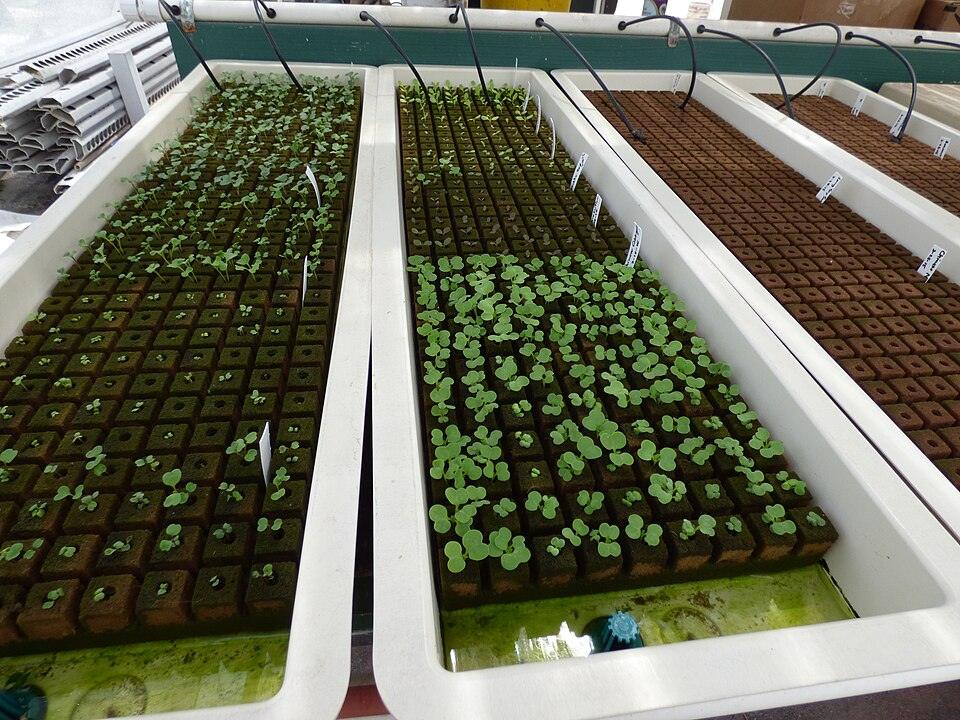 Young
YoungPac choi seedlings at the cotyledon to first-true-leaf stage, about a week after sowing, in a hydroponic seedling tray; shows the look of newly emerged pac choi of any cultivar.
Species-level photo (not this exact cultivar).
Photo: Forest and Kim Starr· CC BY 3.0 us
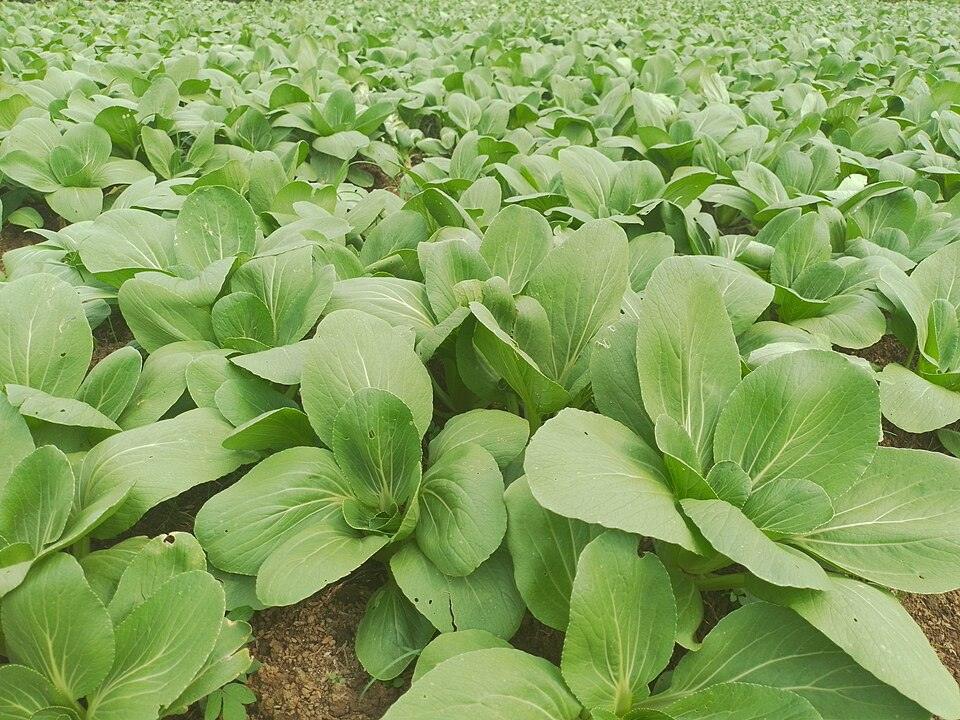 Growing
Half-grown pac choi plants about 5-6 in tall filling a bed, with the pale stems and spoon-shaped leaves forming; the size at which Baby Choi is ready to be cut.
Species-level photo (not this exact cultivar).
Photo: JS and new VpuipV· CC BY-SA 3.0
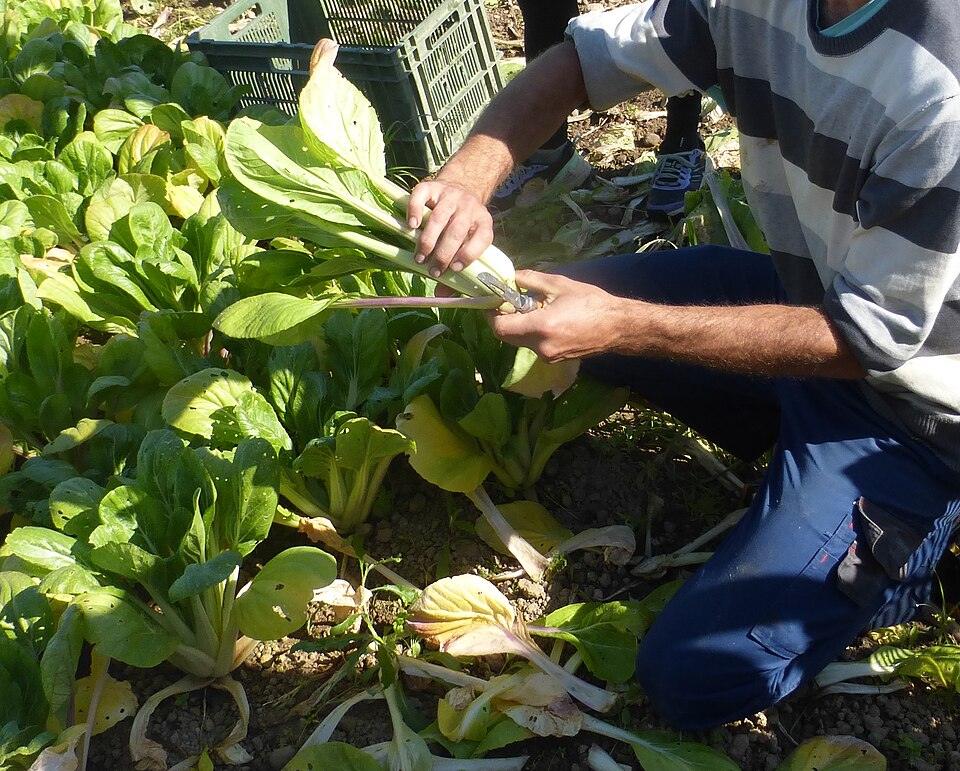 Full grown
Harvesting small white-stemmed pac choi heads by cutting at the soil line with a knife, the way baby-size heads are taken whole.
Species-level photo (not this exact cultivar).
Photo: MHM55· CC BY-SA 4.0
Decatur (Zone 8a): direct sow or transplant every 2 weeks from early September through mid-October for harvests from October into December;
Growing stages
What to look for, and what to do, at each point in its lifeThis group (mizuna, pac choi varieties Rosie F1, Baby Choi, and Prize Choy, and mustards Ruby Streaks, Red Giant, and Southern Giant) follows the same fall-through-spring rhythm as the other greens in Decatur, sown in September for a winter harvest and again in February-March before spring heat pushes them to bolt, but several of these mustards will happily reseed themselves if you let a plant flower.
- 1
Sowing
Early-mid September (fall crop) or mid-February to early March (spring crop)You'll see Seeds are small and round, reddish-brown for mustards and pac choi, and show nothing above ground for several days after sowing.
Do Direct sow 1/4 inch deep, or start pac choi varieties in cell trays for a head start, and keep the surface consistently moist.
- 2
Seedling
Days 4-18 after sowingYou'll see Round seed leaves appear first, then true leaves show each variety's character: mizuna's deeply feathered leaf, pac choi's smooth spoon shape, and the mustards' ruffled, sometimes reddish-purple edges (Ruby Streaks and Red Giant color up early, even as seedlings).
Do Thin to 4-6 inches apart for mizuna and mustards, 6-8 inches for pac choi, and watch for flea beetle shot-holes.
- 3
Transplant
3-4 weeks after starting indoors, when seedlings have 2-3 true leavesYou'll see Transplant-ready pac choi seedlings are compact, 2-3 inches tall, with a small but well-formed rosette and a root ball that holds together.
Do Harden off over 5-7 days, then set plants at the same depth they grew, spaced 8-10 inches apart for pac choi in beds or grow bags.
- 4
Cut-and-come-again harvest
Starting 25-40 days after sowing, continuing 4-8 weeksYou'll see Leaves reach 4-8 inches, with pac choi forming a loose vase-shaped rosette and mustards and mizuna forming a spreading clump of individual leaves.
Do Harvest outer leaves first, or shear the whole plant an inch above the crown for a quick regrow.
- 5
Bolting
Late spring, typically May, once daylength lengthens and temperatures push past 75-80°FYou'll see A central stalk shoots up, leaves become sparse and pointed, and small yellow four-petaled flowers cluster at the top, a classic mustard-family (Brassica) bloom.
Do Harvest what you can before leaves turn bitter, then either pull the plant or leave a few to flower for pollinators and seed.
- 6
Seed saving
4-8 weeks after bolting, once seed pods dry from green to brownYou'll see Flower stalks turn from bright yellow blooms to slim, brown, brittle pods that rattle with seed when dry.
Do Cut dry seed stalks into a paper bag, finish drying, then crush and winnow to collect seed; note which varieties are worth saving.
Techniques — transplant, prune, propagate, divide, seed
At a glance
- Botanical name
- Brassica rapa var. chinensis 'Baby Choi'
- Family
Brassicaceae (mustard family)
- Type
Cool-season annual (biennial) leafy vegetable
- Native range
Pac choi was domesticated in China and has been cultivated there for over 1,500 years;
- Hardiness
Zones Grown as an annual in all zones; in Zone 8a a fall, winter (with cover) and early-spring crop
- Height
5-6 in tall at the 35-day baby stage; 12-20 in if allowed to reach full size
Full sun to part shade (4-6 hours); tolerates as little as 2 hours of sun at the cost of…
Even moisture, about 1 in per week; shallow roots dry out fast, and drought makes stems…
Sow a group of 3 seeds every 6 in, 1/4 in deep, rows 12 in apart;
Rich, moist, well-drained soil with plenty of compost, pH 6.0-7.5.
Care
- Sow 1/4 in deep, 3 seeds per station 6 in apart, and thin to the strongest seedling at 2 in tall; eat the thinnings.
- Or start in cell trays 2-4 weeks ahead and transplant young before roots circle, since stressed seedlings bolt.
- Mix compost into the bed and feed once with fish emulsion or blood meal about 2 weeks after emergence; this is a fast crop that finishes in 5 weeks and needs nitrogen early.
Good to know
Seed source found: Botanical Interests 'Baby Choi' Bok Choy (also sold organic and via Epic Gardening), listed at 35-60 days, 5-6 in tall for baby harvest, white stems and dark-green leaves, frost tolerant and bolt…
Where it fits
Tuck between slower kale, collards and broccoli, or grow with mizuna, tatsoi, lettuce and radishes under one row cover; excellent in containers with scallions and cilantro.
Harvest
Cut whole mini heads at the soil line when 5-6 in tall (about 35 days), or pick the largest outer leaves as the plant grows and let the center…
In the kitchen
Mild, sweet and juicy with crunchy white stems and tender leaves; the classic size for cooking whole.
Watch for
Flea beetles, cabbage worms, diamondback moth larvae, harlequin bugs, yellow-margined leaf beetles, aphids, slugs and snails.
Wildlife & pollinators
Host plant for cabbage white and cabbage looper caterpillars; flowers attract bees if it bolts. Deer, rabbits, groundhogs and voles eat it.
Toxicity
None known; safe for people and pets in normal food amounts. Contains goitrogens like all brassicas.
Propagation
Seed. Botanical Interests sells it as conventional and organic seed;
General Asian Greens / Mustards guide
- Transplant in the evening; shade cloth the first 3–5 days if highs are above 85°F.
- Row cover (AG-19) from day one keeps cabbage worms, flea beetles and harlequin bugs off — the #1 fall greens fix.
- Sow a new short row every 2–3 weeks through October for a continuous harvest.
- Harvest outer leaves and let the center keep producing (cut-and-come-again); or cut whole plants 1" above the crown and they'll regrow once.
- Mustards and mizuna shrug off frost and freezes into the low 20s; pac choi needs row cover below ~28°F.
- Let one plant bolt in spring — the yellow flowers feed bees and the seed comes true for open-pollinated types.
Sources (6)
- https://www.botanicalinterests.com/products/baby-choi-bok-choy-seeds
- https://shop.epicgardening.com/products/baby-choi-bok-choy-seeds
- https://plants.ces.ncsu.edu/plants/brassica-rapa-chinensis-group/
- https://www.johnnyseeds.com/growers-library/vegetables/greens/pac-choi-key-growing-information.html
- https://hgic.clemson.edu/factsheet/chinese-vegetables/
- https://fieldreport.caes.uga.edu/publications/C1258/