Evergreen Bunching Onion
Evergreen Bunching — Allium fistulosum, grown from seed
Allium station Bag 2. A true perennial species: the clump tillers, persists for years, and is divided rather than resown — late winter or early spring, into offsets. Bolting does not kill it; cut a bolted patch back to about 2" above the soil and it regrows tender scallions from the roots. Provenance: an empty Ferry-Morse 'Evergreen Bunching Onion' seed packet is on hand (reported Oct 2026) and is the likely source, but this is not confirmed — the earlier 'Evergreen Hardy White' cultivar name in the guides was an unsourced guess and has been walked back to plain Evergreen Bunching. UNRESOLVED: this and 'Scallion Onions' (Evergreen) may be the same Ferry-Morse planting recorded twice — or the same variety kept in two roles, a perennial clump in bag 2 versus annual succession sowings in the cinder blocks and bed edges. The spring Bed A strip and the Feb/Mar/Apr succession-sow tasks point at this entry; bag 2 points at the other. Not merged pending a decision.
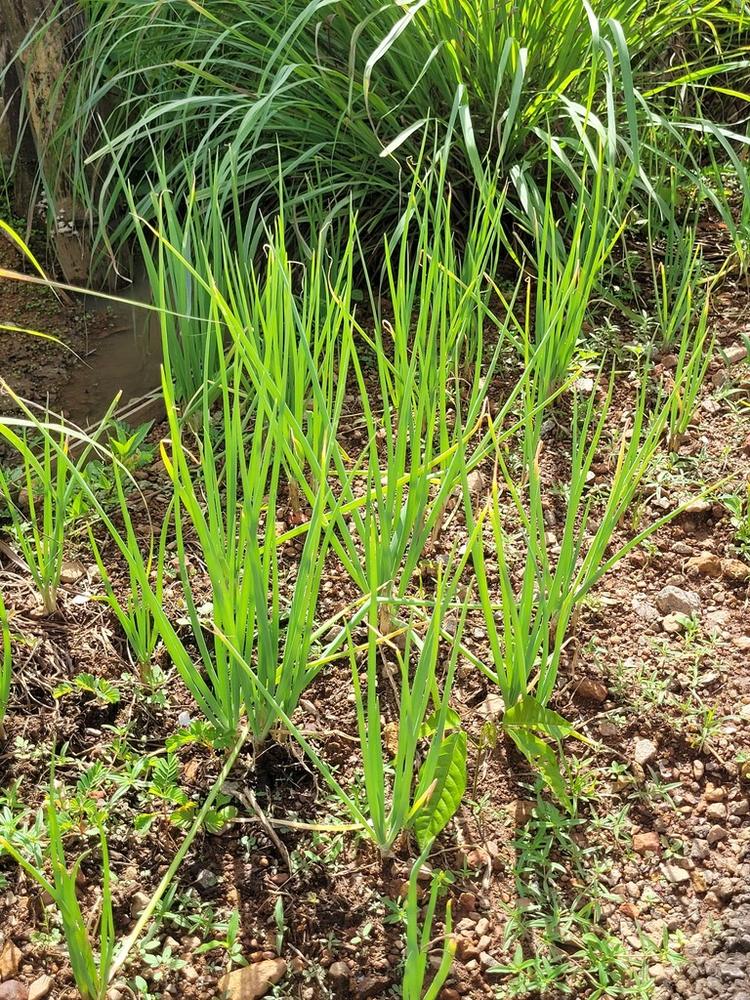 Young
YoungYoung bunching onion clump with thin new shoots emerging, no flowers yet.
Generic Allium fistulosum; not confirmed as 'Evergreen Bunching' cultivar.
Photo: Guillaume Léotard· CC BY-NC
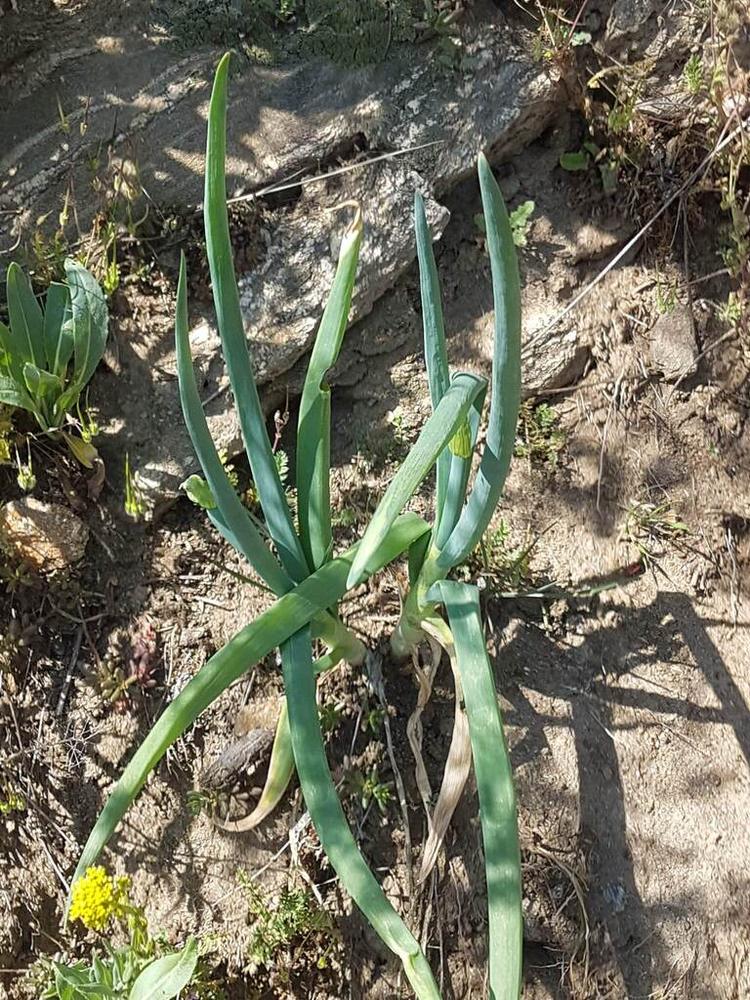 Growing
Established perennial bunching onion clump with several upright hollow leaves, pre-flowering.
Generic Allium fistulosum; not confirmed as 'Evergreen Bunching' cultivar.
Photo: clemens_pachschwoell· CC BY-NC
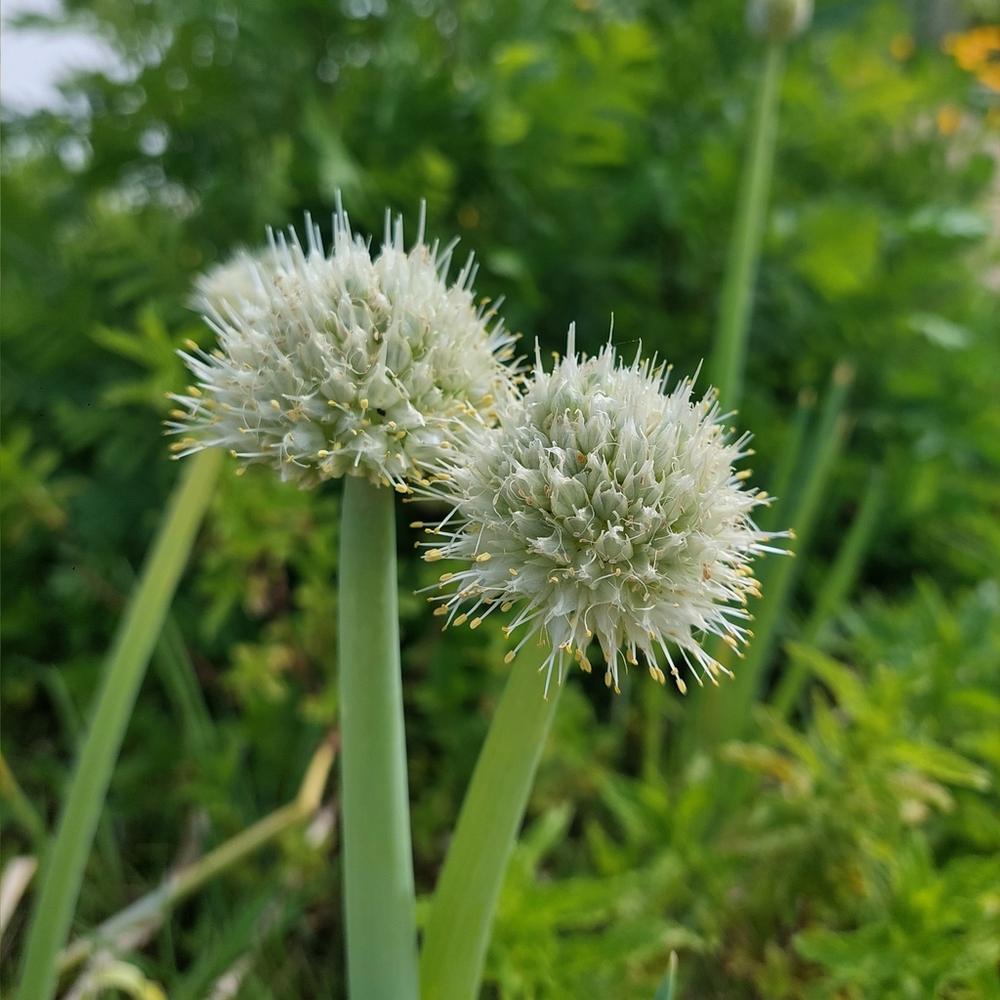 Full grown
Mature bunching onion clump with two round white flower umbels on tall stalks.
Generic Allium fistulosum shown flowering, consistent with brief's note that mature bunching onion may show flowers; not confirmed as 'Evergreen Bunching' cultivar.
Photo: Miguel Afonso· CC BY-NC
Growing stages
What to look for, and what to do, at each point in its lifeBunching onions (Evergreen Bunching as the perennial workhorse, plus White Lisbon or plain scallions grown as an annual) form clumps of non-bulbing stalks rather than single bulbs in Luke's garden, giving repeat cut-and-come-again harvests spring through winter, with Evergreen Bunching persisting and multiplying for years if divided occasionally.
- 1
Sowing seed or setting divisions
Direct sow late winter through early fall in Zone 8a (Feb-Sept), with a fall sowing around Aug-Sept for a hardy overwintering cropYou'll see Seeds are small, black, angular. Within 7-14 days you'll see thin, grass-like green threads, 1-2 inches tall, pushing up in small groups.
Do Direct sow seed thinly 0.25-0.5 inch deep, or set out small divisions from an existing clump.
- 2
Clump establishment
6-10 weeks after sowingYou'll see Individual seedlings thicken into slim white-based stalks, and you'll notice new shoots (tillers) emerging from the base of each plant, turning a single seedling into a small cluster of 3-5 stalks.
Do Keep weeded and watered; thin overly crowded clusters if growth looks stunted.
- 3
First harvest and the cut-and-come-again clump
10-12 weeks after sowing for a first harvest, then continuously for months to yearsYou'll see Stalks reach pencil-thickness or better, 8-14 inches tall, with a firm white base fading to blue-green hollow leaves. A healthy clump looks like a dense tuft with new, thinner shoots visible at the center and older, thicker stalks toward the outside.
Do Harvest only the outer, oldest stalks at soil level, leaving the inner younger stalks and roots undisturbed.
- 4
Overwintering
Nov-Feb, through Zone 8a's mild winterYou'll see Evergreen Bunching largely holds its green color and upright form through winter, with only minor tip dieback even after nights in the teens. Growth slows but doesn't stop entirely.
Do Leave the clump in the ground; mulch lightly ahead of the coldest snaps and keep harvesting lightly through winter.
- 5
Dividing the established clump
Every 2 years, in spring as new growth resumesYou'll see An overcrowded clump shows a dense congested base, thinner and more numerous stalks than a fresh clump, and a general slowdown in new tillering.
Do Dig the clump, split it into smaller sections, and replant to reinvigorate growth and multiply plants.
- 6
Bolting and seed saving
Second year or under stress, typically late spring into summerYou'll see A thick, round, hollow flower stalk rises from the clump well above the leaves, topped by a round white globe of tiny star-shaped flowers, gradually drying to a papery brown seed head.
Do Let a few stalks bolt and flower if you want seed; otherwise cut bolting stalks out to keep the clump productive for eating.
Techniques — transplant, prune, propagate, divide, seed
Full sun
Even moisture; ease off before harvest.
Bags/cells; 24" round felt bags for the allium station. Bulb onions get their own ground…
Feed early; STOP feeding garlic/onions 3–4 weeks before harvest.
Care
- Cut garlic/onion scapes immediately to redirect energy to bulbs.
- Fall planting: order seed garlic July–Aug; onion transplants order mid-Oct for a mid-Nov ship (Dixondale). Garlic goes in in October, onion transplants in November.
- Buy onion transplants rather than starting from seed — onion seed is viable only 1–2 years and wants 8–10 weeks in flats.
Harvest
Onions when tops flop; garlic when lower leaves brown. Granex/sweet onions that bolt early can be harvested as spring onions.
Watch for
Early bolting in warm spring — harvest as spring onions if it happens.