Salvia 'Furman's Red' New · Sep 2026
Salvia greggii 'Furman's Red'· Autumn sage, Texas sage, Furman's Red autumn sage
Bought for the edible garden as a hummingbird/pollinator anchor; flowers are edible as a garnish. Give it a permanent sunny, well-drained spot at a bed edge — not inside a bed that gets turned.
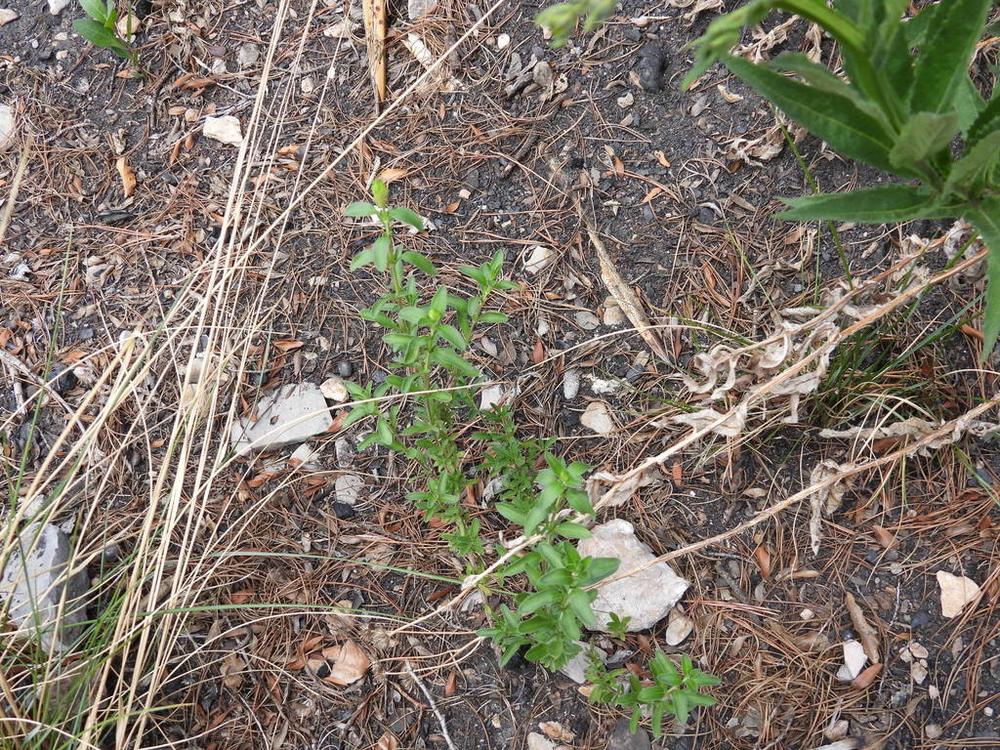 Young
YoungYoung Salvia greggii (species) in early summer: a few sprawling stems with small opposite leaves, about the size of a rooted cutting or first-season seedling, on gravelly ground.
Species-level photo (not this exact cultivar).
Photo: Leticia Jiménez Hernández· CC BY-SA
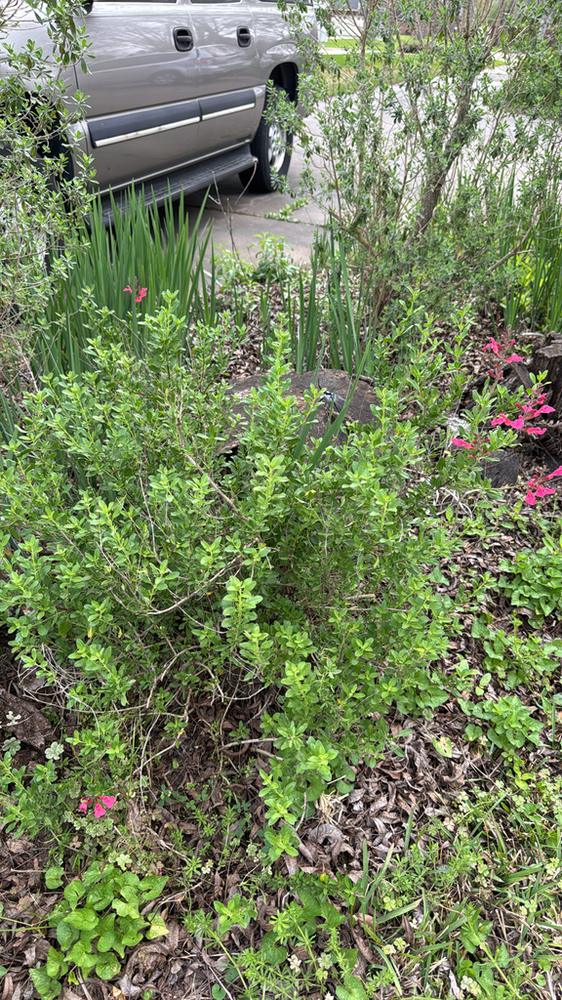 Growing
Established Salvia greggii shrub (species) leafing out in a Texas garden bed in mid-March: a dense 2 ft mound of small green leaves before the spring bloom starts.
Species-level photo (not this exact cultivar).
Photo: Elizabeth Braun· CC BY-NC
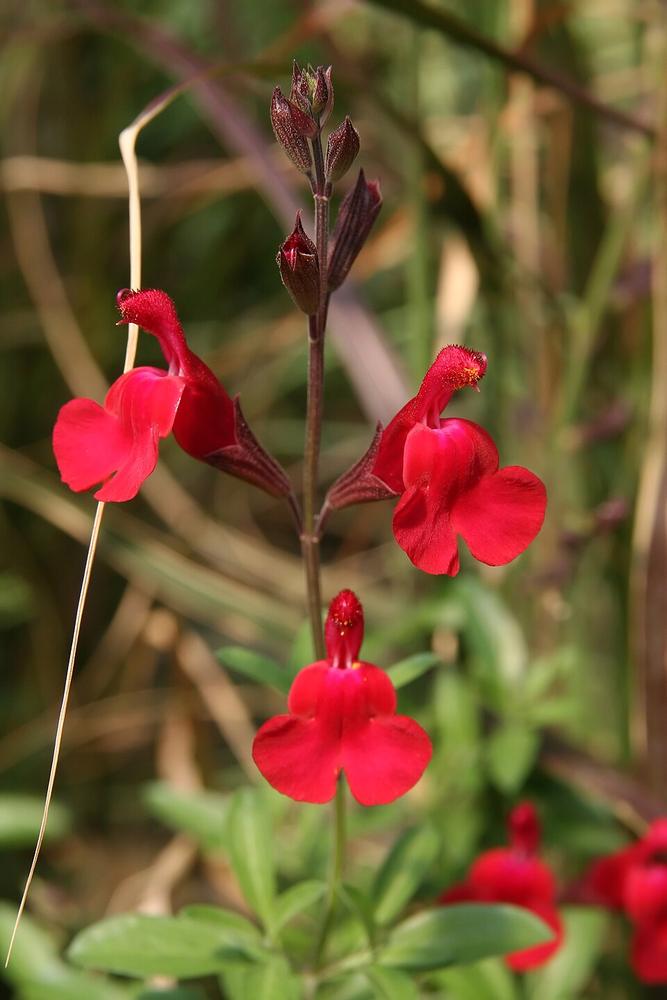 Full grown
Salvia greggii 'Furman's Red' in bloom: saturated cherry-red two-lipped flowers with dark reddish calyces on an upright spike above the small green leaves.
Photo: Photo by David J. Stang· CC BY-SA 4.0
Zone 8a Decatur: plant nursery plants after the last frost (early April) through May, or in early fall (September to early October) so roots settle before frost; avoid late-fall planting.
Growing stages
What to look for, and what to do, at each point in its lifeLantana 'Miss Huff' and Salvia 'Furman's Red' are marginally hardy in Zone 8a, so they spend winter looking dead on top while the crown survives underground, then get cut hard in spring once new growth shows, bloom through the hot season in flushes that respond to light shearing, and go dormant-looking again each fall without being touched.
- 1
Spring Cutback
Late March into April, Zone 8a, once new growth is visible at the baseYou'll see Old woody stems from last year are gray-brown, dry, and often hollow-feeling, with no green on them. Down at the soil line and lower few inches of the stems you will see small green or reddish new shoots breaking.
Do Cut all of last year's dead-looking top growth back to just above the new basal shoots, generally 4-8 inches above ground for Lantana and 6-10 inches for Salvia. Do not cut before you can see the new growth.
- 2
Vegetative Growth
April into MayYou'll see Fresh green growth quickly fills in from the cutback points, with Lantana producing sprawling, slightly rough-textured stems and Salvia producing upright, narrow-leaved stems with a faint aromatic scent when brushed.
Do Water regularly while roots reestablish after cutback, but hold off on heavy fertilizer since both plants bloom best in lean soil. Pinch stem tips once or twice on young or leggy growth to encourage branching before bloom.
- 3
First Bloom Flush
Late May into JuneYou'll see Lantana 'Miss Huff' produces clusters of small orange, yellow, and pink flowers at stem tips; Salvia 'Furman's Red' sends up spikes of tubular red flowers above the foliage, attracting hummingbirds.
Do Deadhead spent Lantana flower clusters if desired, and let the display run. No major cutting needed yet, just enjoy and keep watering during dry spells.
- 4
Reblooming After Shearing
Repeating through summer, roughly every 4-6 weeks from June through SeptemberYou'll see After a bloom flush fades, flower production slows and stems can look leggy or sparse at the tips, with fewer new buds forming.
Do Lightly shear the whole plant back by about a third, removing spent flower clusters and the top few inches of stems, to trigger a fresh flush of branching and bloom.
- 5
Fall (Leave Standing)
October through first frost (~Nov 12) and beyondYou'll see Growth slows, flowering tapers off, and stems may start to look a bit ragged or begin browning at the tips after the first light cold snaps, especially on Lantana.
Do Do not cut back or tidy up the plant now, even though it looks past its best. Stop shearing by early fall so the plant is not pushed into tender new growth right before frost.
- 6
Winter Dormancy
Mid-November through MarchYou'll see Top growth is fully brown, dry, and dead-looking, with brittle stems that may rattle in the wind. It genuinely looks like a dead shrub.
Do Leave all top growth standing untouched, and apply 2-3 inches of mulch (straw, shredded leaves, or bark) over the root zone and crown, especially before nights in the teens. Do not prune until spring growth appears.
Techniques — transplant, prune, propagate, divide, seed
At a glance
- Botanical name
- Salvia greggii 'Furman's Red'
- Family
Lamiaceae (mint family)
- Type
Semi-evergreen woody subshrub, perennial in Zone 8a
- Native range
The species is native to rocky limestone slopes of south-central and west Texas south to San Luis Potosi, Mexico;
- Hardiness
Zones 6-9 (Missouri Botanical Garden rates the species 6-10 and Plant Select rates 'Furman's Red' 5b-10 with sharp…
- Height
2-3 ft
Full sun. Tolerates light afternoon shade in hot climates but flowers less.
Low to medium; drought tolerant once established. Deep-water every 1-2 weeks in dry…
24-30 in apart
Sharply drained, average to lean soil, pH 6-8; native to limestone.
Care
- Plant on a mound or slope in full sun with gravel-amended soil; drainage matters far more than fertility.
- Water deeply once a week the first summer, then only in drought; overwatering and wet winter soil are the usual killers in Georgia.
- Do not fertilize beyond a little compost at planting; rich soil gives floppy growth and fewer flowers.
Good to know
'Furman's Red' was selected in the 1970s by Texas plantsman W.A.
Where it fits
Front or middle of a sunny, dry border with yellow yarrow, rosemary, thyme, lavender, nodding onion, coreopsis, purple lovegrass and other Mediterranean-style or Texas-native plants;
Harvest
Pick fully open flowers in the morning for garnish; snip leaf tips any time for tea or seasoning.
In the kitchen
Grown mainly as an ornamental and pollinator plant, but the flowers are edible: faintly sweet with a light minty-sage note, good scattered over…
Watch for
No serious pests or diseases; watch for whiteflies, aphids and spider mites in dry spells.
Wildlife & pollinators
One of the best hummingbird plants for a Southeastern garden; also worked by bumblebees, carpenter bees, honeybees and butterflies, and seed-eating…
Toxicity
None known. Salvia greggii is not on the ASPCA toxic plant list, and related sages (Salvia officinalis, Salvia coccinea) are listed by the ASPCA as…
Propagation
Semi-ripe tip cuttings 3-4 in long taken late spring through summer root in 2-3 weeks; also layering.
General Woody Perennial / Subshrub (Zone 7–8 hardy) guide
- Plant in spring or early fall so roots establish before a hard freeze; in raised or well-drained ground, never a wet low spot.
- Do NOT cut back in fall — the old woody stems and a 3–4" mulch of pine straw protect the crown through winter.
- Cut back hard (to 6–12") in early spring once new growth shows at the base, then shape lightly through summer.
- Shear salvias by a third after each flush to keep them compact and reblooming.
- Flowers on new wood — every trim is followed by more bloom.
- Expect top growth to die to the ground in a cold winter; roots resprout in April–May.
Sources (6)
- https://plants.ces.ncsu.edu/plants/salvia-greggii/
- https://plantfinder.mobot.org/PlantFinderDetails.aspx?taxonid=263488
- https://www.wildflower.org/plants/result.php?id_plant=SAGR4
- https://plantselect.org/plantstories/wild-thing-and-furmans-red-sage-double-delight/
- https://www.fbts.com/salvia-greggii-furmans-red.html
- https://www.aspca.org/pet-care/aspca-poison-control/toxic-and-non-toxic-plants/sage