Apple Tree
Apple
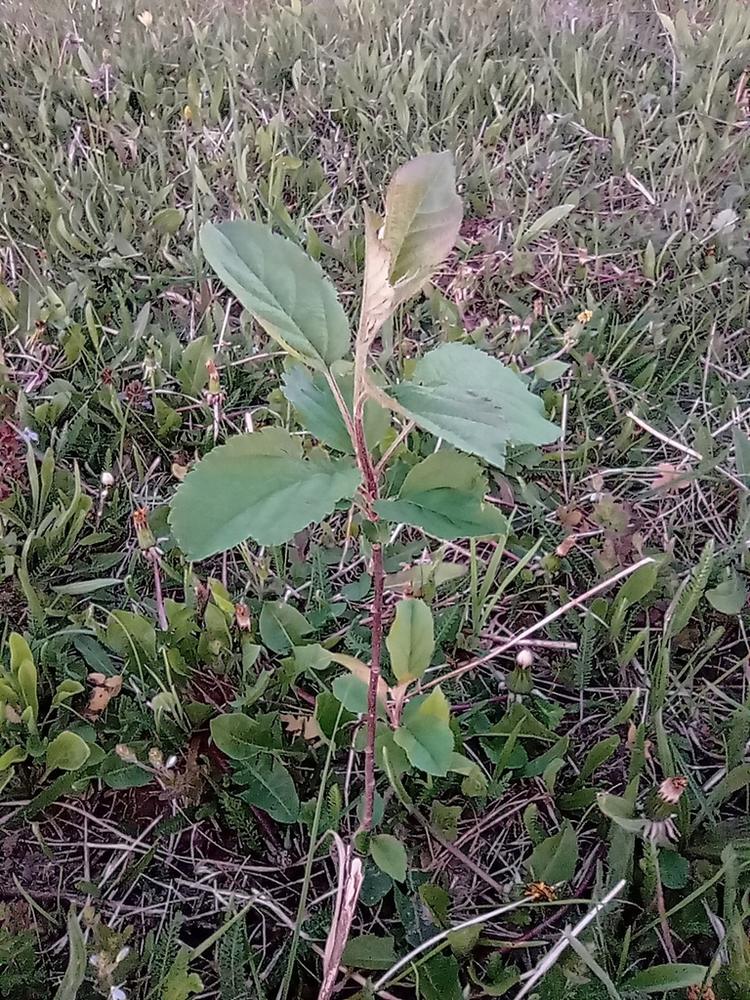 Young
YoungYoung single-stem apple sapling/whip with a handful of leaves growing in grass
Photo: Maksymilian Bobko· CC BY
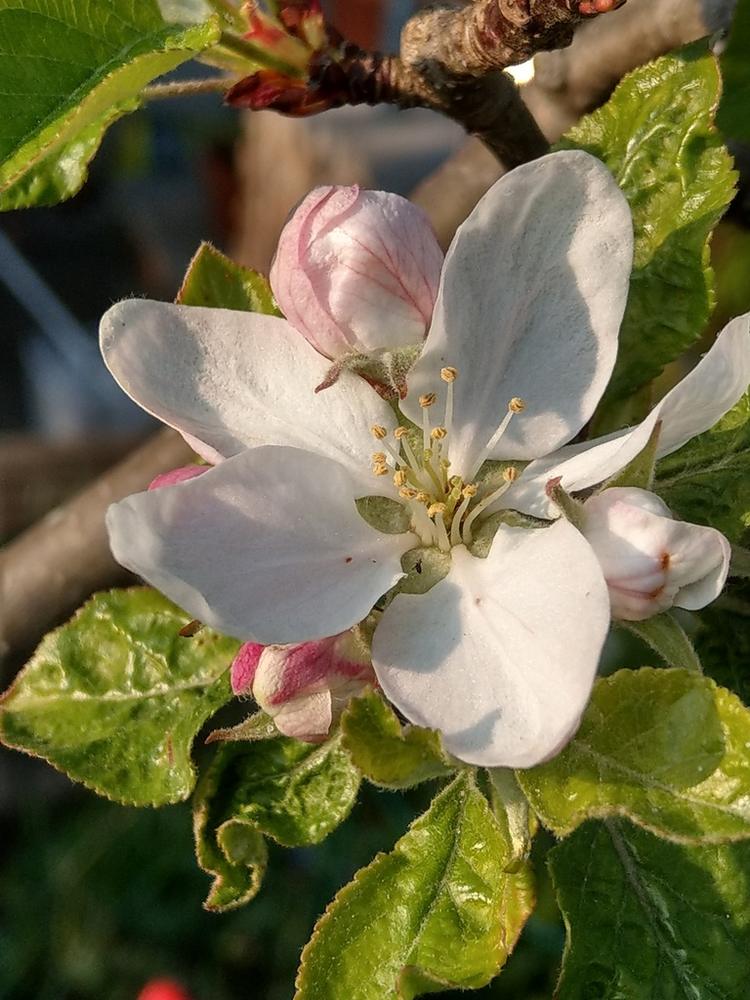 Growing
Close-up of a white apple blossom with pink-tinged buds on a young tree branch
Photo: joerg_ewald· CC BY-NC
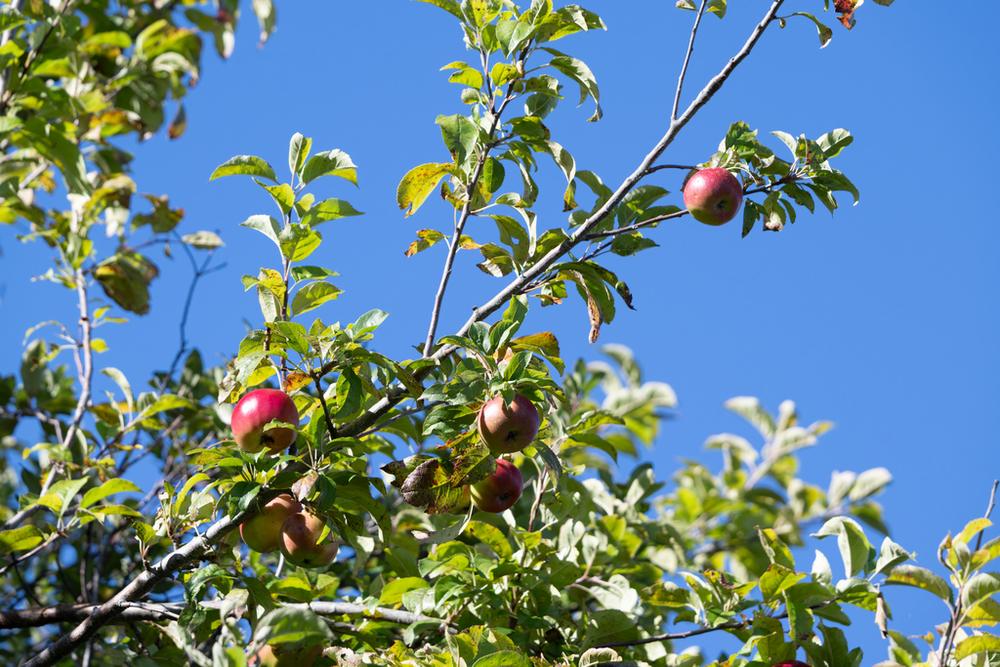 Full grown
Mature apple tree branches loaded with ripening red apples against a blue sky
Photo: Dan On Earth· CC BY-NC
Growing stages
What to look for, and what to do, at each point in its lifeYour apple tree follows the standard apple rhythm in Decatur: structural training its first few winters, white-pink spring bloom needing a compatible pollinizer variety nearby for most cultivars, hand-thinning of fruit clusters 3-6 weeks after bloom to avoid a heavy crop of small fruit, and a harvest window anywhere from midsummer to October depending on variety, judged by background color and the twist test rather than a fixed date - worth confirming the exact variety and its chill-hour and pollinizer needs from the nursery tag, since the record here just says "Apple."
- 1
Planting as a Whip
Year 1, planted while dormant (Dec-Feb)You'll see A young tree often arrives as a single unbranched whip, bare of leaves, roughly 3-6 feet tall.
Do Cut the whip back to about 24-36 inches at planting if unbranched, just above a healthy bud.
- 2
Structural Training
Dormant season each winter, years 1-3You'll see Several main branches radiate from the trunk at different heights; some grow at narrow, weak angles while others spread wider.
Do Each winter, select 3-5 well-spaced scaffold branches with wide angles and remove or shorten competing branches, spiraling around the trunk rather than stacking directly above one another.
- 3
Winter Dormancy
Late November through FebruaryYou'll see Bare branches show fat, rounded flower buds distinguishable from narrower, pointed leaf buds by late winter.
Do Do maintenance pruning now on a dry day, removing dead, crossing, and inward-growing wood.
- 4
Bud Break and Bloom
March into early AprilYou'll see Leaf buds break into small green leaves first, followed by white to pale pink blossoms in clusters along spurs.
Do Make sure a compatible pollinizer variety is blooming nearby, and protect blossoms from late hard freezes.
- 5
Fruit Set and Thinning
April into May, 3-6 weeks after bloomYou'll see Small green fruitlets form in tight clusters of 3-6 per spur, still marble-sized or smaller.
Do Hand-thin clusters down to one, occasionally two, fruit per cluster, spaced 4-6 inches apart along the branch.
- 6
Summer Growth and Suckers
May through AugustYou'll see Vigorous, perfectly vertical shoots (watersprouts) sprout from branches, and separate shoots (suckers) emerge from the trunk base or roots.
Do Remove suckers and watersprouts as soon as you notice them.
- 7
Ripening and Harvest
July into October, depending on varietyYou'll see Background skin color shifts from green toward yellow-green as the variety's red or blush color develops.
Do Check background color and do a twist test - cup a fruit and twist gently; a ripe apple separates easily from the spur.
- 8
Mature Tree Maintenance
Ongoing, dormant season each winter from about year 4-5 onwardYou'll see An established scaffold structure with a full canopy of fruiting spurs that now mostly needs upkeep rather than shaping.
Do Prune yearly to remove dead or crossing wood, open the canopy to light, and control height for easy picking.
Techniques — transplant, prune, propagate, divide, seed
Full sun
Deep water while establishing; less once mature.
Per tree size; check pollination partner needs.
Light balanced feeding in early spring.
Care
- Many apples/cherries need a compatible pollination partner — confirm the variety.
- Prune in dormancy (late winter) for structure and airflow.
Harvest
Variety-dependent; pick at full color/firmness for the type.
Watch for
Codling moth, brown rot, and late-frost on early blossoms.