Nodding Onion New · Sep 2026
Allium cernuum· Nodding onion, Nodding wild onion, Nodding pink onion
Native perennial onion — give it a permanent spot (bed corner, allium station edge) rather than a bed that gets replanted each season.
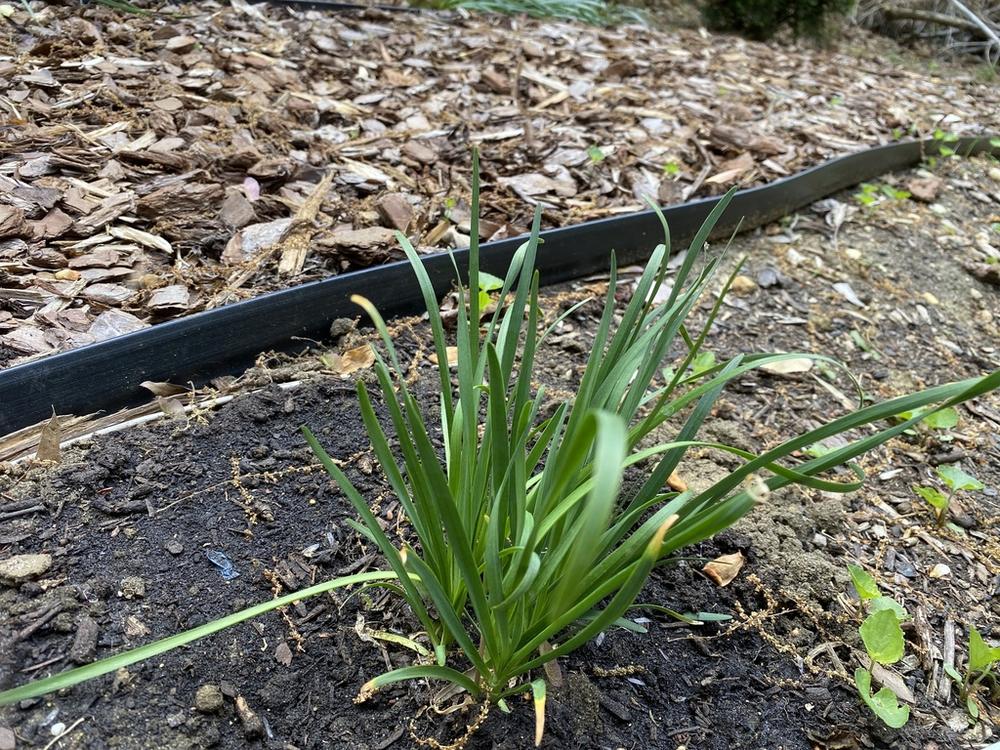 Young
YoungNewly planted nursery clump in late April (Annapolis MD): a tuft of flat, grassy green leaves about 8 in tall in a mulched garden bed, before any flower scapes appear.
Photo: BombusMD· CC BY-NC
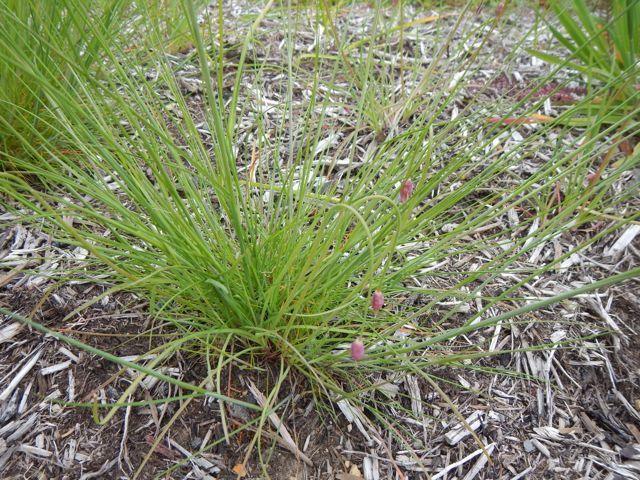 Growing
Established foliage clump in late May with the first flower scapes rising and pink buds just showing, still weeks from opening.
Photo: Kathleen Sayce· CC BY-NC
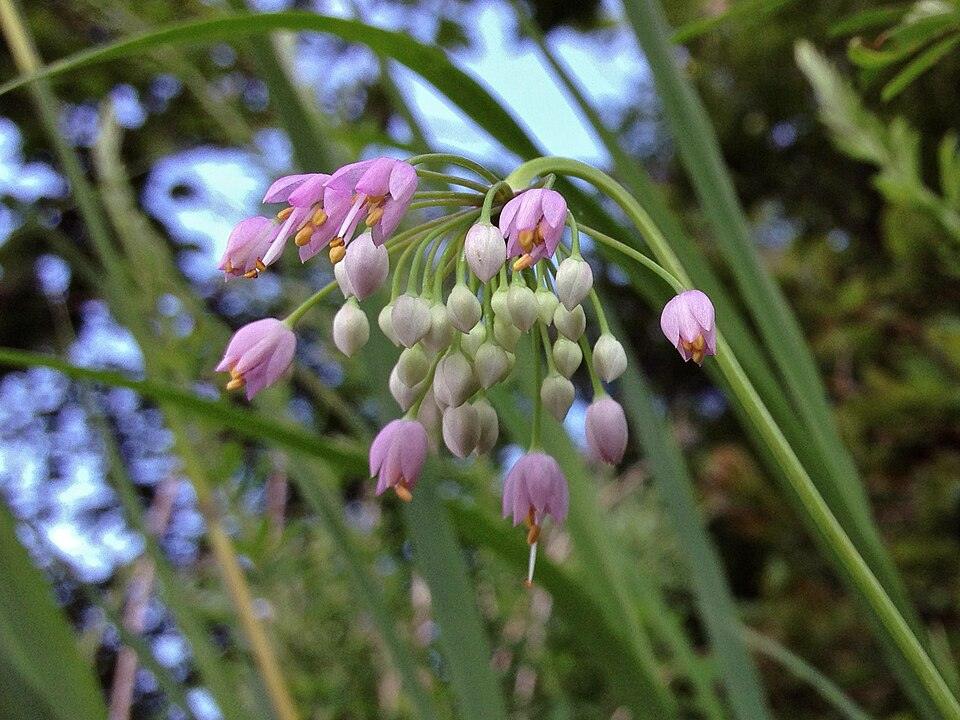 Full grown
Mature plant in July bloom: the leafless scape hooks over at the tip so the loose umbel of pale pink bell flowers with yellow anthers nods toward the ground.
Photo: Fritzflohrreynolds· CC BY-SA 3.0
Zone 8a Decatur: plant bulbs or container plants in fall (October-November, best) or early spring (March).
Growing stages
What to look for, and what to do, at each point in its lifeNodding onion (Allium cernuum) is a slow-starting native perennial in Luke's garden, spending its first year mostly establishing before rewarding him with distinctive down-curved pink-to-white summer flowers in later years, valued more as a pollinator plant to harvest sparingly than as a heavy edible crop.
- 1
Establishment from bulbs or plugs
Planted in spring or fall; first year mostly root and leaf growth, Zone 8aYou'll see Small bulbs look like miniature narrow onions, under an inch across, with papery brown skin. Newly planted plugs show a modest tuft of flat, narrow, grass-like blue-green leaves, 6-10 inches tall, with no flower stalk yet.
Do Plant bulbs 1-2 inches deep or set out plugs at their nursery depth, in well-drained soil in full sun to light afternoon shade.
- 2
Vegetative clump growth
Year one into year two, spring through fallYou'll see Clumps thicken into a tuft of narrow, flat, grass-like leaves up to 12 inches long, staying low and grassy without any flower stalk in the first year.
Do Let it grow undisturbed; resist harvesting this early planting.
- 3
Nodding summer flowering
Roughly June-August, sometimes into September, once mature (often year two onward)You'll see A leafless, wiry flower stalk rises 12-18 inches (occasionally to 24 inches) above the foliage, and right near the top it curves sharply downward so the flower cluster hangs facing the ground -- this drooping habit is unique among the onions Luke grows and gives the plant its name. The cluster itself is a loose umbel of small, bell-shaped flowers ranging from pink to lilac-pink, occasionally white.
Do Let it flower and attract pollinators; avoid cutting flower stalks for harvest.
- 4
Seed head formation and collection
Late summer into fall, after flowers fadeYou'll see Spent flowers dry in place, the nodding cluster gradually turning upright again as it dries, and small papery brown seed capsules form, eventually splitting to reveal tiny black seeds.
Do Let seed heads dry fully on the stalk, then collect them for propagation before they shatter and scatter.
- 5
Mature clump, established years
Year three onwardYou'll see A well-established clump forms a dense grassy mound 12-18 inches across with multiple flower stalks each summer, noticeably more floriferous than in its first flowering year.
Do Enjoy the increased bloom for pollinators, harvest only lightly, and watch for natural self-seeding nearby.
- 6
Dividing the clump
Every 3-4 years, in fall as the plant goes dormantYou'll see An overcrowded older clump shows a tight tangle of small bulbs at the soil surface and may bloom slightly less vigorously than a few years prior.
Do Dig the clump in fall, separate the small bulbs, and replant at wider spacing.
Techniques — transplant, prune, propagate, divide, seed
At a glance
- Botanical name
- Allium cernuum
- Family
Amaryllidaceae (amaryllis family; formerly placed in Liliaceae or Alliaceae)
- Type
Native perennial bulb; edible herbaceous perennial
- Native range
Widespread North American native from New York to British Columbia, south through the Appalachians and cooler uplands…
- Hardiness
Zones 4-8
- Height
12-18 in in flower (occasionally 24 in); foliage 8-12 in
Full sun to part shade. Best flowering in full sun; appreciates light afternoon shade in…
Dry to medium. Drought tolerant once established, but flowers better with average…
6-8 in apart in groups of 5 or more; 4 in apart in a culinary patch
Well-drained sandy loam or gravelly soil, neutral to slightly alkaline (pH 6.5-7.5)…
Care
- Plant bulbs 2-3 in deep and 6 in apart in a sunny, sharply drained spot; group at least 5 for a good show.
- Water in well, then only during spring drought; established clumps need no extra water in summer.
- No fertilizer needed; a thin spring top-dressing of compost is enough, plus a light liming every few years in acid clay.
Good to know
A true native onion and one of the easiest edible natives for a Georgia garden. The nodding umbel and flat leaves distinguish it from other wild onions.
Where it fits
Edible-bed and pollinator-bed border with thyme, oregano, chives, Salvia greggii 'Furman's Red', yellow yarrow, coreopsis and butterfly weed;
Harvest
Snip leaves like chives from spring through midsummer, taking no more than a third of a clump at a time so the bulbs keep building.
In the kitchen
Mild to moderately strong, sweet onion flavor, stronger raw than a supermarket onion and mellowing with cooking.
Watch for
No significant pests or diseases; occasional bulb mites, and bulb rot in heavy wet soil. Can seed around in loose mulch, so deadhead if unwanted.
Wildlife & pollinators
Nectar for native bees, honeybees, hairstreak butterflies and hummingbirds; songbirds take the seed.
Toxicity
Safe for people in normal culinary amounts; the Lady Bird Johnson Wildflower Center notes that large quantities can cause nausea, vomiting or…
Propagation
Division of bulb offsets in fall (easiest). Seed sown in fall outdoors, or after 60 days of cold-moist stratification;
General Allium (Onion / Garlic / Scallion / Chive) guide
- Cut garlic/onion scapes immediately to redirect energy to bulbs.
- Fall planting: order seed garlic/onions July–Aug; plant in October for next year.
- Evergreen bunching onion is perennial; harvest outer stalks and it regrows.
Used in 9 recipes
Sources (5)
- https://plants.ces.ncsu.edu/plants/allium-cernuum/
- https://www.wildflower.org/plants/result.php?id_plant=alce2
- https://plantfinder.mobot.org/PlantFinderDetails.aspx?taxonid=282058
- https://nativefoodsnursery.com/nodding-onion/
- https://www.aspca.org/pet-care/aspca-poison-control/toxic-and-non-toxic-plants/onion